Facebook
 Google
 GitHub
 Linkedin
Google Launches Efforts to Power Data Centers in Taiwan
To help supply power to its growing data center and cloud services, Google is expanding its renewable energy portfolio in Taiwan.
Google is investing heavily in Taiwan’s renewable energy industry to power its data centers and achieve 24/7 carbon-free operations. The company will invest in its first offshore wind power purchase agreement (PPA) in Asia Pacific and its first corporate geothermal energy project in the region.
Both projects are designed to support the growing power demands of Google’s data centers, cloud infrastructure, and offices in Taiwan, while also advancing the company’s 2030 carbon-free energy goal.
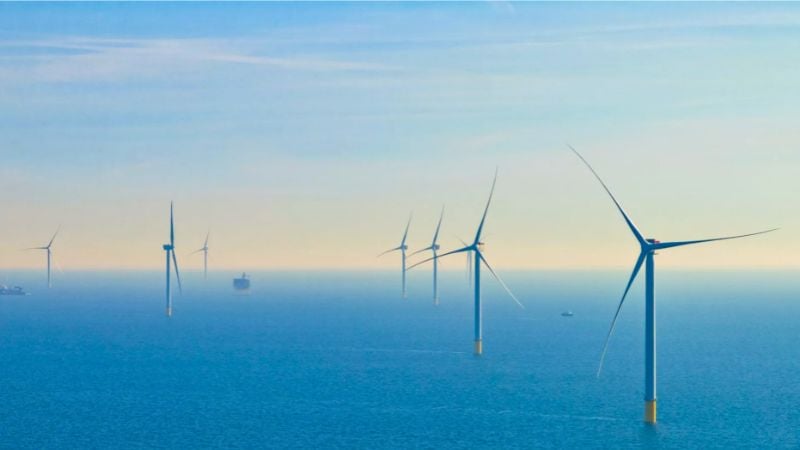
Google’s offshore wind project in the Netherlands. Image used courtesy of Google
Google’s First Asian Offshore Wind Project
In a major milestone for its renewable energy efforts, Google signed a PPA with Copenhagen Infrastructure Partners to procure energy from the 495 MW Fengmiao I offshore wind project, located off the coast of Taichung. Scheduled to become operational in 2027, Fengmiao I will supply clean, consistent power to support Google’s expanding digital infrastructure in Taiwan.
The project marks a first for Taiwan’s renewable sector, becoming the inaugural project from the government’s Round 3.1 offshore wind auction to achieve financial close. It secured $3.1 billion in project financing from a syndicate of 27 international and Taiwanese banks and export credit agencies, demonstrating strong investor confidence despite global economic headwinds.
Beyond its operations, Google’s participation is reshaping Taiwan’s offshore wind sector. Fengmiao I is the first project in Taiwan to adopt a multi-offtaker model, securing additional corporate PPAs with local technology firms such as United Microelectronics Corporation, MediaTek, and Far EasTone Telecommunications.
This diversified offtaker structure could be a critical evolution for Taiwan’s energy market, reducing reliance on government subsidies and creating a more resilient, market-driven renewable sector. It also addresses Taiwan’s urgent need for clean power to support its growing high-tech economy, particularly its globally important semiconductor industry.
10 MW of Geothermal Capacity
In a second clean energy announcement, Google has entered into Taiwan’s first corporate geothermal energy agreement, partnering with Swedish developer Baseload Capital to deliver 10 MW of geothermal capacity to the local grid. Baseload, which has been exploring Taiwan’s geothermal resources since 2019, will supply steady baseload power to help Google meet its continuous operational needs.
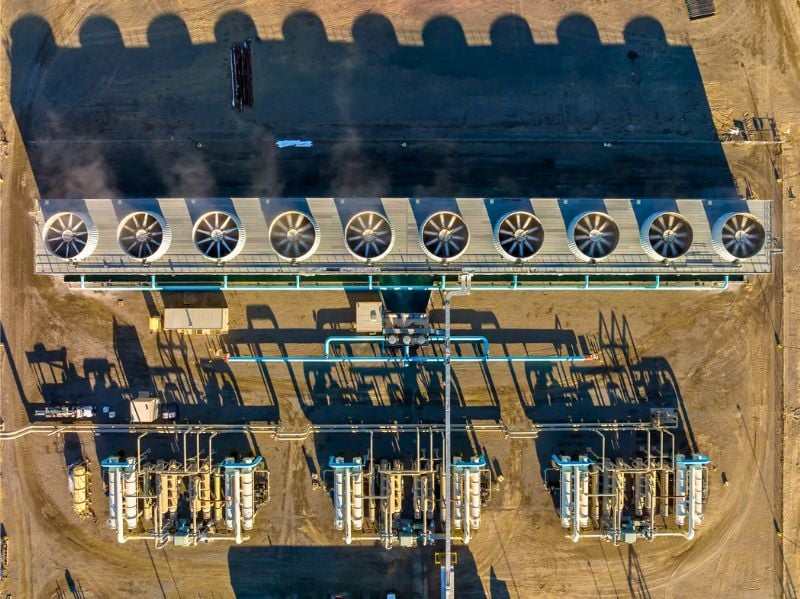
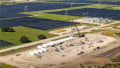
A Google geothermal plant in Nevada, developed with Fervo Energy. Image used courtesy of Google
This marks Google's first geothermal energy project in Asia-Pacific and builds on the company’s earlier partnership with Fervo Energy to bring geothermal power to its U.S. data centers in Nevada.
Geothermal energy brings unique advantages to Google's renewable energy portfolio. Unlike solar and wind, geothermal provides consistent, always-on generation, independent of weather or daylight cycles. This baseload capability is critical for high-availability systems like data centers, where even brief power interruptions are unacceptable.
Taiwan, which is situated along the so-called Pacific Ring of Fire, has significant geothermal potential, with government targets aiming to scale up to 6 GW of geothermal generation by 2050. Google's early investment positions it as a leader in scaling new forms of clean baseload energy in the region.
Building a Balanced, Resilient Energy Strategy
By adding offshore wind and geothermal energy in Taiwan, Google is developing a more resilient and diversified approach to clean energy. Each resource plays a distinct role: solar power provides energy during daylight hours, offshore wind supports generation during evenings and periods of low sunlight, and geothermal energy delivers a continuous baseload supply.
This diversified portfolio helps Google address one of the major challenges in renewable energy: matching supply with demand on an hourly basis. By combining variable and constant generation sources, the company can reduce its reliance on conventional fossil-fuel backup systems and improve the overall stability of its operations in Taiwan.
In parallel, Google continues to leverage its Carbon Intelligent Compute platform to align data center workloads with times of greater renewable availability, further optimizing energy use across its infrastructure.