 Facebook
 Google
 GitHub
 Linkedin
Emissions-Free Electric Seaglider Sails on Water and Wind
Using wing-in-ground technology, the seaglider can transport both passengers and cargo along coastal waters.
It’s part airplane and part boat. It can carry passengers or haul cargo like a helicopter, but it’s classified as a marine vessel. This multi-capable craft is the Regent Viceroy, an electric seaglider using wing-in-ground (WIG) technology that offers emissions-free coastal transportation.
During a milestone test flight off Rhode Island in September, the Regent prototype covered nearly 600 meters in half a minute. It marked the first time an electric ground-effect vehicle of that scale carried people in flight. Regent also opened its first seaglider manufacturing facility in Rhode Island with an eye toward commercialization.
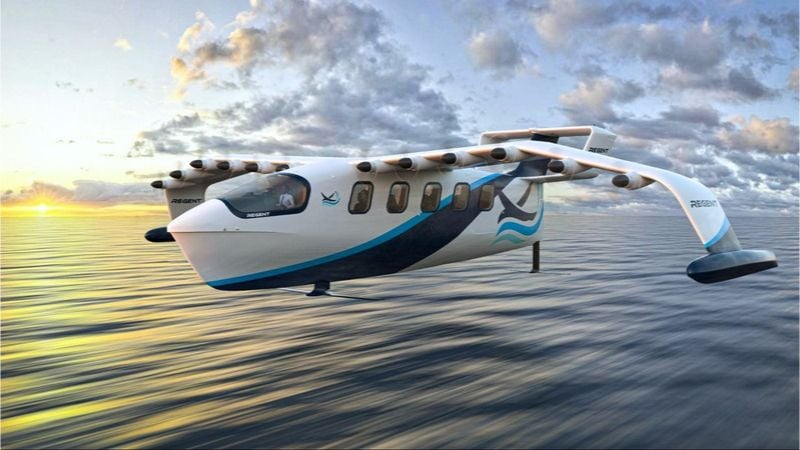
The Viceroy electric glider. Image used courtesy of Regent
The Viceroy Craft
The Viceroy seaglider is designed to glide over coastal waters like a hydrofoil. It extends retractable hydrofoils to lift the hull and eliminate wave drag as it accelerates. When cruising, it skims just above the surface on an aerodynamic air cushion.
The craft is 55 feet long and 18 feet high, with a 65-foot wingspan. Powered by 12 redundant electric motors, it can cruise at 180 mph and operates at 30 dB, quieter than comparable helicopters or turboprops. It has a 180-mile (160 nautical miles) range, but Regent hopes to extend that with next-generation battery technology.
The 12 propellers on the wing’s front edge create the “blown-wing” effect. The forced air creates a pressure difference between the top and bottom of the wing, creating a powerful lift. As a result, the craft can carry heavy loads and take off from the water much faster, using wings that are significantly shorter than normal airplane wings.
Watch the seaglider’s inaugural flight. Video used courtesy of Regent
The Viceroy can carry up to 12 passengers plus two crew (maximum 3,000 lb payload) or 3,500 lbs of cargo. Once docked, it can float like a boat.
Seaglider vs. eVTOLs
The seaglider serves the same purpose and targets the same market as electric vertical take-off and landing aircraft (eVTOLs). Both offer low-emissions transport of passengers or cargo across short distances. However, while eVTOLs can make short inland commutes, the Viceroy and similar craft are confined to coastal areas because they depend on water.
While both are more energy-efficient than helicopters, a WIG craft uses far less battery power than an eVTOL. WIG technology reduces aerodynamic drag, while an eVTOL’s vertical takeoff and hovering activity requires more power.
eVTOLs are also in prototype, testing, and pre-commercial stages. A few developers, such as Joby Aviation and Archer, are running operational pilot and demonstration programs in anticipation of FAA certification.
The Regent Viceroy, however, will not need FAA certification. U.S. and maritime law classify low-altitude WIGs as marine vessels, not aircraft. The U.S. Coast Guard, not the FAA, has jurisdiction.
The Viceroy’s Future
The Viceroy’s inaugural flight coincided with Regent’s official opening of its seaglider manufacturing plant in North Kingstown, Rhode Island. The occasion marked the company’s transition from developing prototypes to full commercial production.
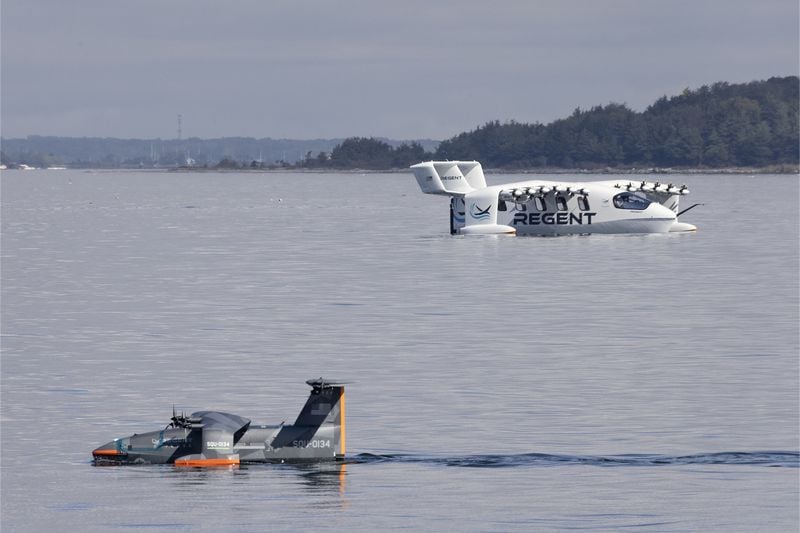
The Viceroy floating on the water after its inaugural flight, accompanied by the Squire Seaglider drone (lower left). Image used courtesy of Regent
The 255,000-square-foot facility sits on Narragansett Bay, making it convenient for ongoing seaglider trials. The building has dedicated spaces for structural assembly, battery installations, and foil and wing installation. The facility is designed to scale production up to 75 Viceroy craft and 300 Squire drone variants annually.
Regent raised $240 million in Series B funding, bringing total funding to $340 million. Lockheed Martin Ventures and Japan Airlines were funding partners. The company has a contract with the U.S. Marine Corps and is pursuing other defense and commercial contracts.