Facebook
 Google
 GitHub
 Linkedin
Ditching the Draft: Heat Pump Uses Water Instead of Air
Researchers claim their water pumps perform better than air pumps.
In the global push for increased sustainability, environmentally friendly alternatives to traditional in-home heating are under development. Residential heating significantly impacts energy consumption. Most heating systems are oil and gas-based, which results in high carbon dioxide and other greenhouse gas emissions.
How heat pumps work. Video used courtesy of New York State Energy Research and Development
Scientists in Edinburgh have created a heating system utilizing water instead of air for heating pumps. The system uses natural water sources, such as rivers and lakes.
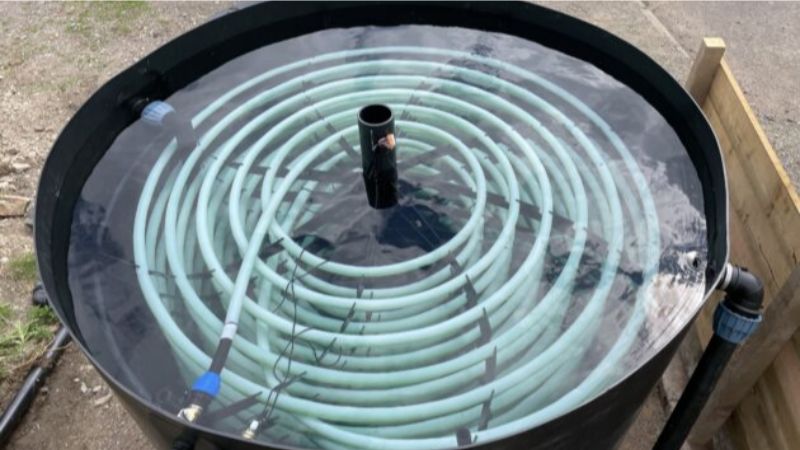
Water-based heating system. Image used courtesy of SeaWarm
Heat Pump Basics
Air-source heat pumps offer an efficient alternative to dual-function refrigeration systems.
These systems use a compressor and two heat-transfer coils, typically copper or aluminum with fins, to enhance thermal exchange. During heating, the outdoor coil extracts warmth from ambient air, vaporizing the refrigerant, which then condenses in the indoor coil to release heat. A reversing valve near the compressor lets the system switch between heating and cooling modes and defrost the outdoor coil in cold weather. However, air source heat pumps struggle in extreme cold, where they experience reduced efficiency and heat output.
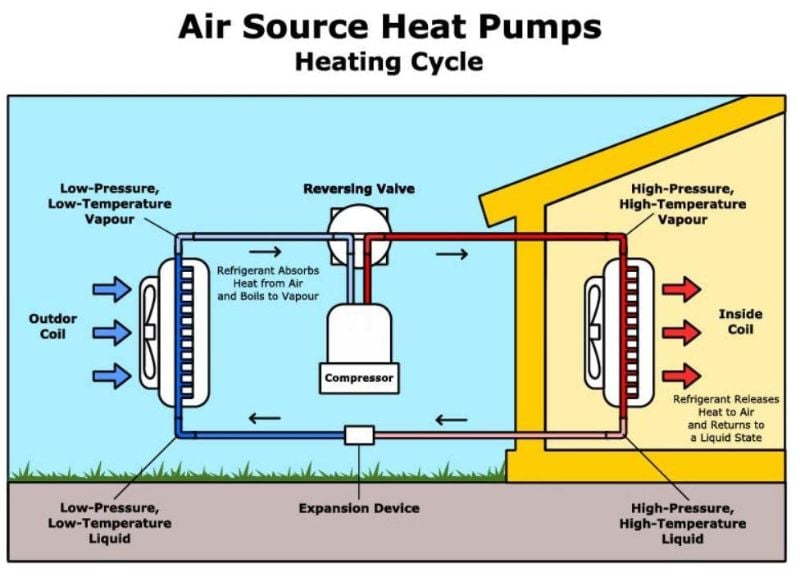
Air source heat pumps. Image used courtesy of the Department of Energy
Another alternative is ground-source heat pumps, which leverage stable underground temperatures for efficient climate control. These systems extract warmth from the earth for winter heating and reverse the summer cooling process, dispersing indoor heat into the ground. Using this thermal energy source and minimal electricity, geothermal pumps offer year-round comfort with remarkable efficiency.
However, ground-source heat pumps can disrupt local ecosystems and biodiversity due to extensive land use and drilling. Their installation also has a high initial carbon footprint and may disturb soil and water tables.
Eco-Friendly Heating Systems
Scientists at a University of Edinburgh spinoff have developed two heating systems, SeaWarm and RiverWarm. These pumps harness water from natural sources, such as seawater, rivers, ponds, and mine water, for home heating.
According to the design team, the system performs more effectively than air pumps because water generally maintains a more stable temperature than outside air. Glycol, a liquid used in anti-freeze, compresses the warmed liquid to heat radiators and water. Once cooled, the glycol recirculates, and the process repeats.

SeaWarm study installation at a naval barracks. Image used courtesy of SeaWarm
According to the researchers, this method delivers 350% to 400% more heat than the electricity required to operate it and matches the efficiency of top air-source heat pumps. Unlike air-source pumps, which struggle in extreme cold, this water-based system can maintain efficiency due to water sources’ consistent temperatures. While more expensive to install than air-source heat pumps, they are still cheaper than ground-source heat pumps overall.
Cleaner Future Ahead
According to the researchers, the pumps are designed for homes and small buildings, particularly in rural and coastal areas. Currently, the technology is being trialed in Scotland.