Facebook
 Google
 GitHub
 Linkedin
Data Modelling Can Maximize Power Grid Performance as EV Charging Grows
The National Renewable Energy Laboratory’s data model, the Transportation Energy & Mobility Pathway Options, helps project power grid demands as they evolve with expanding electric vehicle market conditions. This tool will help engineers develop EV infrastructure and maintain power grid functionality.
As the electric vehicle (EV) market grows, it does so unevenly. Some regions have what is considered an EV boom, while others are now seeing modest growth in EV ownership. The vast disparities and data fluctuations based on area, driver habits, climate, and other variables have made predicting electricity load demand difficult.
The National Renewable Energy Laboratory’s (NREL) dynamic modeling technique can assimilate many data sets to predict grid performance needs. This model is not only comprehensive in scope but is localized to the county level, which no model has done before.
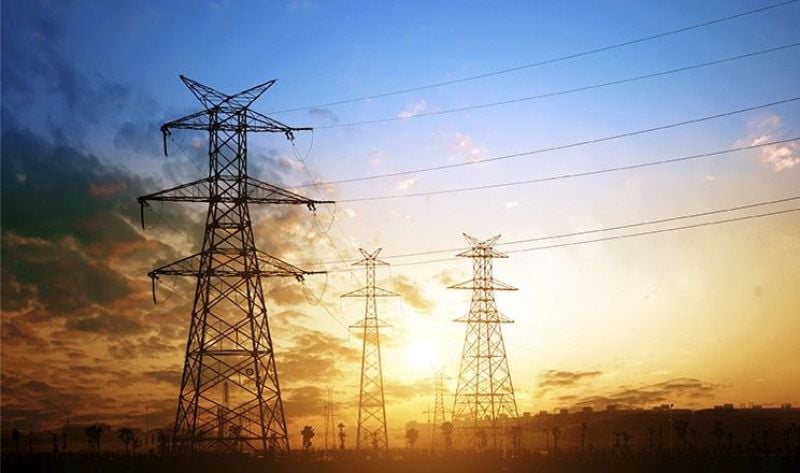
Transmission lines support the power grid. Image used courtesy of the Department of Energy
The model developed by the NREL, the Transportation Energy & Mobility Pathway Options (TEMPO) model, meets two important goals simultaneously. First, it will help engineers understand where the power grid needs to be upgraded and expanded. Secondly, it will help to strategically design EV charging infrastructure to meet power demands and prevent peak utility loads from overwhelming the grid in locations with higher EV use.
The Challenge of Predicting Localized Power Needs
To successfully prepare for EV market infrastructure development, engineers need robust data sets that are highly localized and can account for several factors. Idiosyncratic driver behaviors impact local utility loads, and without accurate data modeling, the stability and resilience of the grid are in jeopardy.
However, it is not feasible to develop such data modeling without access to complex sets of information that account for variables that change dynamically from hour to hour. Some dense urban areas that have fewer drivers despite population density, such as New York City, can complicate how a model attempts to generalize driver needs and impact electricity demand.
In addition, unpredictable temperature impacts are much more severe than many realize. There can be a 50 to 100 percent difference in energy use for the same EV traveling the same distance but in a different climate. With significant energy use disparities, they must be accounted for in any model that can accurately predict stress on the electrical grid.
Addressing Charging Issues With TEMPO
The TEMPO model is an answer to this challenge. It can account for EV load impact in every county in the contiguous United States. TEMPO processes data from sources like the National Household Travel Survey and the Freight Analysis Framework and combines it with various credible statistics to make precise calculations that account for spatial and temporal differences. It also simulates EV charging profiles and uses existing data sets and simulation projections to comprehensively provide insight into exactly where and how much electricity will be needed to support EVs.
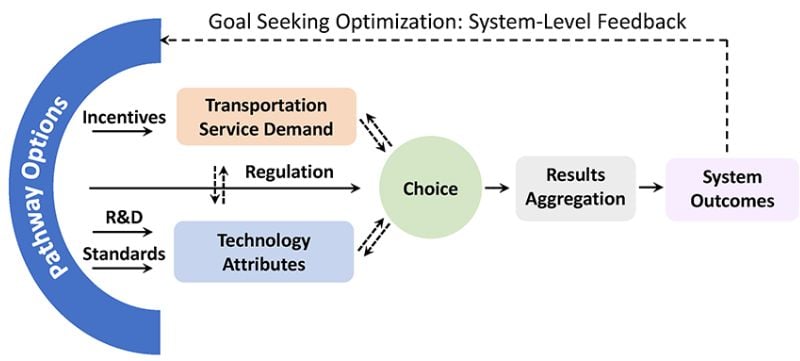
The TEMPO model. Image used courtesy of NREL
Reducing the Need for New Power Plants
The TEMPO model is an important development, not simply because it can provide accurate projections for the power needed to support the EV market but because it can help prevent needless spending on power grid expansion projects.
A research team from MIT recently completed a study and estimated there would need to be an approximate 20 percent increase in power generation capacity to meet EV market needs. Still, they note that with strategic EV charging infrastructure placement, power plant expansion will not be necessary.
The strategic placement of charging stations can prevent the need for grid expansion by maximizing existing utilities and diversifying their use. Building charging stations at places of employment would also be a useful move that can maximize solar power generated during the day so that it does not have to be stored for later use.
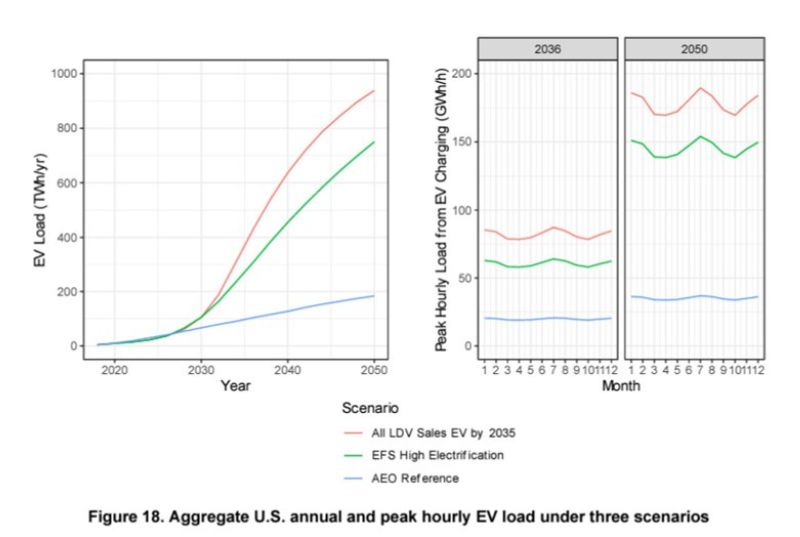
TEMPO can project peak hourly electrical loads into the year 2050. Image used courtesy of the NREL
The main conclusion from this research is that knowing precisely where and when charging stations are needed is the foundation for figuring out how to use existing grid resources efficiently, and the TEMPO model does exactly this. Its ability to map every county’s EV power needs will help engineers manage charging station growth to preserve the current grid without wasting resources to needlessly expand it.