Facebook
 Google
 GitHub
 Linkedin
Bonus Battery Material Found in Rice Waste
Hard carbon in rice hull ash can be upcycled for higher-capacity battery materials.
Burning rice grains’ outer layer can yield an unexpected source of hard carbon materials as inputs for higher-capacity batteries, according to a study in Advanced Sustainable Systems. University of Michigan researchers found that the hard carbon contained in rice hull ash provides nearly double the energy density of standard lithium- or sodium-ion battery anode materials like graphite.
The study also mentioned biomass combustion methods that can transform carbon dioxide captured through photosynthesis into combustible carbon to produce carbon-neutral electricity.
The University of Michigan noted that the study is the first demonstration of making hard carbon from rice hull ash via combustion. This is unlike the standard practice of charring organic precursors—such as agricultural waste and other biomass sources—in 1,200°C temperatures and an inert, oxygen-free environment.
Producing graphite from biomass is carbon-intensive, requiring 2,000-plus °C temperatures and emitting 5-10 tons of CO2 for every ton of graphite. However, most hard carbon production consumes less energy than graphitization reactions.
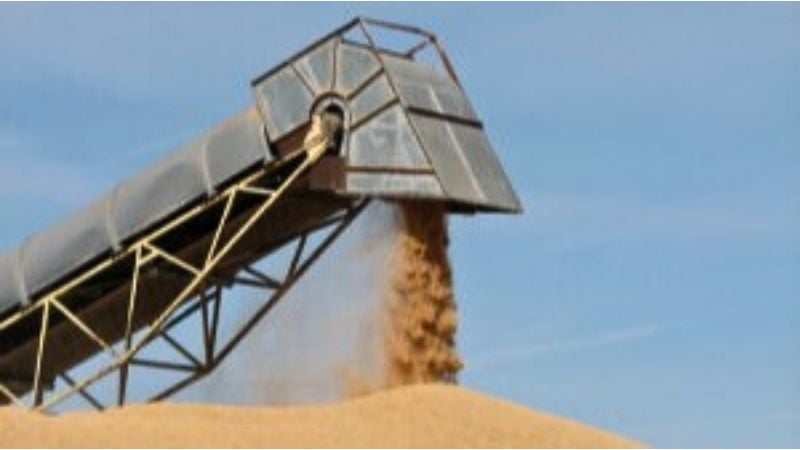
A site in California converts rice hull waste into electricity. Image used courtesy of Wadham Energy
Upcycling Rice Hull Ash
In addition to discovering a way to upcycle hard carbon in rice hulls, the University of Michigan study covers waste-to-energy strategies that generate clean electricity from rice hulls. This power is carbon-neutral because the CO2 released through rice hull burning is the same input the plant previously absorbed from the atmosphere through photosynthesis.
Rice hull combustion generates hundreds of gigawatts annually in the U.S. and produces 150,000 tons of rice hull ash annually, presenting an attractive opportunity to repurpose an often-landfilled byproduct.
Wadham Energy, which runs the world’s largest rice waste-to-energy facility, supplied the ash used in the study. Its biomass plant in the rice-rich Sacramento Valley converts 200,000 tons of rice hulls annually into 26.5 MW of power, enough for 22,000 local homes. The company sells the facility’s 200,000 GWh of annual output to California’s renewable energy market.
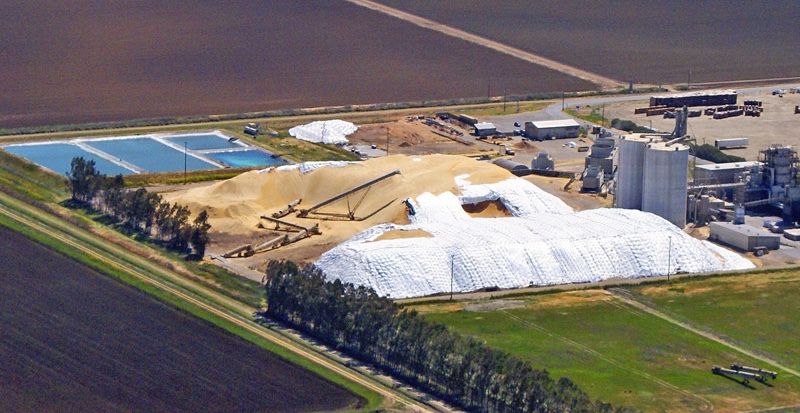
The Wadham Energy plant in California. Image used courtesy of California Biomass Energy Alliance
According to Wadham Energy, the facility incinerates 600 to 700 tons of hulls daily, feeding them into grinders, pulverizing them, and conveying them to a superheated steam generator where burners fire them at 857°C. Heat converts water into high-pressure steam that turns two turbines to yield 30 MW of electricity.
Promising Anode Materials
Mercedes-Benz Research and Development North America partially funded the study. Amid recent export restrictions and anode supply chain volatility, electric vehicle makers are increasingly interested in domestically sourced alternatives to graphite-based battery materials.
The study’s authors mentioned that one generally wouldn’t expect to find hard carbon in rice hull ash. However, the team leveraged their prior research in depolymerizing rice hull ash to remove silica and isolate the carbon. The recycled material can then be used to make solar-grade silicon.
The team employed advanced Raman spectroscopy and scanning transmission electron microscopy to observe molecular-level features. They found stacked graphene in the silica-depleted rice hull ash presented in a porous carbon matrix. Burning the hulls creates silica around the remaining carbon.
They tested the electrochemical performance of the silica-depleted hull ash with various hard carbon contents and assessed the contribution of silicon dioxide in the composites. Thanks to the nanoporous structure, they found superior lithium capacities (700 mAh per gram) in the hull ash-derived hard carbon compared to standard commercial hard carbon (500 mAh per gram) and graphite (370 mAh per gram) in battery anodes.
These findings translate to significantly higher energy density in recycled hard carbon-based battery materials.