Facebook
 Google
 GitHub
 Linkedin
Strategic Moves by Mercedes-Benz, National Grid and Equinor
Developments in energy business news include multi-billion-dollar wind projects, next-gen electric vehicle batteries, and renewable energy pivots.
Several companies have made strategic moves to secure financing, shift priorities, and refine their portfolios. Equinor locked in financing for a large offshore wind project in New York, Mercedes-Benz started testing a lithium-metal solid-state battery, and National Grid sold its renewables business to concentrate on energy networks.
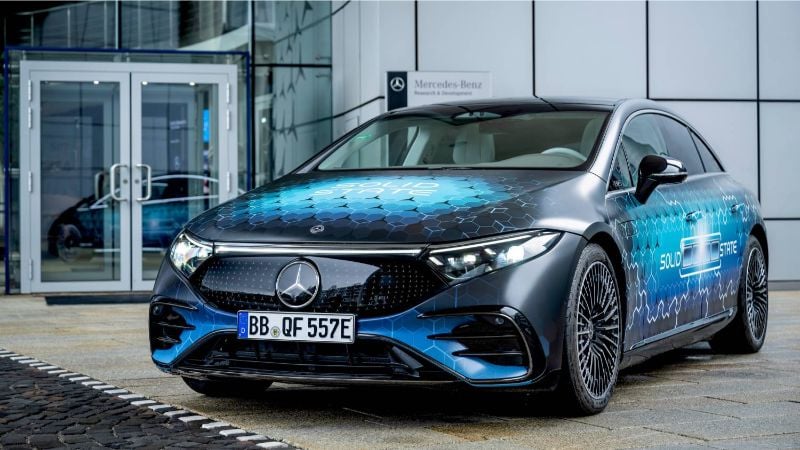
Mercedes-Benz is conducting road tests on a solid-state battery in a modified EQS sedan. Image used courtesy of Mercedes-Benz
NY Offshore Wind Project Lands Financing
Equinor closed a $3 billion financing package for phase one of its Empire Wind project, expected to begin operating in 2027. The 810 MW facility will power 500,000 homes through a 25-year supply arrangement with the New York State Energy Research and Development Authority.
The financing reduces Equinor’s cash needs for the $5 billion project, a price tag that includes the company’s previous capital investments, the cost of redeveloping the South Brooklyn Marine Terminal, and expected tax credits.
The project will be developed in two phases. Empire Wind 1 is already under construction near Long Island, and Empire Wind 2 will add another 1.2 GW of capacity.
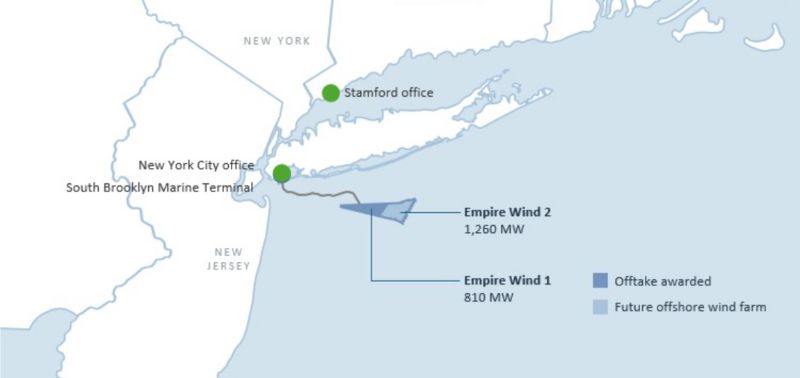
Sites for Empire Wind 1 and 2. Image used courtesy of Empire Wind
According to a February investor presentation, Equinor expects to begin installing Empire Wind 1’s offshore cables and foundations this year and build the turbines and offshore substation in 2026.
The South Brooklyn Marine Terminal is being rebuilt into an operation and maintenance base for Empire 1. It will also host the onshore substation.
Mercedes-Benz Tests Solid-State Battery-Powered EV
Mercedes-Benz’s High Performance Powertrains subsidiary has integrated an industry-first lithium-metal solid-state battery into a modified EQS all-electric sedan. Road tests began in February. Engineers will test the battery’s real-world performance over the next several months.
The prototype is being developed in partnership with Factorial, which delivered lithium-metal solid-state battery cells to Mercedes-Benz last year. The delivery marked the world’s first B sample shipment of solid-state cells to a global EV manufacturer. The pair initially teamed up in 2021.
Solid-state batteries are an increasingly popular alternative to conventional lithium-ion cells. Their use of a solid electrolyte enables lithium metal anodes to boost performance without compromising weight, thus extending the EV’s driving range. Mercedes-Benz claims its technology increases the gravimetric energy density by up to 450 Wh/kilogram.
The prototype unlocked a 25% range gain compared to the unmodified EQS version with the same battery size and weight. A 118 kWh-capacity battery in a standard EQS 450+ offers about 497 miles of range, but the enhancements will support more than 621 miles.
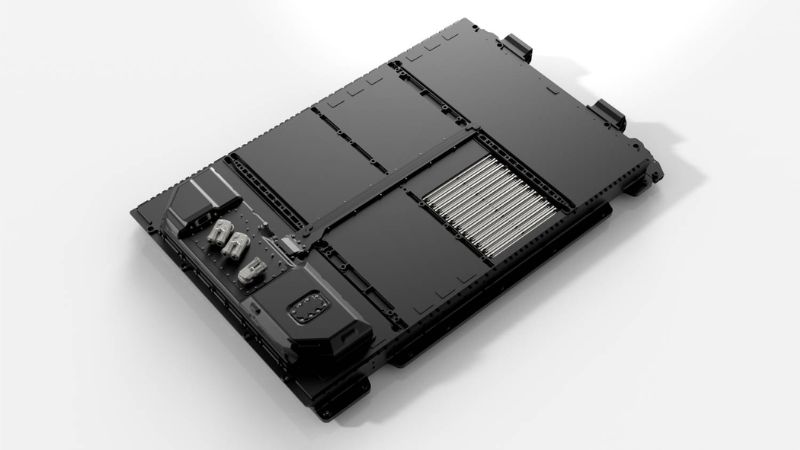
A solid-state battery cell. Image used courtesy of Mercedes-Benz
The battery features a floating cell carrier equipped with pneumatic actuators to support volume changes during charging and discharging. The passive cooling system also provides additional efficiency and weight benefits.
Besides Mercedes-Benz, Factorial is working with other automakers on solid-state batteries, partnering with Stellantis in late 2024.
National Grid Sells Onshore Renewables Business
National Grid has sold its U.S. onshore renewables division to Brookfield Asset Management for $1.7 billion, aligning with a broader pivot to energy network applications. National Grid Renewables US heads the company’s development, construction, and operation of large-scale solar, battery storage, and onshore wind farms nationwide, overseeing 1.8 GW of operational projects and another 1.3 GW in construction.
The pivot is intended to streamline the portfolio to target pure-play networks. National Grid first revealed the shift to network infrastructure in 2024, reasoning that its business is increasingly weighted toward transmission and distribution infrastructure, where it foresees major network growth opportunities.
The company has allocated a five-year £60 billion ($77 billion US) capital investment to support its electricity networks and offshore businesses through 2029. About 52% will be spent in the U.K. and 48% in the U.S.