Facebook
 Google
 GitHub
 Linkedin
Solar + Storage Power Sustainable Vietnam LEGO Factory
The manufacturing plant is LEGO’s sixth facility to run on renewable energy.
While tech leaders like Google and Amazon are touted for powering their facilities and data centers with renewable energy, other industries, such as manufacturing, are quietly making great strides in the energy transition.
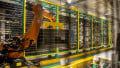
Take a look inside LEGO’s Vietnam factory. Video used courtesy of Firstpost
The LEGO Group’s $1 billion factory in Binh Duong, Vietnam, opened in April 2025 and is the Danish toy company’s sixth factory globally and its most environmentally sustainable to date.

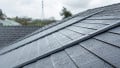
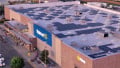
LEGO factory powered by solar panels on the roof. Image courtesy of LEGO
100% Renewable Energy and Clean Manufacturing
At the heart of the factory’s environmental strategy is its commitment to operate entirely on renewable energy by early 2026. The facility is equipped with 12,400 rooftop solar panels, which will supply a significant portion of its electricity needs. To ensure consistent clean energy access even when sunlight is unavailable, the factory will utilize Vietnam’s first large-scale battery storage system, housed in an adjacent energy center. Any remaining energy requirements will be met through power purchase agreements with other clean energy providers and renewable energy certificates until full renewable coverage is achieved.
LEGO’s goal is to reduce the factory’s carbon footprint and set a precedent for other manufacturers in Vietnam, which is rapidly industrializing and aiming for net-zero emissions by 2050. Integrating solar power, battery storage, and direct power purchase agreements demonstrates that large-scale, energy-intensive factories can be both sustainable and profitable.
LEED Certification and Zero Waste Ambitions
The Vietnam factory is the first LEGO site to receive LEED (Leadership in Energy and Environmental Design) Platinum certification for its administrative and play buildings, with other LEGO structures rated LEED Gold. LEED certification, developed by the non-profit U.S. Green Building Council, is a globally recognized standard for green building, covering areas such as energy efficiency, water conservation, and waste management.
In line with LEGO’s global sustainability goals, the factory is designed to achieve zero waste-to-landfill. This involves comprehensive recycling, waste reduction measures, and a shift to more sustainable packaging. Notably, the factory is the first in the LEGO network to exclusively use paper-based pre-pack bags, eliminating single-use plastics from its packaging process.
Reforestation and Biodiversity
To offset the environmental impact of construction, LEGO has committed to planting 50,000 trees near the factory site, double the number of trees removed during building. These native trees are planted in collaboration with local partners, enhancing urban biodiversity, improving air quality, and supporting the health and well-being of nearby communities. Urban tree planting also helps reduce local temperatures and mitigates the effects of short-lived climate pollutants, contributing to broader climate resilience.
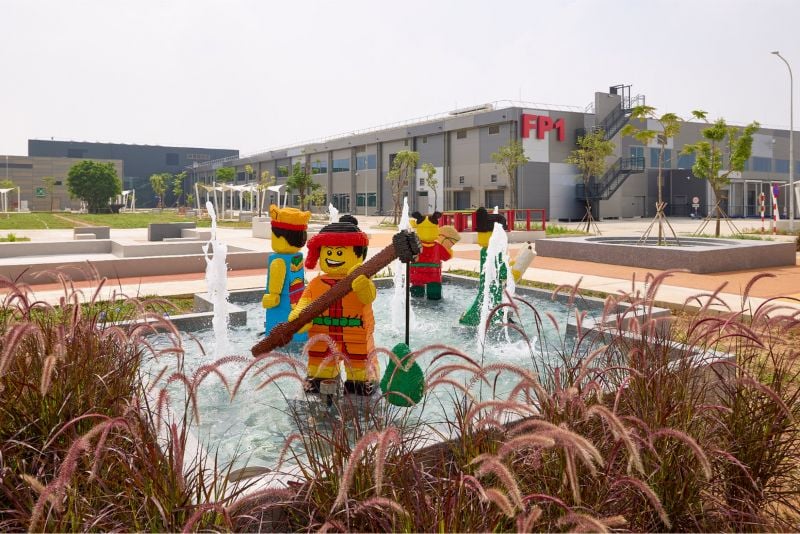
The LEGO factory’s exterior. Image used courtesy of LEGO Group
Community and Educational Impact
Beyond its environmental initiatives, the factory will also be a hub for local community engagement. LEGO’s learning-through-play programs, in partnership with local organizations and NGOs, aim to reach over 60,000 children in Vietnam by the end of 2025. These programs foster creativity, environmental awareness, and STEM skills, empowering the next generation to understand and build a more sustainable future.
LEGO Responsibility
LEGO’s Vietnam factory is more than a production site. It is a model for responsible, sustainable industrial growth. The company was founded by Ole Kirk Kristiansen in Billund, Denmark, in 1932. The LEGO name comes from two Danish words, LEg and GOdt, which translate to “Play Well.” Manufacturing began in 1949.
By 2024, over 1.1 trillion LEGO pieces have been produced worldwide. With a global population of around 8 billion, that’s approximately 140 LEGO bricks for every person on Earth. In recent years, LEGO has produced about 60 billion bricks each year.
By using renewable energy, LEED-certified buildings, zero waste initiatives, reforestation efforts, and community programs, the factory significantly improves the environment both locally and as part of LEGO’s global climate strategy. With its new plant in Vietnam, LEGO is showing that large-scale manufacturing can be aligned with ambitious environmental goals. Perhaps this will inspire other companies and countries to follow their lead.