Facebook
 Google
 GitHub
 Linkedin
Navitas Bets on GaN as the Future of AI Data Center Efficiency
Navitas’ IntelliWeave uses gallium nitride to operate energy-intensive data centers reliably and efficiently.
As artificial intelligence and cloud-based applications evolve, so does the demand for energy-intensive processing power in data centers. These centers must operate reliably and efficiently, often processing enormous datasets and performing complex calculations around the clock. However, with this increased demand comes heightened pressure to reduce energy consumption and carbon footprints, presenting economic and environmental challenges. Power loss, energy inefficiencies, and overheating are persistent issues compromising system reliability, performance, and operating costs.
Navitas is addressing these critical challenges with IntelliWeave, a control technique engineered to meet modern AI data centers' rigorous efficiency and performance demands. This innovation achieves PFC peak efficiencies of up to 99.3% while reducing power losses by 30% compared to current solutions.
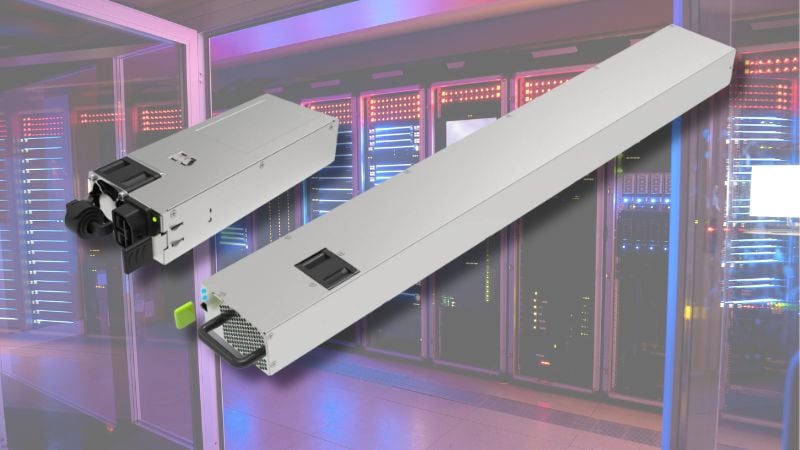
IntelliWeave. Image used courtesy of Navitas
GaN-Powered Speed and Efficiency
Navitas’ digital control technique, IntelliWeave, is designed to enhance the efficiency of next-generation artificial intelligence data center power supplies. This innovative control method ensures precise current sharing, evenly distributing the power load among multiple power supplies, preventing any unit from overburdening.
IntelliWeave features an ultra-fast dynamic response, allowing the system to quickly adjust to changes in power demand and maintain stable operation even with fluctuating loads. Additionally, IntelliWeave minimizes phase error, reducing timing discrepancies between different power supply phases.
A key feature is IntelliWeave’s ability to achieve absolute zero voltage switching. This means power transistors switch at zero voltage, significantly minimizing energy loss and heat generation, which can enhance efficiency. The technique incorporates critical conduction mode (CRM) interleaving totem-pole power factor control (PFC). CRM interleaving involves multiple power converters operating out of phase, reducing ripple current and improving efficiency. The totem pole PFC further enhances power conversion efficiency by reducing losses, resulting in a 30% reduction in power losses compared to traditional continuous conduction mode solutions.
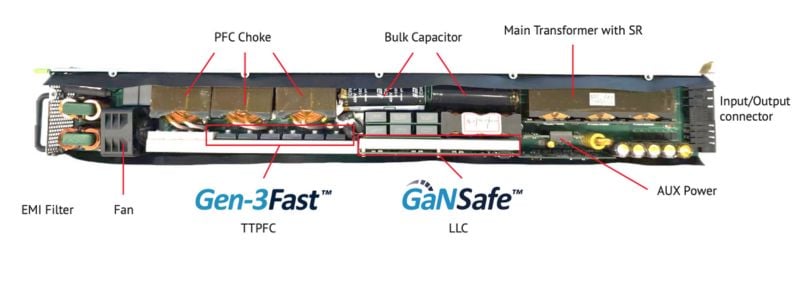
Inside IntelliWeave. Image used courtesy of Navitas
This system's high-power GaNSafe power ICs operate at a high frequency of 500 kHz and utilize gallium nitride (GaN) technology for efficient power conversion. This setup has been proven on a 3.2 kW CrM PFC power supply unit (PSU), achieving a peak efficiency of 99.3%, including losses from the electromagnetic interference filter. This high efficiency means that the PSU converts 99.3% of the input power into useful output power, with only 0.7% lost as heat.
IntelliWeave and Data Centers
IntelliWeave and its advanced digital control techniques are significant developments for several reasons. As the backbone of modern digital infrastructure, data centers support everything from cloud computing to artificial intelligence applications. As these technologies continue to grow, so does the energy demand. By improving the efficiency of power supplies, IntelliWeave helps minimize data centers’ energy consumption, which is crucial for economic and environmental reasons.
Economically, higher efficiency translates to lower operational costs. Data centers require substantial electricity; even minor efficiency improvements can lead to major cost savings over time. This is particularly important as companies strive to manage operational expenses while scaling their digital services.
Reducing energy consumption directly impacts data centers' carbon footprint. With the global push towards sustainability and minimizing greenhouse gas emissions, technologies like IntelliWeave could play a vital role in making data centers more eco-friendly. IntelliWeave contributes to the broader goal of sustainable technology development by minimizing power losses and enhancing efficiency.