Facebook
 Google
 GitHub
 Linkedin
Green Gravity Tests Energy Storage in Australian Mine Shaft
Green Gravity and Wollongong Resources will launch the world’s first gravitational energy storage trial at the Russell Vale mine in New South Wales, Australia.
Green Gravity will partner with Wollongong Resources to trial its gravitational energy storage system in an unused mine shaft in Australia. The storage system will remain off-grid during the trials, with energy storage tests conducted at 150 kW of power and up to 400 metres of depth, providing the foundation for scaled testing.
The companies identified multiple shafts at the Russell Vale site as viable, with the #4 shaft confirmed as the ideal location for the deployment. The feasibility study is in the final stages, targeting large-scale production trials in 2026. Green Gravity’s technology is expected to enable increments of up to 10 MW with durations between 8 and 20 hours per shaft. With eight shafts under its control, Wollongong Resources has the potential to deliver more than 100 MWh of clean energy storage to the greater Sydney metropolitan area.
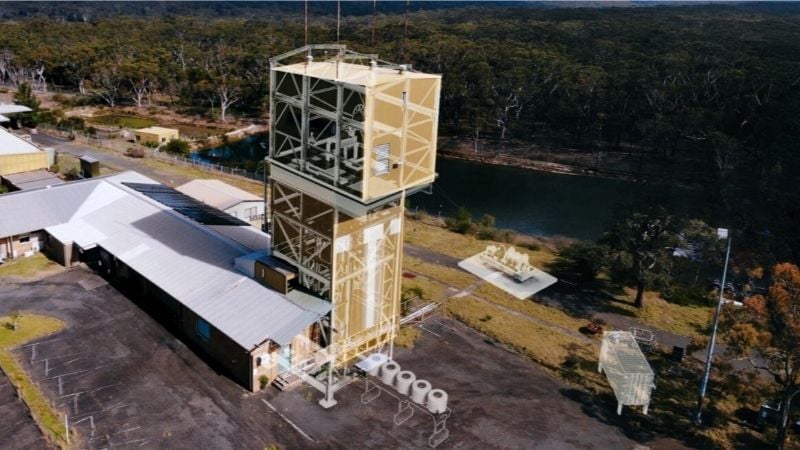
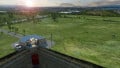
The Russell Vale mine demonstration site. Image used courtesy of Green Gravity
Green Gravity’s Technology
Green Gravity’s storage system captures renewable energy from solar or wind and converts it into gravitational potential energy. The technology lifts heavy weights to the top of disused mine shafts when excess power is available, storing energy for later use. When demand rises, the weights are lowered, driving a generator that produces electricity as needed and feeds it directly to the grid.
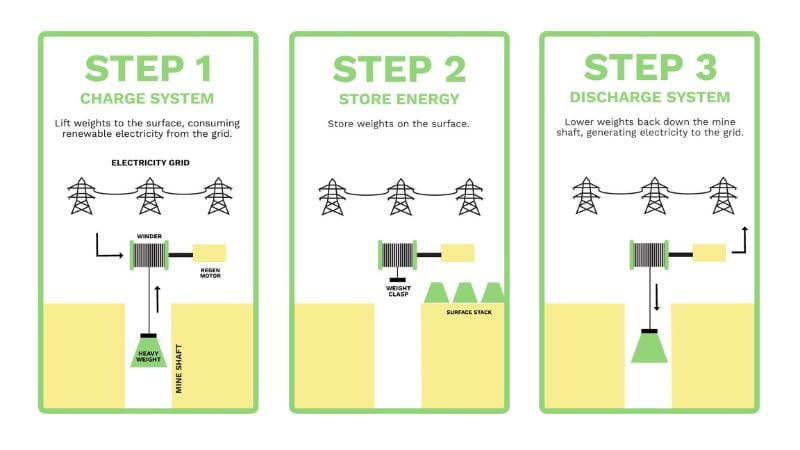
How Green Gravity’s energy storage works. Image used courtesy of Green Gravity
By harnessing gravity and kinetic energy, Green Gravity provides reliable, efficient, and sustainable energy storage. The system helps overcome one of the biggest challenges in renewable energy by offering a dependable way to store and dispatch power when it’s needed most.
Why Old Mines?
Repurposing vertical mine shafts minimizes friction losses compared to inclined systems, improving performance while giving new life to old infrastructure.
Worldwide, hundreds of thousands of abandoned mines pose environmental, economic, and safety risks. Collapsing shafts threaten groundwater quality, while mine closures bring job losses that strain local economies. The Russell Vale #4 mine, selected for the trial, operated as a coal mine until 2023, when it was shut down and placed into care and maintenance.
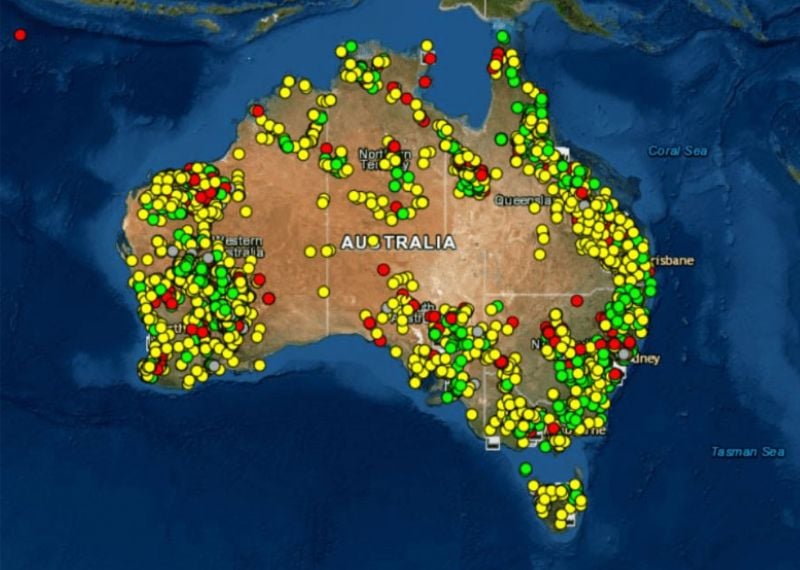
Red dots represent closed or unused mines. Image used courtesy of Green Gravity
Transforming disused shafts into gravitational energy storage systems offers a smart, sustainable use of existing infrastructure. Mine depth provides the vertical drop needed for effective gravitational storage without building massive new structures or excavating further. This reuse saves materials, construction costs, and land disturbance. Reactivating these sites for clean energy can also generate new employment opportunities, giving coal-dependent communities a direct role in the transition to renewables.
It is important, however, to pair this repurposing with environmental remediation. Former coal and mineral extraction sites carry land degradation risks, groundwater contamination, and other hazards. Converting them into energy storage helps address these risks while making productive use of land that might otherwise remain idle and problematic.
Feasibility Study
Securing binding access to the Russell Vale #4 mineshaft marks a major milestone in the global rollout of underground gravitational energy storage. Green Gravity holds key intellectual property for multi-weight gravitational systems capable of delivering exceptionally high energy density. Demonstrating this technology at commercial scale in the Russell Vale #4 shaft will mark the first global trial of its kind and position Green Gravity at the forefront of the emerging energy storage sector.