Facebook
 Google
 GitHub
 Linkedin
Google-Backed Inverters Pave the Way for Smart(er) Grid
CSIRO, Tapestry, and Google Australia have developed a smart inverter prototype to streamline renewable-to-grid communication.
Inverters are essential in modern energy systems; however, the growing integration of renewable sources like solar and wind presents challenges. Traditional inverters are designed for consistent, one-way power flow, meaning they struggle to manage the intermittency and output power fluctuations associated with renewables. Moreover, renewables’ decentralized nature requires devices that can communicate and coordinate to ensure a balanced grid.
In an attempt to solve this problem, CSIRO and Tapestry have developed a smart inverter prototype equipped with various advanced sensors, software, and communication capabilities. The prototype highlights one solution to the challenges renewable energy sources pose to the grid.
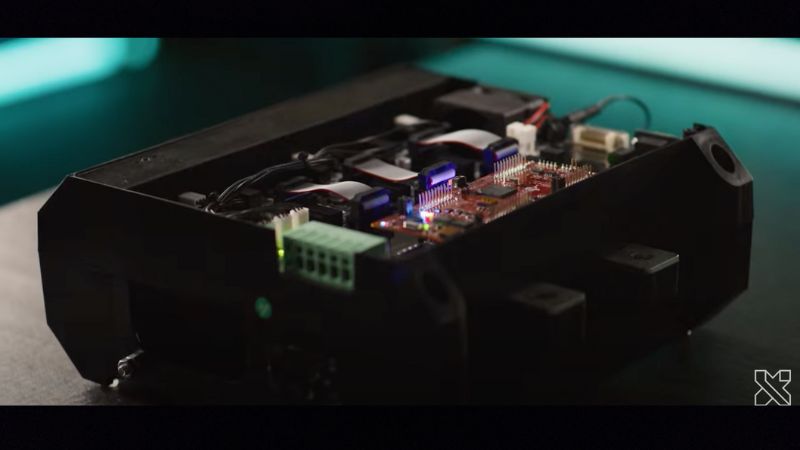
Smart inverter prototype. Image used courtesy of Tapestry
Renewable Challenges
Traditionally, the grid has relied on large, centralized coal or natural gas power plants with synchronous generators. These generators create electricity using rotating magnetized iron turbines surrounded by copper wire. The turbines, in turn, adjust their speed to match changes in supply and demand. For example, during peak demand periods like evenings, when more electricity is used, the grid's frequency briefly decreases, prompting other generators to increase their spinning speed accordingly.
Because these turbines have significant physical inertia, they respond slowly to maintain grid stability. In contrast, renewable sources with inverters provide quick-response electricity generation, capable of adjusting almost instantly.
The inverters are necessary for the clean energy transition as they work to convert direct current (DC) from renewable sources into alternating current (AC) that can be used safely on the power grid. Despite their importance, their high cost, lower efficiency compared to traditional generators, and association with notable blackouts and fires have been challenges to their widespread adoption.
The Smart Inverter Initiative
CSIRO and Tapestry, in collaboration with Google Australia under the Digital Future Initiative, have developed a new smart inverter prototype that could significantly impact grid stability and efficiency.
The smart inverter's design incorporates several innovative features, setting it apart from conventional inverters. First, it utilizes advanced sensors and grid-forming software, enabling communication with other grid-connected devices, such as solar panels and batteries. The inverter allows for improved grid behavior prediction and management for transfer models and simulations to physical inverters. The system also employs sophisticated signal sensing and filtering hardware, enabling more precise voltage and current detection.
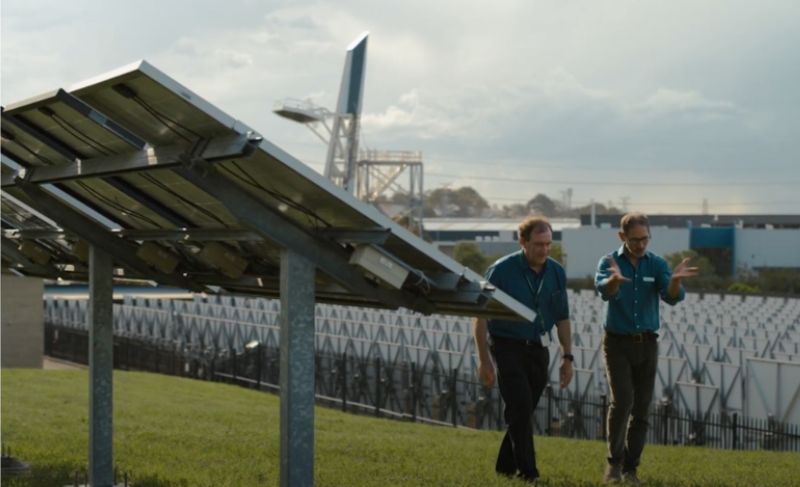
CSIRO scientists working on the smart inverter. Image used courtesy of CSIRO
Despite its impressive capabilities, the smart inverter maintains a remarkably compact form factor comparable in size to a laptop. Yet, it can deliver a substantial 300 kW output, equivalent to the power needed for 20 households. One major enabler of this enhanced power capacity is silicon carbide power electronics instead of traditional silicon solutions. Overall, the prototype is estimated to be 50% more cost-effective without compromising conversion efficiency.
Powering the Future
The collaborative effort between Tapestry, CSIRO, and Google Australia under the Digital Future Initiative is an important step toward a resilient and efficient renewable energy grid. In their next testing phase, Tapestry plans to collaborate with trusted power distribution partners to deploy these advanced inverters in real-world settings and evaluate their performance. Overall, the inverter’s economic advantage and advanced technical capabilities position it as a promising solution for future grid management and renewable energy integration.