
 Facebook
 Google
 GitHub
 Linkedin
GM Patents Dual Charging System for EVs: V2G and Beyond
General Motors has patented a concept for two separate charging ports, allowing easier vehicle-to-grid and vehicle-to-home integration. What are the challenges that lie ahead?
Could electric vehicles from General Motors soon feature dual charging ports? A patent application suggests that the giant automaker might be working on a technology that allows EV owners to charge their vehicles and send electricity to the grid at the same time.
In 2023, GM applied for a patent for a dual charging tech in the U.S., Europe, and other countries. One port is for conventional EV charging, while the other port is bidirectional, allowing it to simultaneously charge another EV or supply electricity to an electric power grid or other electrical device. The U.S. patent was published on December 26, 2024.
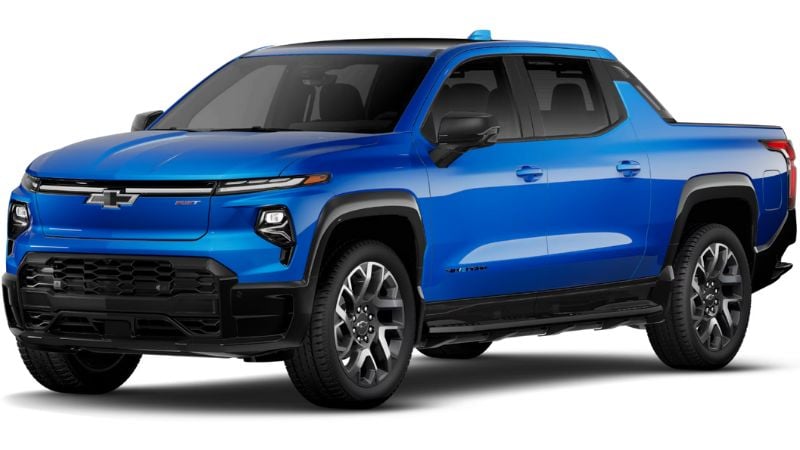
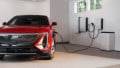
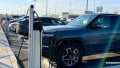
Chevy Silverado EV. Image used courtesy of General Motors
Bidirectional Charging
Bidirectional charging enables EVs to receive and send power, allowing for two-way energy flow between the vehicle and the power grid (V2G), the home (V2H), or other devices or loads (V2L). This requires a specialized bidirectional charger that functions similarly to an inverter, converting grid AC (alternating current) to high-voltage DC (direct current) during charging, and converting the DC power from the EV battery back to AC for use in homes or feeding back to the grid. An energy management system uses advanced communication technologies, such as a controller area network, to control the flow of energy between the EV and the grid, monitoring supply and demand to determine when to charge or discharge the battery.

Bidirectional charging benefits. Image used courtesy of Security and Exchange Commission
This technology is crucial for smart grid integration in several ways. By enabling EVs to draw power from and return surplus energy to the power grid, bidirectional charging helps balance demand and supply during peak and off-peak hours, resulting in a more balanced load and reduced stress on the system and increasing grid stability. This allows for better management of energy among homes, cars, and workplaces, collaborating with smart energy systems to optimize overall energy usage. Bidirectional charging also supports the integration of renewable energy sources by allowing surplus energy generated from sources like solar panels to be stored in EV batteries and used later, decreasing reliance on large battery energy storage systems for the grid.
Two Better Than One
Dual charging ports on EVs have been used before. The Porsche Taycan (and the related Audi e-tron GT), for example, has an AC charging port on the driver’s side and a combined AC and DC fast charging charging port on the passenger's side. The Porsche design offers flexibility in charging options and parking orientation, but it does not allow for simultaneous charging from both ports; only one port can be active at any time. The DC fast charging capability is only available on the passenger side port.
_.jpg)
Illustration of dual charging from GM’s patent (U.S. patent number 20240424943). Image used courtesy of U.S. Patent Office
The General Motors dual charging port patent describes a system enabling EV charging from one port while simultaneously charging another vehicle, powering an external power device, or returning energy to the grid through the second bidirectional port. The second port can also be used for ordinary charging to enhance flexibility when visiting a public charging station. An onboard integrated power-management system controls each of the two ports and their charging and discharging functions and manages V2G, V2H, and V2L interactions.
Although GM’s patent was recently granted, the company has not indicated that it plans to install dual charging plugs in its production EVs anytime soon.
Dual Charging Challenges
Bidirectional charging faces several significant technical challenges not addressed in the GM patent. Managing two-way power flow could be difficult. The current grid is designed for one-way power flow, and power flowing in both directions simultaneously would require upgrades to grid management systems for real-time monitoring and control of bidirectional power flow from numerous EVs. In addition, fluctuations in voltage and frequency could damage equipment and disrupt grid stability.
Advanced inverters and power electronics will be needed to ensure consistent and safe power flow. Effective communication between EVs, chargers, and the grid is essential for safe and efficient operation. This will necessitate upgrades to communication infrastructure to ensure reliable data exchange and control. At present, EVs are not compatible with bidirectional charging, and ensuring compatibility between EVs, chargers, and home energy management systems will present challenges. The additional charging and discharging cycles in bidirectional charging may potentially accelerate battery degradation, which needs to be mitigated with improved battery control systems.
Addressing these technical challenges will require significant investment in grid modernization, standardization of communication protocols, and continued innovation in charger and battery technology. As the technology advances, bidirectional charging is expected to play a significant role in building a robust and sustainable energy ecosystem, optimizing the use of EVs to assist in the transition to greener energy sources.
GM’s dual charging system patent is a game-changer for EV infrastructure, especially with its V2G capabilities. As automakers innovate, securing strong IP protection is crucial to maintaining a competitive edge in emerging technologies. The role of patents in driving innovation is evident, and it will be interesting to see how such advancements shape the future of sustainable mobility.