Facebook
 Google
 GitHub
 Linkedin
Smart, Fast Charging and More: 4 Innovations for EVs
If electric vehicles are the future, EV charging infrastructure must improve. Here are the latest innovations.
While EV charging infrastructure lags, researchers and developers are responding by creating solutions to charging times, range, cyber security, and grid load. Innovations include smart chargers, fast-charging batteries, and more accurate testing equipment.
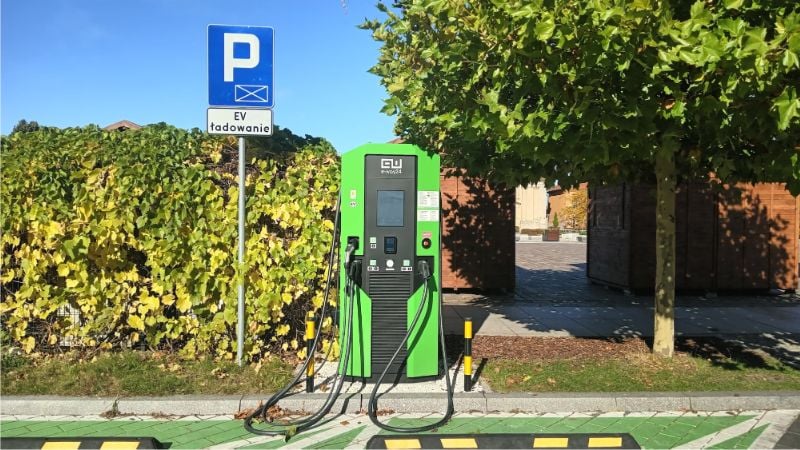
EV charging station. Image used courtesy of Unsplash
1. Smart Chargers
EVs significantly reduce environmental impacts by reducing emissions. However, local grids often need help handling a community of EV drivers using public and home chargers. Experts must also consider the power source. Sustainability may come into question if the origin is fossil fuels.
Smart chargers could be a pragmatic solution to EV charger concerns. With this technology, artificial intelligence takes over charging responsibilities. A hallmark feature of smart chargers is powering vehicles during off-peak hours. Daytime energy usage is typically higher, so these systems charge at night when lower demand exists.
Georgia Institute of Technology researchers have pioneered a smart charging system for modern electric mechanisms. They aimed to help grid operators proactively deal with the rising EV volume. Advanced algorithms evenly distribute the charging time to minimize grid strain and benefit customers. This technique shaved power draw during peak times.
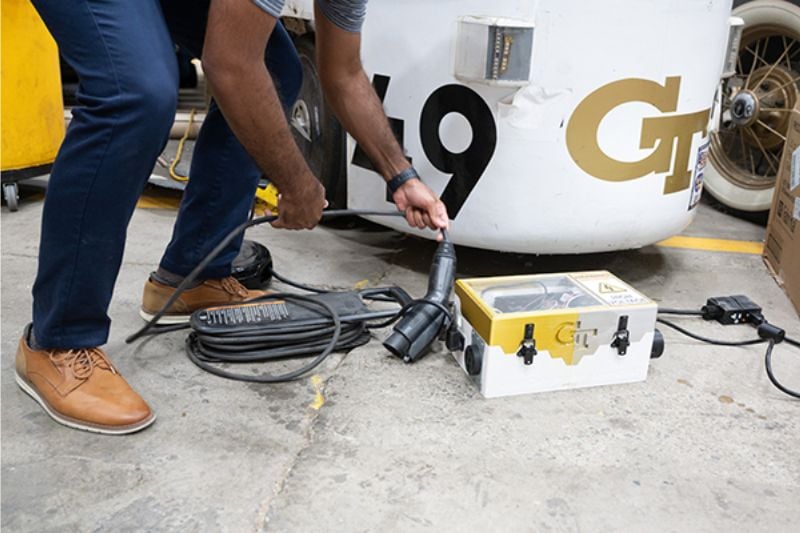
Smart charger prototype. Image used courtesy of Georgia Tech
With the smart charger, EV owners don’t have to monitor their charger’s peaks and valleys. Instead, the researchers’ algorithm determined when the charging occurred. The charger doesn’t need vehicle-to-everything communication. Researchers said random timing and predictive analytics distribute the load without raising costs.
2. Power Meters
The Federal Highway Administration says the U.S. has over 192,000 publicly available chargers. With this growing infrastructure, each charger must be accurate for each user and the company.
Fuel pumps and charging stations rely on advanced calibration systems to ensure each machine starts at zero. Otherwise, they could violate state and federal regulations in the U.S. and worldwide. Yokogawa Electric’s Test and Measurement Corporation has introduced power meters to aid EV charger accuracy. Starting with the WT3000E, the Japanese brand has regulated machine electrical performance.
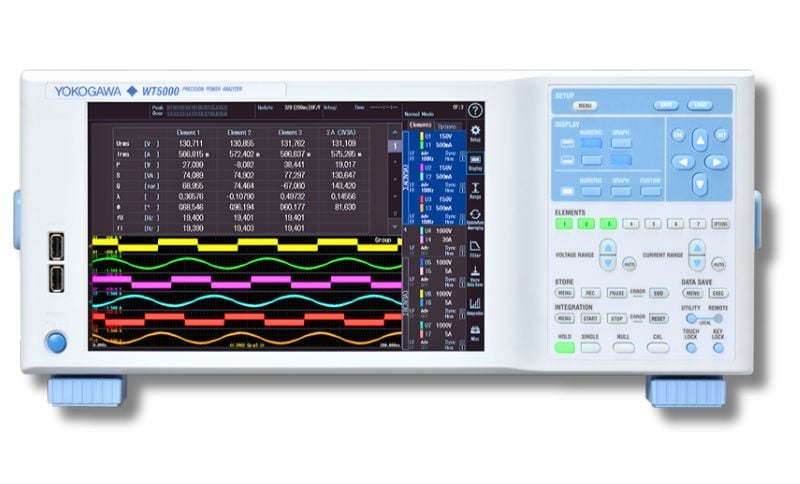
WT5000 EV charger power analyzer. Image used courtesy of Yokogawa Electric
Yokogawa Electric used the WT3000E to comply with Germany’s Measurement and Calibration Act and other European Union regulations. It discontinued the product in 2021 and has since used the WT5000. With this machine, electrical engineers have a ±0.03% accuracy for the first six months. After a year, these professionals should multiply the reading by 1.5.
These Yokogawa machines accurately depict the energy supply and consumption. In addition to the meters, Yokogawa developed Raspberry Pi-based software to test devices. Germany, other EU members, and EV-heavy countries are expanding the WT5000’s presence nationwide to assist EV chargers.
3. Charging Reliability and Security
Accurate meters are one part of a larger issue surrounding EV chargers—their reliability. If stations are down, drivers could become stranded without other reliable ports nearby. Overcrowding could also cause issues. Irdeto and Pionix have partnered to enhance charging security and reliability, thus increasing uptime and user-friendliness.
The focus is simplifying certificate provisioning service protocols for EVs, making the operators’ jobs easier. Their strategies included securing authentication and reducing the interaction between drivers and the machine. With better connections, EV chargers can be as simple as plugging into and out of each car. Among the most advanced technologies in this concept are Irdeto’s CrossCharge PKI and the Pionix Basecamp.
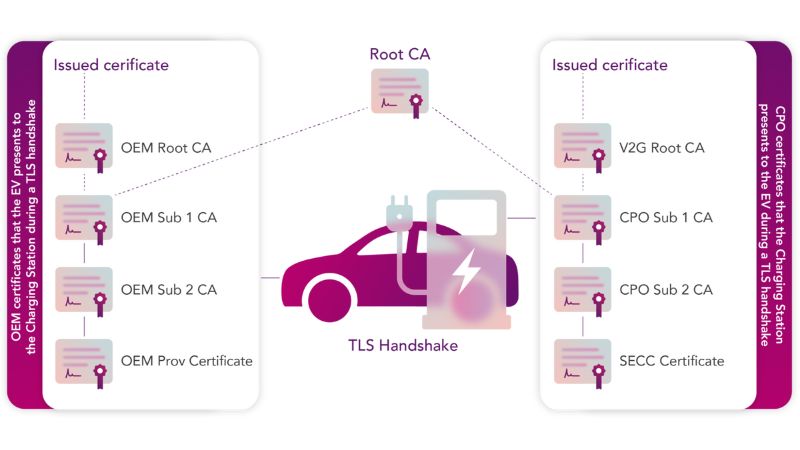
CrossCharge PKI. Image used courtesy of Irdeto
The partnership is handy for original equipment manufacturers testing their charging stations. With Irdeto and Pionix technologies, the manufacturers can perform quality control better and accelerate charger rollout. The U.S. requires organizations to comply with the National Electric Vehicle Infrastructure guidelines—therefore, streamlined certificate management and vehicle communication are essential.
Compliance is also critical when considering cybersecurity concerns. With Irdeto’s digital security infrastructure, certificate management is more manageable. EVs are susceptible to outside threats because of their increased connectivity. Drivers must enter payment information and other sensitive details during their transactions, so Irdeto’s CrossCharge uses cryptographic keys to heighten security.
4. Fast-Charging Batteries
The supply and demand for EVs could outpace new charger construction. Alleviating this concern means research and development must prioritize energy-dense, high-capacity batteries. With these devices, drivers stop less frequently at stations and can stay on the road longer. Amprius technology has recently proven effective.
The California-based nanotechnology firm has created A-Sample EV batteries with 360 Wh/kg at the product’s initial use. Once the battery reaches its end of life, the device still exceeds 275 Wh/kg. The organization recently announced its shipment of batteries to the United States Advanced Battery Consortium (USABC) for further examination and implementation.

Silicon anode batteries. Image used courtesy of Amprius
With these batteries, charging times can significantly decrease for EV owners. Amprius says the A-Sample devices can charge to 90% in only 15 minutes. This achievement exceeds the USABC’s current standard of 80% charge in the same span. The brand says its goal is 1,000 cycles, thus giving EV owners a few years of reliable charging. It started working with the USABC in 2022, so this innovation bodes well for 2025 and beyond.
This Amprius innovation is significant because of its weight. Larger batteries with higher ranges add weight to the EV, causing it to use more energy to move. With a lightweight, energy-dense battery, EVs can optimize their range. Lighter batteries like Amprius devices are also vital to other aspects of EV performance, such as acceleration and handling.
Improving EV Charging and Critical Infrastructure
EVs are the automotive industry’s future, so improving infrastructure is vital. Automakers, universities, and research institutions are improving the landscape to make charging easier for EV owners and operators. With smart chargers, security tactics, accurate meters, and denser batteries, electric cars are more accessible to the public.