Facebook
 Google
 GitHub
 Linkedin
From Scrap to Cathodes: Recycling Turns Trash into Treasure for EVs
The Ultium Cells, Redwood effort aims to facilitate a rapid and sustainable shift toward electric vehicles and a clean energy economy.
As battery usage surges, concerns about environmental impacts and resource scarcity have intensified. Recycling batteries is essential to mitigate these challenges, as it enables the recovery of valuable materials and reduces raw material extraction. Additionally, battery recycling helps prevent hazardous waste accumulation in landfills and promotes the sustainable utilization of finite resources.
Redwood has joined with Ultium Cells in a sustainability effort to recycle battery materials from end-of-life batteries. The collaboration will refine scrap battery parts for manufacturing anodes and cathodes.
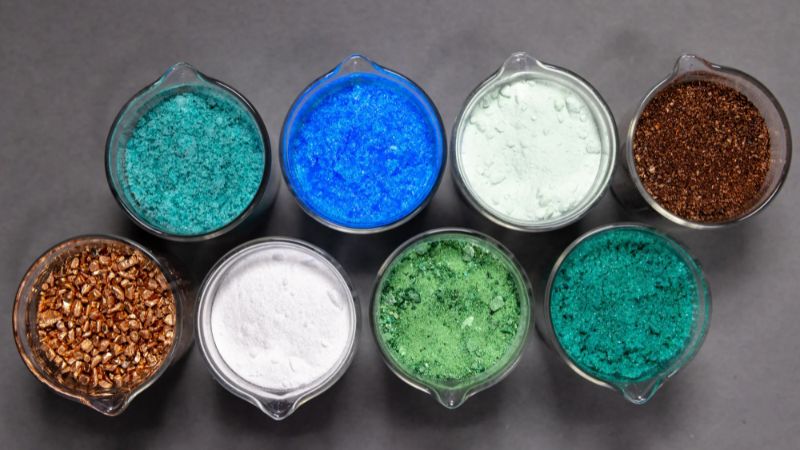
Recycled battery materials. Image used courtesy of Redwood
Why Recycle Batteries?
Batteries pose serious environmental risks at the beginning and end of their useful lives.
Starting from scratch is unsustainable when producing new batteries. Most modern lithium-ion batteries require metals like nickel and cadmium and chemicals like lithium and sulfuric acid, which are finite and costly to extract from the earth. Significant waste arises in lithium-ion battery production, particularly during coating. Defects like pinholes, inclusions, and edge trimming result in the rejection of around 10% of coated foils as unusable.
When improperly disposed of, batteries leak chemicals and heavy metals, contaminating soil and water and posing threats to ecosystems and human health.
How Recycling Works
Recycling offers a solution that conserves resources, mitigates pollution, and curbs hazardous waste buildup in landfills.
The initial stage of lithium-ion battery recycling involves collecting and sorting based on chemistry and physical attributes. Next, batteries undergo processing to extract valuable materials, with methods varying according to battery type and required material recovery. Common techniques encompass mechanical crushing, hydrometallurgical processes, and pyrometallurgical processes.
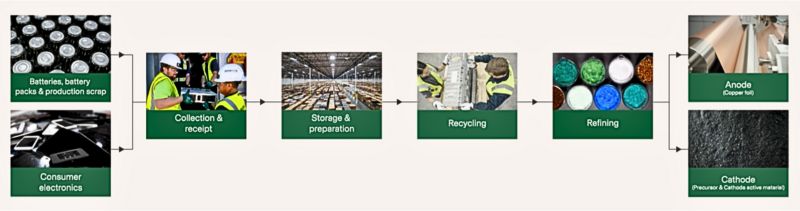
Redwood’s recycling process. Image used courtesy of Redwood
Hydrometallurgical processes utilize chemicals to dissolve battery metals, commonly employed for lithium-rich batteries like those in EVs. The resulting solution undergoes purification, with metal recovery facilitated by precipitation, ion exchange, or electrochemical processes. In contrast, pyrometallurgical processes utilize high temperatures to melt and segregate battery metals, which are preferred for batteries with lower metal content. The molten metal produced can be cast into ingots or subjected to further refinement for additional metal recovery.
Turning Waste Into Opportunity
Redwood and Ultium Cells’ initiative will utilize recycling production scrap from Ultium's facilities in Ohio and Tennessee, encompassing cathode and anode materials and cell scrap.
Ultium Cells' facilities boast a combined annual battery cell production capacity exceeding 80 GWh, supplying the majority of scrap material for Redwood's recycling processes. Redwood's hydrometallurgy facility, the first in the U.S. in a decade, recycles battery scrap into raw nickel and cobalt and serves as a commercial-scale lithium source.
Redwood's exclusive reductive calcination technology operates solely on the residual energy within end-of-life batteries, eliminating fossil fuel as an energy source while processing. Moreover, reductive calcination fully extracts nickel, cobalt, graphite, and lithium without forming alloys or slag waste, enhancing efficiency and reducing environmental impact.
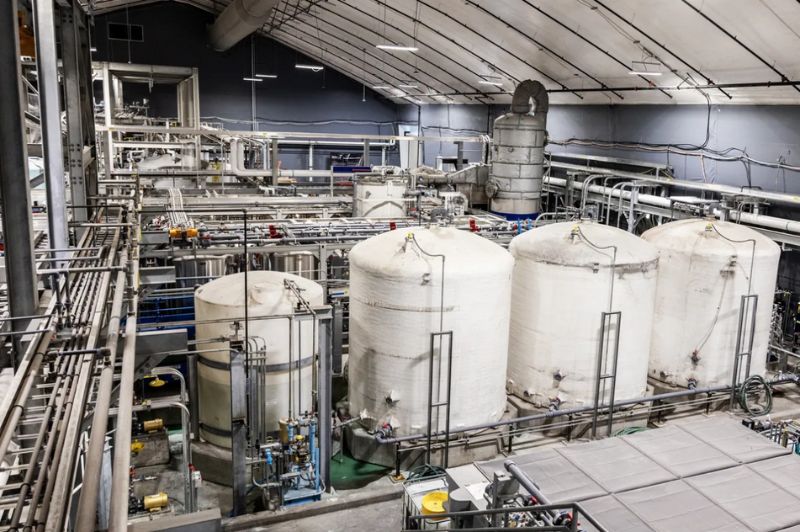
Redwood’s calcining facility. Image courtesy of Redwood
Stanford University research indicates that Redwood's process emits at least 40% fewer emissions than other recyclers. Moreover, their facility, scalable to process over 40,000 metric tons annually, was built and activated in less than one-fourth the time required for traditional mining projects. Their exclusive hydrometallurgy method substantially boosts resource recovery, effectively retrieving 95% of lithium from scrap battery materials. The purified nickel, lithium, and other metals are further processed into intermediates or transformed into chemicals to manufacture high-quality cathode active materials.
Driving Toward Sustainability
Redwood sets new benchmarks in resource efficiency, emitting 70% less carbon dioxide and requiring 80% less water than traditional methods of processing mined ore into battery-grade materials. The Department of Energy's Loan Programs Office supports Ultium Cells and Redwood's collaborative efforts. Redwood has secured contracts with most of North America's battery cell manufacturers.
Since operations began less than two years ago, Redwood’s campus has processed 30,000 tons of end-of-life batteries and production scrap annually. By the end of 2024, its existing equipment is poised to double capacity, reaching 60,000 tons (15 GWh).