Facebook
 Google
 GitHub
 Linkedin
EVs Expand With GaNPower and Next-Gen Batteries
Advancements in electric vehicles include GaN power devices, heavy-duty truck manufacturing, and next-generation lithium-sulfur batteries.
Transitioning to electric vehicles has challenged the automotive and energy industries significantly. As the demand for sustainable transportation increases, manufacturers must optimize EV powertrains while balancing efficiency and cost. At the same time, battery technologies and production methods must evolve to meet performance and scalability goals. These interconnected demands call for innovation in power electronics, manufacturing, and battery development.
Collaborations between semiconductor and automotive manufacturers are pushing the boundaries of power device efficiency. Investments in domestic production facilities are laying the groundwork for more resilient supply chains. Meanwhile, alternative battery chemistries promise to make EVs more affordable and accessible in the coming decade.
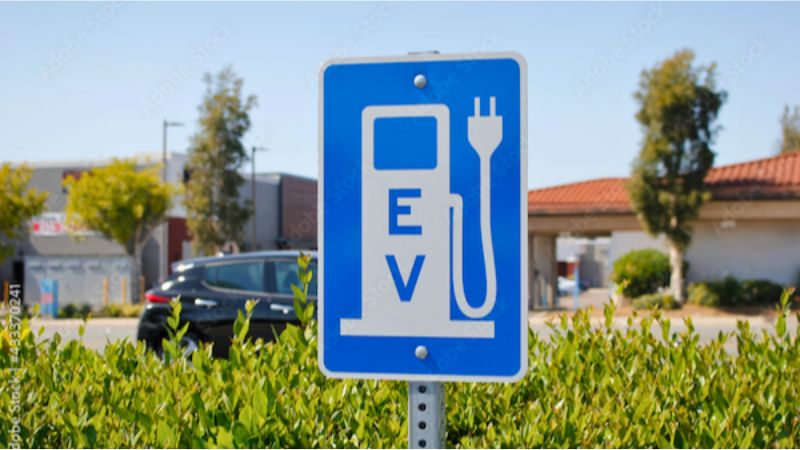
EV charging location. Image used courtesy of Adobe Stock
ROHM and TSMC Collaboration
ROHM and TSMC will partner to develop and produce gallium nitride (GaN) power devices for EV applications. GaN’s superior high-voltage and high-frequency properties over traditional silicon make it ideal for applications such as onboard chargers and inverters. By integrating ROHM’s device development expertise with TSMC’s GaN-on-silicon process technology, the collaboration aims to enhance energy efficiency and system miniaturization in EV power electronics.
Adopting GaN power devices has already shown promise in consumer electronics, such as fast chargers, and this partnership seeks to extend these benefits to the automotive industry. With the EcoGaN series, ROHM has demonstrated the potential of GaN technology in reducing energy consumption and enabling compact designs. Combining these advancements with TSMC’s manufacturing capabilities, the partnership could meet the growing demand for reliable and efficient power solutions in electronic vehicles.
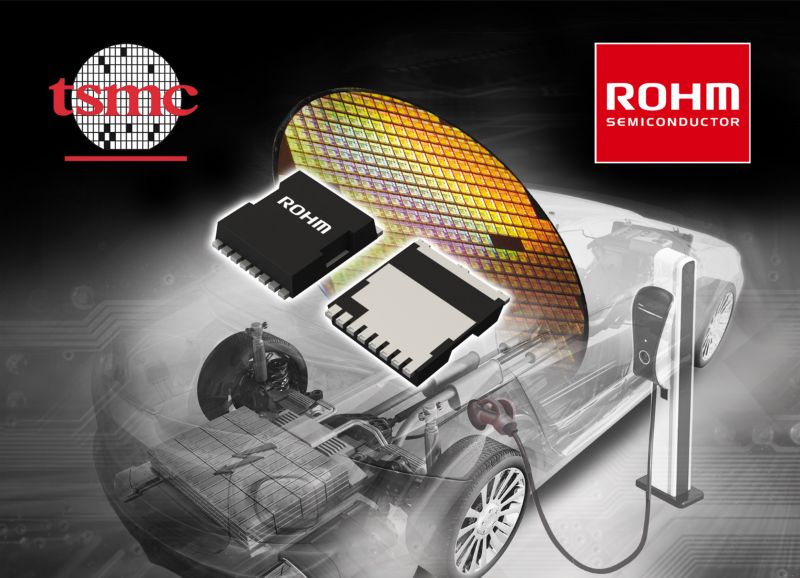
GaN power devices used in an EV. Image used courtesy of ROHM
Daimler Truck North America Expansion
Daimler Truck North America is investing $285 million to expand its Detroit Diesel manufacturing facility in Michigan. This initiative focuses on producing components for internal combustion engines and zero-emission vehicles. The expansion is expected to create over 400 jobs and strengthen the company’s manufacturing footprint in North America.
This project also highlights the evolving role of traditional manufacturing plants in supporting the transition to cleaner technologies. By diversifying its product offerings, Detroit Diesel addresses the challenges of medium- and heavy-duty commercial vehicles, such as performance reliability and adaptability across varying terrains. State-supported incentives, including grants and tax abatements, further enable this shift, ensuring long-term stability for the workforce and the region’s economy.
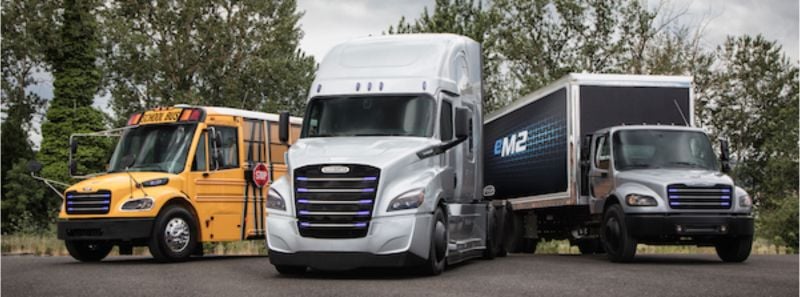
Daimler Truck’s electric commercial vehicles. Image courtesy of Daimler Truck
Stellantis and Zeta Energy Partner
Stellantis has partnered with Zeta Energy to develop lithium-sulfur (Li-S) battery technology to reduce EV costs. Unlike conventional lithium-ion batteries, Li-S batteries eliminate the need for expensive materials such as nickel and cobalt. This transition significantly lowers production costs. Their lightweight design and comparable energy density could lead to lighter battery packs with improved range and performance.
The collaboration emphasizes sustainability and scalability. By leveraging a domestic supply chain, Stellantis and Zeta aim to simplify manufacturing and reduce dependence on resource-intensive materials. Although Li-S technology remains in the developmental stage, it could reduce battery costs by half the price per kilowatt hour and increase fast-charging speeds by 50%. The technology could make EVs more accessible by 2030.
Improvements Across the Automotive Sector
Advancing EV technology requires a broad and collaborative effort across the automotive sector. By enhancing power devices with GaN technology, scaling manufacturing capabilities, and developing next-generation batteries, these initiatives are paving the way for more sustainable and affordable transportation solutions.