Facebook
 Google
 GitHub
 Linkedin
Audi EV Charging Simulator: Testing the Future
Audi’s power grid simulator allows engineers to optimize electric vehicle charging to increase efficiency, ease grid strain, and reduce costs.
Audi has introduced an electric vehicle charging simulator to test the impacts of EV charging on a simulated power grid. The first of its kind, the simulator allows research and development teams to optimize EV charging for customers worldwide. The simulator can be configured to mimic grid conditions in various countries.
German engineering firm Bosch Rexroth developed the simulator in collaboration with partner company Schmidbaur, which performed the simulator’s installation at Audi’s electric charging test center in Ingolstadt, Germany.
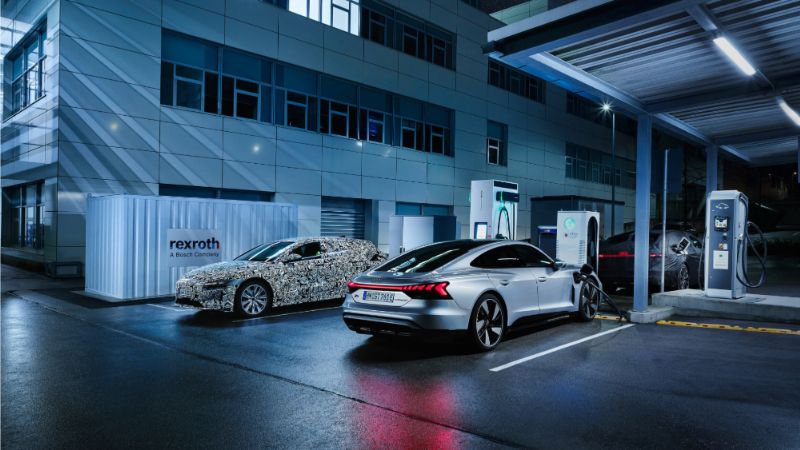
Concept of Audi’s EV charging simulator. Image used courtesy of Audi
Audi’s Flexible Grid Simulator
The test center features charging stations from various countries and manufacturers. These stations allow Audi to test and charge electric vehicles ranging from China to the United States, replicating the different configurations, voltages, and frequencies of global power grids.
Devices in North America are typically designed to accommodate 120 V and 60 Hz, while European devices are usually made for 230 V and 50 Hz. This difference means a standard EV charging station in North America is incompatible with a European electric vehicle. Audi’s grid simulator’s output power is 500 kW, offering between 100 and 540 V and 40 and 65 Hz. It also supports single-phase to three-phase and split-phase networks.
The Benefits of Audi’s Power Grid Simulator
With the information gained from testing EVs on various charging stations in the grid simulator, Audi experts can adjust a vehicle’s software for better speed, efficiency, and reliability. Testing teams can improve the charging performance of electric Audi vehicles worldwide.
The simulator is cost-effective and saves time since it eliminates the need to test abroad. Before, engineers would have to travel and stay in the country for a few days to test EV charging capability on the local grid. Audi’s testing in Ingolstadt allows engineers to develop grid-optimized EVs without traveling internationally to conduct research.
The grid simulator benefits EV drivers worldwide and saves Audi significant amounts of money. Its power grid simulator will also help engineers develop grid-optimized EVs that work in various countries.
Grid-Optimized EVs
In theory, grid-optimized charging can increase each vehicle’s charging time since this method must navigate the electrical load EVs place on a grid. However, those operating on a Level 2 charger do not typically need their entire downtime—from arriving home to departing the following day—to charge.
Smart meter gateways (SMGW) are at the heart of grid-optimized charging. They create a secure data connection between a house and the grid operator. This communication triangle between the SMGW, a house, and an electric vehicle allows the car’s charging capacity to adjust while ensuring a full charge when needed.
How Grid-Optimized EVs Work
Grid-optimized EVs are equipped with smart charging software using algorithms that analyze present grid conditions, electricity prices, and EV owners’ preferences to decide the most efficient charging schedule.
These EVs communicate with the power grid to obtain current demand and cost information. Based on this analysis, they can then adjust their charging.
Grid-optimized EVs adjust in relation to the power grid, typically by moving their charging time to off-peak hours. This helps decrease the grid’s labor by distributing electricity demand from EVs more evenly throughout the day.
The Benefits of Grid-Optimized EVs
Grid-optimized EVs build on the benefits of standard EVs. EVs transform electrical energy into mechanical movement using batteries, which strategically hold onto and release electricity when needed. Because batteries store a lower amount of energy compared to fossil fuels, EVs have a limited range. Grid-optimized EVs work in the same fundamental way but have several advantages.
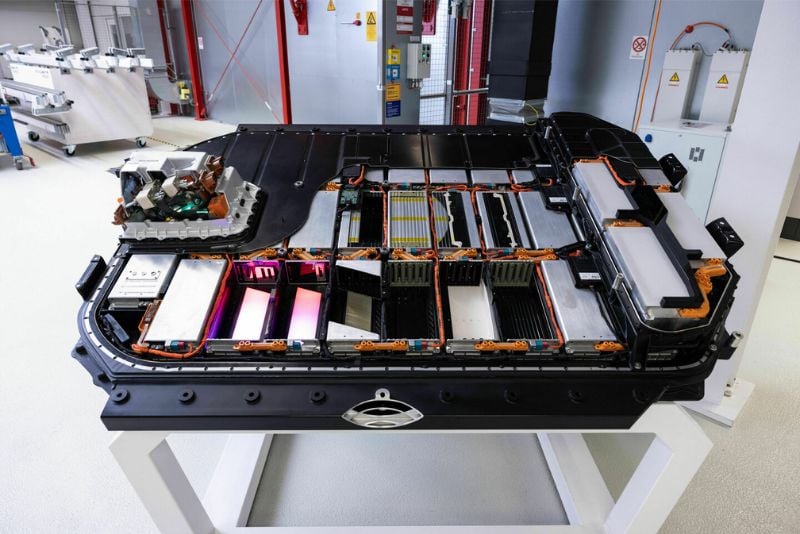
Audi battery testing. Image used courtesy of Audi
Save Drivers Money
Grid-optimized charging can reduce costs for EV drivers by allowing them to charge their cars at various locations, from home to the office. It also saves money by prioritizing vehicle charging when electricity is less in demand and cheaper.
Decrease Grid Overload
Power outages are a main concern in widespread EV adoption. Some worry that a power grid can handle only so many cars charging simultaneously before the electricity goes out in an area. Grid-optimized EVs help reduce power outages by spreading dependency on the power grid throughout the day. Instead of too many EVs charging simultaneously, grid-optimized EVs ensure a more balanced charging demand.
Renewable Energy
EVs are already a response to environmental pollution from fossil fuel dependency and inefficient internal combustion engines. Grid-optimized EVs are often even better for the environment since their software can be programmed to charge when solar and other renewable sources produce more power. This method allows EVs to use clean electricity when possible.
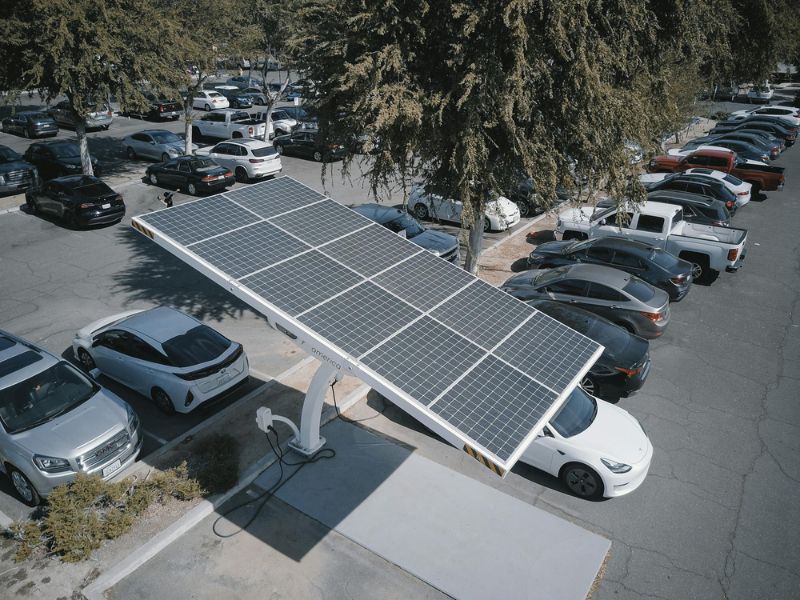
EV charging with renewable energy. Image used courtesy of Pexels
Distribution of Electricity
Advanced grid-optimized EVs can send electricity back into power grids during high-demand periods, functioning as a storage and distribution system. This capability makes energy use more efficient.
The Future of EV Charging
From its Ingolstadt test site, Audi is leading the way for advanced EV charging worldwide. The flexible power grid simulator assists engineers in developing machines with adaptable charging and grid-optimized software. The auto industry lessons from this innovative simulator could make EVs more cost-effective and environmentally friendly.