Facebook
 Google
 GitHub
 Linkedin
Smart Homes to Smart Charging: EV Charging Reliability Solutions
As electric vehicles increase, consistency—not novelty—is key.
Electric vehicles are going mainstream. Or at least they're trying to.
As vehicle prices drop and ranges increase, EVs are increasingly attractive to the average consumer. It is no wonder that industry discourse has shifted away from the vehicles themselves to the availability and reliability of EV chargers. Commercial chargers now appear in public spaces, condo and apartment buildings, workplaces, and fleet yards. It's clear charging is no longer just for the early adopter, but outside of home chargers, it's a ways off from meeting the standards of a modern consumer product.
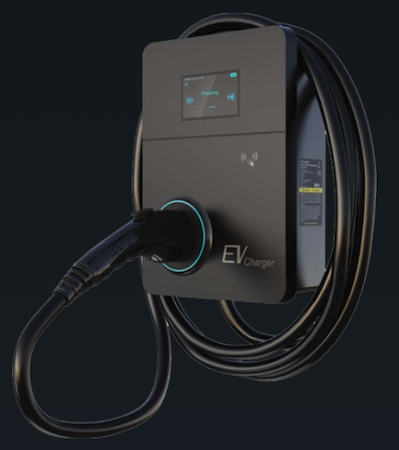
Smarter, more reliable EV chargers will incorporate remote diagnostics and troubleshooting. Image used courtesy of FractalEV
Two simple truths remain: Commercial charging has a reliability problem, and connectivity is the leading cause of issues. JD Power reports a public charging failure rate of 20%. Harvard research further validates this figure, finding that commercial chargers have a success rate of just 78% in the US. Commercial drivers also report challenges finding enough charging stations on their routes, compounding the reliability issue.
If the situation sounds dire, the good news is that other industries have seen similar growing pains. This journey of maturation is not unique to EV charging; thankfully, we don't have to solve the issue in a vacuum.
The Smart Home Blueprint
The EV charging industry takes many cues from the world of IoT products, particularly where connectivity is concerned. Smart home products, from smart doorbells to connected thermostats, are the most common examples of IoT tech in our everyday lives. Like EV chargers, these systems all rely on an internet connection. In both cases, non-experts, such as building owners or consumers, are on the frontlines when things go wrong.
So why is connectivity so tough to get right? EV chargers and IoT devices typically connect to an existing Wi-Fi network, which may or may not be optimized for that application. Even if a dedicated commercial network is implemented, it will still be subject to the same challenges inherent in Wi-Fi: Signal quality is difficult to predict and may change rapidly.
Of course, Wi-Fi's shortcomings aren't unique. Cellular connectivity has its issues. While you may not need to consider how close your device is to the modem, you'll still find the signal interrupted by concrete or bad weather. Ethernet connections are the most reliable and the most expensive and can be impractical to implement. Neither of these last-mile technologies addresses the upstream connectivity challenges.
All internet communications require sufficient bandwidth and experience latency. The more data sent back and forth on the network, the tighter the thresholds for both factors. EV chargers are typically lightweight unless they rely on the Open Charge Point Protocol (OCCP).
The OCPP is a boon for the EV charging industry, making it possible to match hardware with the compatible software of your choice, but it is relatively bandwidth-intensive. Furthermore, if OCPP messages between hardware and software drop in transit, they're often unrecoverable. This dynamic puts even more pressure on network consistency and reliability in EV charging.
Still, this challenge is hardly unique. IoT devices that stream video, for instance, require immense bandwidth. The smart home industry is already a decade ahead in tackling connectivity issues. So, what are they doing?
Supplying Network Equipment With EV Chargers
Some manufacturers have nipped connectivity in the bud in the most intuitive way possible. They noticed that their influence ended with the hardware, making it impossible to ensure field reliability. Well, what if they could control the network, too?
This approach is most common in high-end consumer goods because of costs. If a brand sells a high-ticket system like whole-home security or a smart home package, it may make financial sense to supply a Wi-Fi router or a SIM card to connect the products it is installing.
This practice has evolved out of the exact issue many face today with EV charging. If you install your equipment on a pre-existing Wi-Fi network, you are at the mercy of how that environment was set up, which, in all likelihood, was not designed to provide 97%+ uptime.
Some mature charge point operators (CPO) have already done this math and opted to ensure connectivity. Still, it's all too common to slap EV chargers on an existing Wi-Fi network, even in commercial settings. Sometimes, this is because of pushback from the site manager, and sometimes, it's because there hasn't been adequate network planning. However, if it's worth doing for residential smart home products, it should be table stakes for large-scale EV charging.
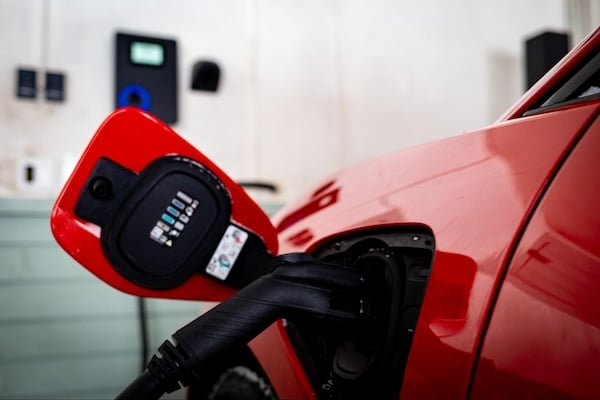
EV charging systems rely on reliable network connectivity. Image used courtesy of FractalEV
Building Network Diagnostics
The next lesson sounds obvious but has taken a long time to catch on. If you can't control the network, you should try to get visibility into its points of failure.
Historically, every smart home product would have a lengthy FAQ on a website or a printed guide to help users connect the device to the internet. While these guides still exist, the industry has begun to recognize that this dynamic puts the onus on the end user to solve problems. Today, smart home companies have started to build network diagnostic features directly into their devices, delivering a far more seamless experience for consumers.
This new wave of smart devices can scan network environments to understand the root cause of connectivity issues. They then report diagnostics such as signal strength and network characteristics back to a cloud portal, giving operators the insight they need to solve problems. For example, every Sonos speaker will report detailed diagnostics on its network environment—and that's a home speaker, not critical commercial infrastructure.
Unfortunately, the EV charging industry has not yet standardized diagnostics, so each manufacturer makes decisions around these features. Current industry dynamics are such that newcomers are rewarded for speed to market. If they can keep costs down by meeting only those standards mandated by the OCPP, the product will be viable and competitive. When connectivity issues inevitably surface, it's easy to shift the blame to the network or software provider. But the end user—and the industry as a whole—suffers in the long run.
When hardware vendors choose to implement diagnostics, the reporting is typically put into a generic data message because the protocol has no standard location for it to live. That means that software interfaces may not even be able to surface diagnostics information correctly.
A better, though admittedly more ambitious, solution is for the hardware manufacturer to support diagnostics independent of the protocol. For example, at FractalEV, we offer a diagnostic dashboard showing every IoT tech stack component and its operational status. We feed the dashboard network information, such as signal strength and surrounding congestion, to get a complete view of the connectivity status. This proprietary reporting works alongside OCPP standards and aligns EV charging with best-in-class smart home products.
Powering Remote Troubleshooting
The final lesson relates to engineering. During the early days of IoT products, there was a gold rush to bring the next "smart" gizmo to market. We saw everything from connected litter boxes to Wi-Fi blenders. At this point, the general mode of operation was to put a Wi-Fi chip into the device and validate that everything was turned on. Once connectivity was achieved, engineering teams pivoted to building compelling user experiences that would warrant the investment in a "smart" product over a "dumb" one.
On the surface, that approach seems aligned with the economic incentives. At this stage, the smart home industry was subject to market dynamics similar to those we alluded to: first-to-market wins and connectivity is somebody else's problem. However, when selling hardware, the downstream support cost can quickly come to bear on your margins, invalidating the strategy of flooding the market with cheap antennas. Support is encroaching on EV charging profits just as quickly.
We are increasingly seeing IoT brands revisit their designs and invest in building tools beyond functionality to create resiliency in the connection. Features like mesh networks and redundant antennas are increasingly common. Even better, many companies are now building support interfaces that allow support teams to log in and adjust device settings remotely. Sending a firmware update to a smart light bulb is much easier for a dedicated support team member than for an end user following an FAQ, but you need the underlying infrastructure to do so.
Consider the case of a charger that is going offline intermittently. With traditional diagnostics, it can be hard to know which component is to blame—is it the device, the software, or the Wi-Fi? Then, once a network is identified as the root cause, the only solution is to go onsite and deploy new infrastructure (either a new Wi-Fi AP or a SIM card to move to an LTE solution). This process amounts to two site visits, one for diagnostics and one for repair. Between the two, you have no hope of making any margins on the charger. And that's not even considering the costs of call center support for the EV drivers who initially reported the issue.
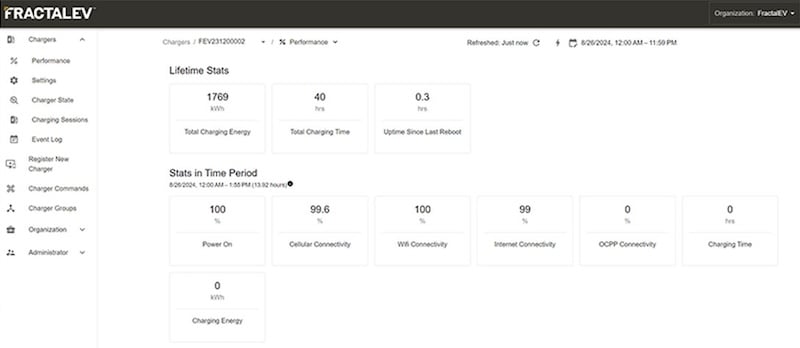
Mockup of a remote dashboard for EV charger diagnostics. Image used courtesy of FractalEV
FractalEV dealt with this scenario with a site two hours from the installing electrician. However, we resolved the scenario with zero on-site time, thanks to remote troubleshooting tools. First, we activated the charger's onboard SIM card to regain access to the charger. Once a connection was re-established, we looked at the signal strength and Wi-Fi connection statistics to pinpoint the issue. Given the weak network, we determined that permanently switching to cellular was the most cost-effective repair, so we flagged it as the primary connection and activated the onboard eSIM in our cloud platform.
While charging software supports some of this functionality today, vendors are generally still in the early days of the market. Just as we saw in consumer goods, the development emphasis is on new user features to compete in a crowded market rather than building tools for operational resiliency.
The Path Forward
EV charging is still a new space. While it has many unique complexities, it's a mistake to think these problems have never been solved. However, at the end of the day, an EV charger is just another connected appliance. With 85% of Americans having a smart device in their home, this is well-trodden ground.
At the early stages of any industry, the priority has to be to wow people with what can be achieved—the art of the possible. However, as EVs emerge into the mainstream, it's time to double down on the boring stuff—the routine changes that increase consistency instead of novelty. The good news is that the playbook already exists, and it's already been deployed at scale.