Facebook
 Google
 GitHub
 Linkedin
3 Enhanced Tools To Help Utilities Combat Grid Strain
Schneider, Siemens, and Sense have released upgraded software and tools aimed at boosting grid capacity, visibility, and flexibility amid rising electricity demand.
As pressure mounts on the world’s power systems, three major players in the grid tech world are rolling out software designed to tackle different angles of the problem. Schneider Electric, Sense, and Siemens each unveiled tools this month that promise to help utilities keep up with rising electricity demand without relying solely on costly infrastructure projects.
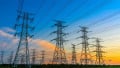
Transmission towers. Image used courtesy of Pixabay
Schneider Electric's AI-Assisted Grid Management Software
Schneider Electric has introduced the One Digital Grid Platform, an AI-enabled software aimed at helping utilities modernize without replacing existing infrastructure. The system merges planning, real-time operations, and asset management into one platform, giving utilities a way to improve reliability and control costs as electricity demand increases.
Learn more about the One Digital Grid Platform. Video used courtesy of Schneider Electric
The platform expands on Schneider Electric’s established EcoStruxure ADMS, DERMS, and ArcFM technologies, adding new AI functions that speed up outage response, increase network models' accuracy, and assist operators during live grid events. Its restoration time estimate system uses operational data, weather inputs, and historical patterns to update customers during storms, wildfires, or public safety shutoffs.
A built-in assistant supports troubleshooting and performance optimization, while network model tuning can correct inconsistencies between the model's data and real-world conditions.
The software comes as electrification, manufacturing growth, domestic onshoring/reshoring, and the expanding energy needs of AI computing are straining power networks. Schneider Electric's research suggests the U.S. will need to add up to 2,000 TWh of new generation each decade, and advanced digital tools can help avoid bottlenecks and service disruptions.
Schneider Electric developed the platform on Microsoft Azure to offer utilities a hybrid cloud approach integrating cybersecurity, analytics, and AI services from OpenAI's models. The company cites measurable results from utilities already using its core systems, reporting a 184% return on investment, $40 million net gain, and a 16-month payback period, along with about 20% fewer outage penalties and significantly faster restoration with time savings of 65% for control room operators and 35% for field crews.
Siemens Adds Flexibility Management to Gridscale X Platform
Siemens has unveiled Gridscale X Flexibility Manager, a new software product designed to help distribution system operators boost grid capacity without waiting on major construction projects. The German tech giant frames the tool as a way for utilities to handle rising demand from renewables and data centers.
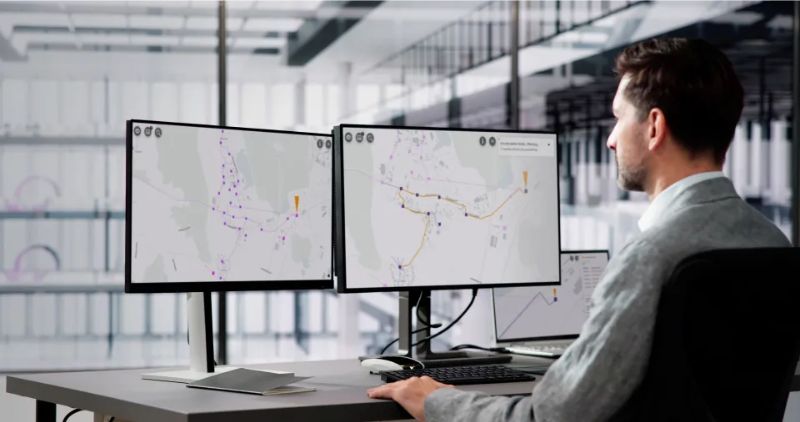
Gridscale X. Image used courtesy of Siemens
The system uses predictive analytics to anticipate congestion and voltage problems, and taps into flexibility from connected resources like EV chargers and heat pumps to prevent overloads. According to Siemens, the software can raise capacity by as much as 20% and cut planned grid investments by up to 40% by allowing operators to defer or scale back additional work.
Although Siemens's Gridscale X platform has been around for a while, the new flexibility software brings modern enhancements. It integrates directly with distribution system operators' monitoring and forecasting systems, watching grid behavior in real time and selecting the best flexibility actions.
Siemens developed the platform with several European grid operators, including Austria’s KNG, which is facing rapid growth in rooftop solar and new regulatory requirements for market-based flexibility.
Sense's Load Visibility Offering
Sense has introduced a load-visibility suite aimed at giving utilities feeder-level insights into what’s happening on the distribution grid, particularly at the grid edge where distributed energy resources (DERs), rooftop solar, EV charging, and new electric appliances are adding volatility.
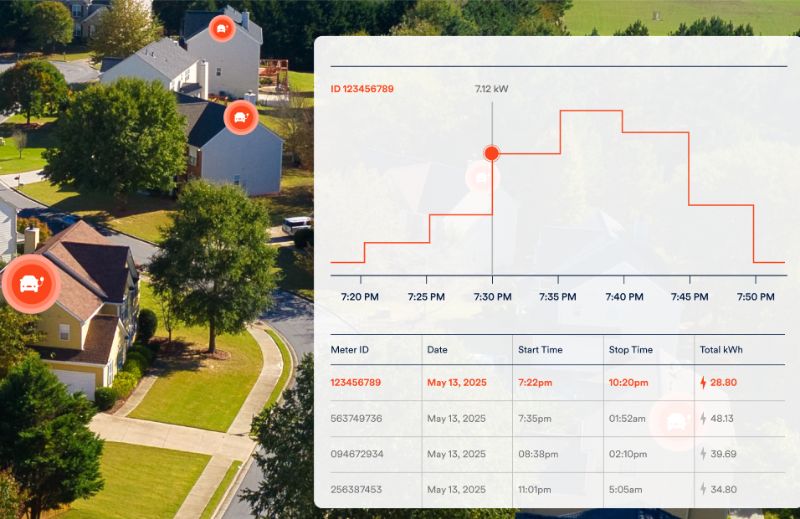
EV Analytics snapshot. Image used courtesy of Sense
The system is built into next-generation AMI 2.0 smart meters and uses the company’s high-resolution WaveformAI technology to detect major household loads without needing any extra hardware beyond planned meter upgrades. The platform can help eliminate blind spots around behind-the-meter activity, allowing utilities to trace loads down to individual transformers and feeders for better planning, forecasting, and operational awareness.
How load visibility can help utilities. Video used courtesy of Sense
The offering includes three analytics services that can be deployed independently or as a bundle. Home Analytics presents end-use consumption patterns such as heating, cooling, laundry, and other appliance categories like heat pumps. Solar Analytics measures home solar production, enabling more accurate forecasting. EV Analytics detects both Level 1 and Level 2 charging periods, providing visibility into one of the fastest-growing sources of residential demand. EV Analytics and Home Analytics are already available on Landis+Gyr Revelo meters, with broader support expected in 2026.
By capturing disaggregated data at the meter, the system is designed to improve the precision of capacity planning, reduce unnecessary infrastructure expansions, and detect overload or voltage issues earlier.