Facebook
 Google
 GitHub
 Linkedin
New Bidirectional TVS Devices Aim for Enhanced Safety in EV Systems
The devices offer an important combination of low clamping voltage and peak power rating.
The transition in the automotive industry from traditional vehicles to electric vehicles (EVs) has spurred a huge rise in the importance of power electronics. The EV industry requires high reliability and extremely high-power operation and is now among the greatest drivers of innovation in the power electronics field.
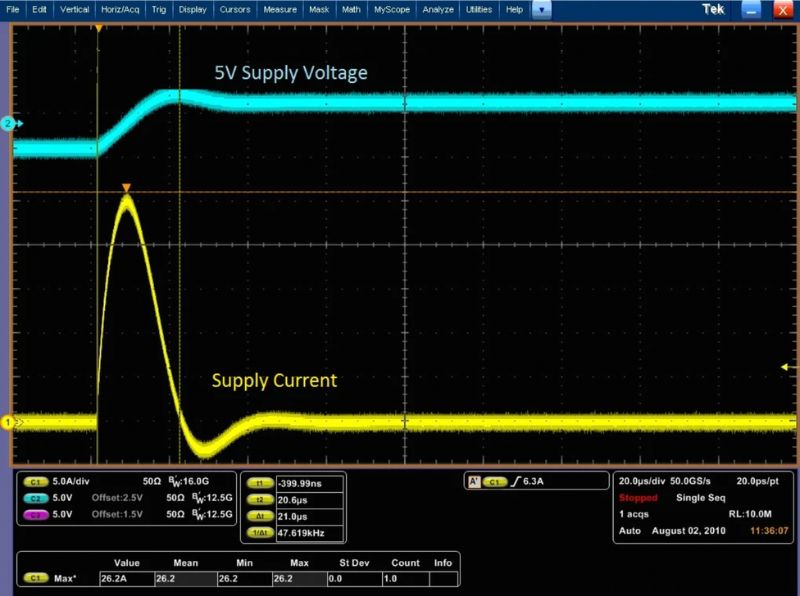
Inrush current spike/transient. Image used courtesy of All About Circuits
To ensure reliability in these kinds of systems, transient voltage suppressors (TVS) are a standard classification of components. Protek Devices has released two TVS devices designed for safety in automotive and EV charging systems.
What Are TVS Devices?
TVS devices are specialized semiconductor components pivotal in safeguarding electronic circuits from transient voltages or voltage spikes.
Their operation is based on a simple yet effective principle: they transition to a conductive state when the voltage across them surpasses a predetermined threshold, known as the breakdown voltage. This transition allows the excess voltage to be diverted from sensitive components, thereby averting potential damage. Placed parallel to and upstream from the IC to be protected, the TVS component diverts large voltage spikes away from the downstream IC and keeps it protected from surges.
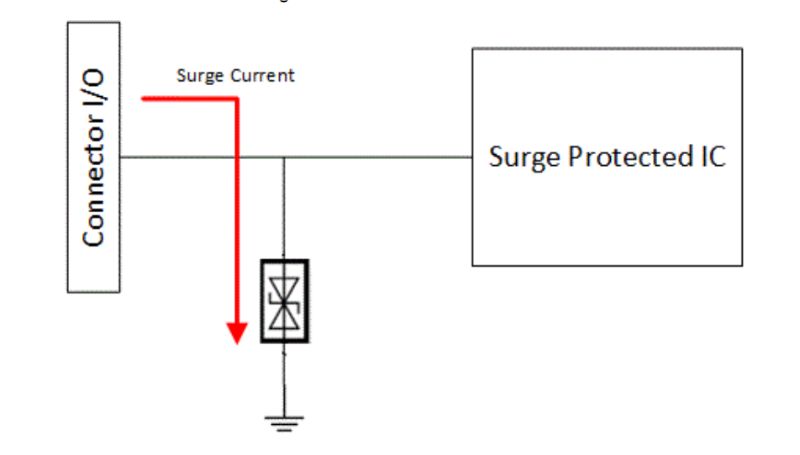
A TVS component is placed in parallel with the surge-protected IC. Image used courtesy of Texas Instruments
These devices are indispensable in many applications, particularly in automotive electronics. In automotive applications, TVS devices offer protection to systems such as the Electronic Control Unit (ECU), Belt Starter Generator (BSG), and Integrated Starter Generator (ISG) circuits. As the complexity and sensitivity of electronic systems in contemporary vehicles escalate, particularly in electric and hybrid vehicles, the role of TVS devices becomes increasingly paramount.
Clamping Voltage for TVS
In TVS devices, one of the most important specifications is the clamping voltage.
Clamping voltage refers to the maximum voltage a TVS device will allow to pass through when it is in its conducting or "on" state. This occurs when a voltage surge or transient exceeds the breakdown voltage of the TVS device, causing it to transition from a non-conductive to a conductive state.

IV curves of a TVS diode. Image used courtesy of Texas Instruments
The clamping voltage is essentially the peak voltage a protected line will experience during a transient event when a TVS device is installed. It is a critical parameter because it directly impacts the level of protection provided to the electronic system. A TVS device with a lower clamping voltage can effectively limit the voltage spike to a level that the protected circuit can safely handle, thereby preventing potential damage to the circuit.
The importance of clamping voltage becomes evident when considering the sensitive nature of modern electronic components. Many of these components, such as microprocessors and other integrated circuits, operate at low voltage levels and can be easily damaged by relatively small voltage transients. Therefore, the lower the clamping voltage of the TVS device, the better the protection provided to the electronic system.
Protek TVS Components
Protek Devices, a leading player in the circuit protection market, has recently unveiled two new TVS components specifically designed for applications in electric vehicles.
The PAM7KSMDJ24CAP and PAM11KLD8S24CAP are bidirectional TVS components rated to deliver peak pulse power of 7,000 W and 11,000 W, respectively, providing robust protection for a wide array of EV systems. Notably, the two devices offer impressively low clamping voltages of 28 V and 26 V, respectively.
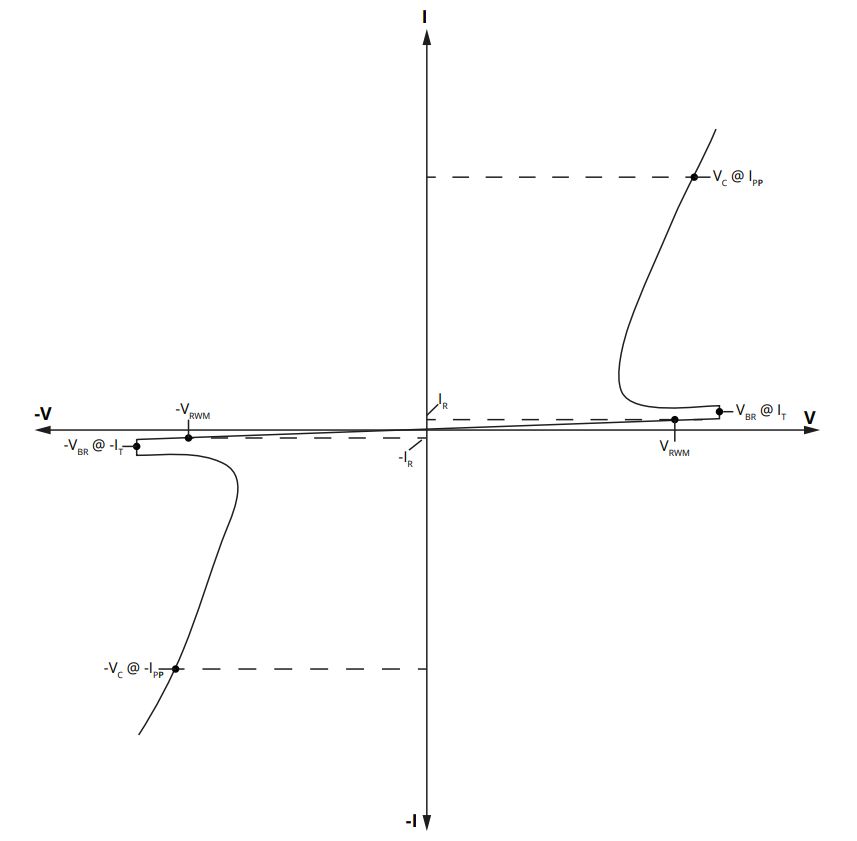
The PAM11KLD8S24CAP IV curve. Image used courtesy of Protek Devices
According to Protek, the PAM7KSMDJ24CAP is optimally designed to protect the BSG) circuit, the ISG circuit, and hybrid electric vehicles. It has achieved the AEC-Q101 qualification and is RoHS and REACH compliant.
On the other hand, the PAM11KLD8S24CAP is engineered more specifically to safeguard automotive ECUs. It also meets the AEC-Q101 standards, is RoHS and REACH compliant, and features a junction passivation optimized design, making it highly reliable and suitable for high-temperature automotive requirements.
Between these two components, Protek hopes to provide designers with ways to ensure high levels of reliability and safety in many different automotive subsystems.