Facebook
 Google
 GitHub
 Linkedin
Will 2025 Be a ‘Solid’ Year for EV Batteries?
Advances in solid-state batteries could reduce size, weight, range anxiety, and safety concerns in future electrical vehicles.
Advances in solid-state batteries could reduce size, weight, range anxiety, and safety concerns in future electrical vehicles.
Manufacturers and researchers worldwide are seeking electric vehicle battery solutions that address the fundamental challenges of range, safety, and efficiency. Lithium-ion batteries struggle with energy density, thermal stability, and fire risks, ultimately limiting EV performance and consumer adoption.
Fortunately, in 2024, numerous advances were made in manufacturing solid-state batteries (SSBs), which could significantly impact EVs in 2025.

Factorial Solstice battery packs. Image used courtesy of Factorial Energy
Mercedes-Factorial Solid-State Partnership
EV ranges now peak at 400 miles, with models like the Lucid Air and Mercedes-Benz EQS leading the market. In early 2024, Mercedes-Benz partnered with Factorial to launch a groundbreaking SSB technology that further pushes these limits.
The solution, branded as Solstice, promises to extend ranges to over 600 miles by the decade's end. The major benefit lies in the battery's solid electrolyte, which replaces the liquid electrolyte in conventional lithium-ion batteries. Consequently, Solstice offers an energy density of 450 watt-hours per kilogram, making the batteries lighter, more compact, and significantly safer.
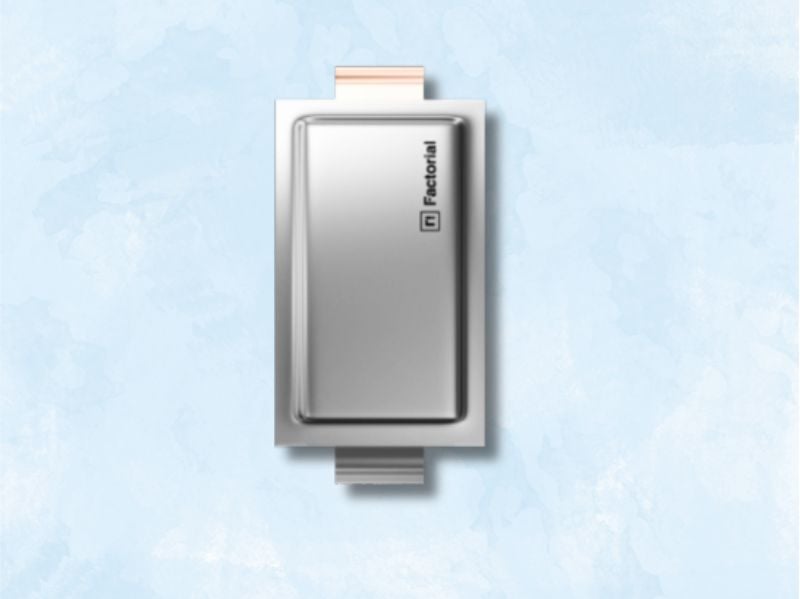
Factorial’s Solstice solid-state battery. Image used courtesy of Factorial Energy
Stellantis and Factorial’s Solid-State EVs
Traditional lithium-ion batteries present challenges like limited energy density, flammability, and thermal sensitivity. SSBs address these challenges by integrating the electrolyte and separator into a single component, enabling safer operation at higher temperatures.
In late 2024, Stellantis partnered with Factorial to develop EVs powered by SSBs. The partnership centers on Factorial's proprietary FEST-based solid electrolyte, which integrates a lithium-metal anode, innovative quasi-solid electrolyte, and high-capacity cathode design. The lithium metal anodes make these EVs compact and lightweight for longer driving ranges. The result is an impressive energy density of 390 Wh/kg.
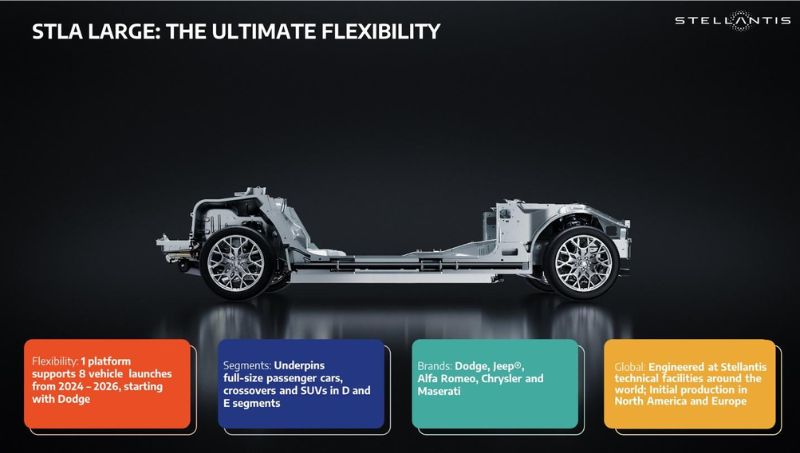
The STLA LARGE platform. Image courtesy of Stellantis
Integrated into Stellantis’ STLA Large platform, these SSBs promise scalability for millions of vehicles. A demonstration fleet of Dodge Charger Daytona EVs featuring these SSBs is expected by 2026.
All-Solid-State Batteries for EVs
In 2024, McGill University researchers developed an all-solid-state battery (ASSB) consisting of a solid cathode, a solid electrolyte, and a solid lithium-metal anode.
Historically, one of the major hurdles in ASSBs is the high interfacial resistance between the solid electrolyte and the solid electrode. McGill’s work solves this by using a porous ceramic membrane filled with a polymer, which allows lithium ions to move efficiently and enables stable, high-voltage operation.
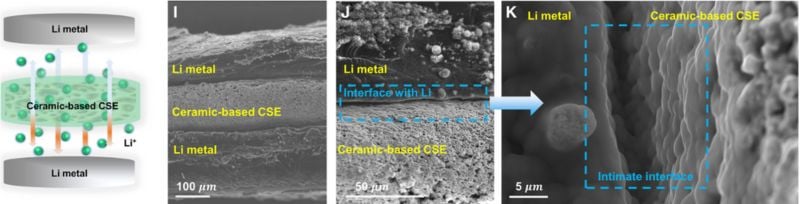
The CSE-based Li-Li interface. Image courtesy of Wang et al.
The solution uses a garnet-based composite solid electrolyte (CSE) with an ionic conductivity of 0.437 mS/cm and a lithium transfer number of 0.72 at 25°C. The research found that the material, with 45.74% porosity, reduced resistance and supported voltages up to 5.08 V.
Overcoming Challenges in SSB Manufacturing
SSB development faces significant hurdles, primarily from material diversity and production complexity. The absence of standardized manufacturing processes for ceramic, sulfide, and polymer electrolytes creates challenges in scaling production, resulting in increased costs and technical variability across different ionic conductivity and mechanical performance profiles.
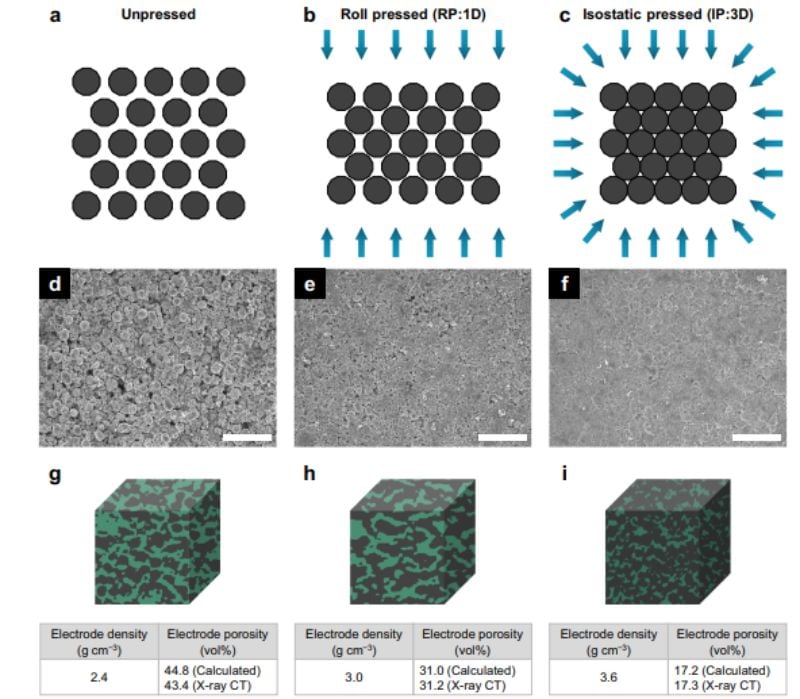
Different compression methods for electrode material. Image courtesy of Lee et al.
To overcome this, Korean researchers introduced universal design principles for SSBs. The researchers developed a blueprint named SolidXCell, which optimizes electrode thickness, voltage control, and material configurations. Their 10-layer and 4-layer solid-state pouch cells achieved specific energies of 280 Wh/kg and 310 Wh/kg, with energy densities of 600 Wh/L and 650 Wh/L, respectively.
A Solid Future
In 2024, automaker partnerships, academic research, and manufacturing standardization pushed toward a future where SSBs are the norm. Such momentum highly suggests that 2025 could be a landmark year for widespread SSB adoption.