Facebook
 Google
 GitHub
 Linkedin
What Do Data Center Pros Want for Efficient Operations?
ZincFive’s new report reveals data center trends in meeting challenges in power density, backup power, scalability, and sustainability.
Energy storage in data centers is entering a significant transition, driven by rising AI adoption and power density requirements. A report from ZincFive, based on feedback from over 130 global data center professionals surveyed in early 2025, reveals just how fast the trends are shifting.
With AI placing greater strain on electrical infrastructure, data centers are under pressure to deliver higher power density, shorten backup runtimes, and adopt scalable yet sustainable energy storage architectures as legacy systems are pushed to their limits.
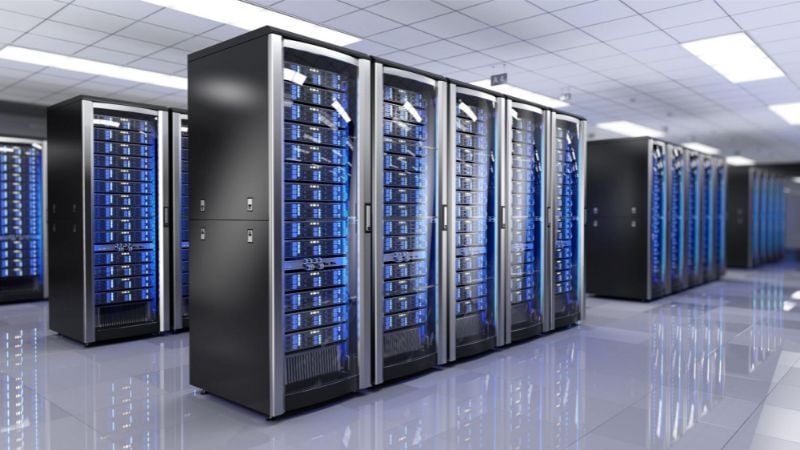
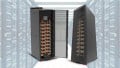
Data center server racks. Image used courtesy of Adobe Stock
Power Demands and Battery Chemistry Tradeoffs
AI is making a major impact on power and energy storage, with over half of respondents citing increased energy efficiency and power density in a smaller footprint. Lower-ranked impacts include onsite power generation, GPU-induced load variation support, and the shift to medium-voltage distribution.
About 96% of ZincFive’s survey respondents foresaw a push toward customized data center power architecture, suggesting that off-the-shelf designs can no longer keep pace with AI’s demands.
In assessing energy storage solutions, data centers said they were most concerned with lifetime costs (both capital and operating expenses), followed by battery safety, sustainability, and regulatory approval. Lead time and UPS footprint ranked lower overall but were still marked as top or high-priority by two-thirds of respondents.
In ranking various battery chemistries, lithium-iron phosphate batteries dominated in safety, sustainability, and space footprint—but not cost. Valve-regulated lead acid batteries were the cheapest and second-safest but scored among the lowest in sustainability and footprint.
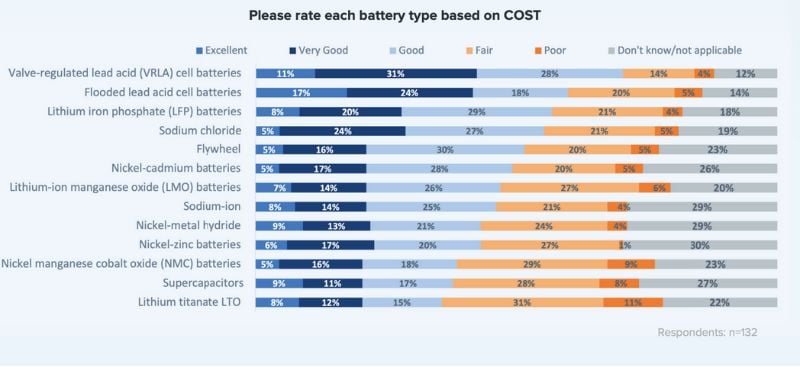
Respondents rated battery types by cost. Image used courtesy of ZincFive
Flywheels and lithium titanate batteries also performed well in sustainability and space, though adoption remains niche.
Shorter Backup Runtimes
A major change is underway in data centers’ backup strategies. About 37% of respondents expect shorter UPS runtimes in the future, up from just 26% in 2024. Slightly under one-third (31%) expect no change. Data centers are shifting away from long-duration battery support toward smarter, faster systems with modular redundancy.
Among respondents using a centralized UPS, the most common backup runtime was over 10 minutes (36%), followed by 5-7 minutes and 7-10 minutes (with a 20% share in each category). About a quarter of respondents using server rack-level battery backups had a runtime of 10-plus minutes. However, rack-level solutions trended towards the 3-10 minute range.
In the 2024 survey, ZincFive asked what respondents were not getting out of their battery backup and energy storage systems, reporting four priorities: long life, reliability, sustainability, and cost reductions. This year’s edition indicates that trust in UPS backup systems is waning, with only 25% saying they’re completely confident in their existing setup compared to 34% in 2024. The top perceived failure point is human error (53%), followed by issues with the battery system, generator, or UPS, and procedural mistakes.
Cost, Modularity, and Sustainability
While cost is the top driver for energy storage changes (58%), other rising factors include safety (46%), cooling requirements (42%), product availability (40%), and reliability issues (39%). This marks a shift from last year, when storage limitations and sustainability mandates led the discussion.
Modularity is another key trend, as containerized and skid-mounted systems offer flexibility and scalability. Nearly 70% of respondents are already using modular power solutions, with 22% planning to roll it out to all sites.
About 87% of respondents marked sustainability as a priority in their power system buying decisions, compared to 81% last year. About 72% said sustainability-related cost savings are rising moderately or significantly, up from 63% in 2024, suggesting increased return on investment.