Facebook
 Google
 GitHub
 Linkedin
Solar Space Race: UK Pushing Energy Frontier
Developing continuous energy from space is the goal of an ambitious initiative.
The U.K. is leading the development of space-based solar power (SBSP) technology. The government, industry, and research institutions will coordinate efforts to advance SBSP technology and create a prototype system. The goal is to power over a million homes by the 2030s with a mile-wide array of mirrors and solar panels orbiting 22,000 miles above Earth.
The U.K. government will invest £4.3 million to fund innovative projects by leading universities and technology companies to drive forward space-based solar power. This will include £3.3 million from the Department for Energy Security and Net Zero and £1 million from the U.K. Space Agency. The funding will position the U.K. at the forefront of the space power industry as it prepares for commercial deployment.
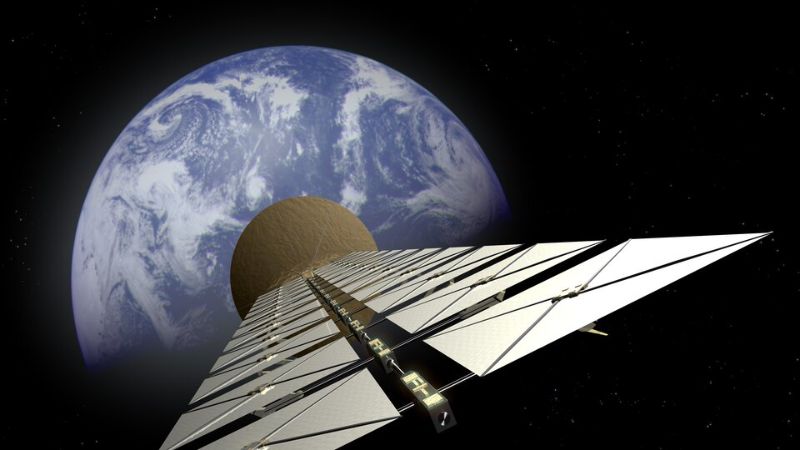
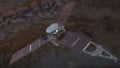
Illustration of space-based solar power. Image used courtesy of European Space Agency
Vision for Space-Based Solar Power
Solar panels in space can capture 13 times more energy than ground-based panels due to the absence of atmospheric interference, clouds, and night. While some energy loss occurs during transmission to Earth, space-based solar power significantly surpasses terrestrial solar generation.
The ability to provide continuous power makes SBSP a promising option for supporting ground-based renewables. Nuclear energy and gas turbines currently serve as the baseload but produce radioactive waste or carbon dioxide, respectively. SBSP aims to offer baseload power at a cost similar to intermittent renewables, making it a significant advancement in sustainable energy.
Research and Development Projects
Numerous universities are working on various SBSP parts to make the technology practical.
- The University of Cambridge is developing ultra-lightweight solar panels to function in space’s high-radiation conditions.
- Queen Mary University in London is working on a wireless system to transfer the solar power collected in space to Earth.
- The University of Bristol produces solar space wireless power transfer capability simulations to explore the technology's performance, safety, and reliability.
- Imperial College London and EDF Energy are assessing how space-based solar power could be integrated into the U.K.'s electricity grid alongside other low-carbon sources.
On the corporate side, Jaltek, a leading U.K. electronics manufacturing services provider with over 25 years of experience in the space sector, is working with Oxfordshire-based Space Solar, which has successfully demonstrated the world’s first prototype for a continuous energy supply from space. This technology, featuring 360-degree beam steering with no moving parts, has the potential to transform solar energy harnessing.
Prototype Development and Demonstration
The project’s initial phase involved building a prototype to demonstrate the technology on Earth. The team set a goal to develop a demonstrator within eight months, with hardware deadlines in August 2023 and December 2023, which were met. The working demonstrator was completed by March 2024. The technology was successfully tested at Queen’s University Belfast, where a wireless beam was steered across a lab to activate a light, validating the concept’s feasibility.
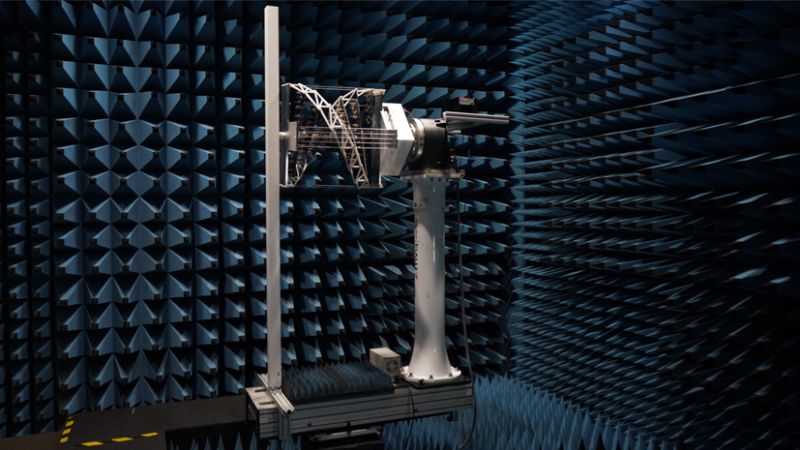
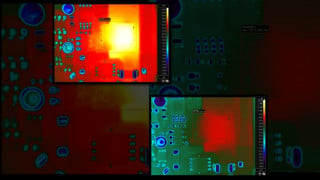
Prototype. Image used courtesy of Jaltek
Jaltek was integral to the prototype’s design, from concept to final delivery and successful demonstration. Their responsibilities included consultation, hardware development, PCB layout, PCB fabrication, materials procurement, and PCB assembly. This project allowed Jaltek to collaborate with numerous talented individuals, employ pioneering technology, and create a groundbreaking SBSP application.
Space Solar’s success in this project demonstrates the potential for space-based solar power to meet net-zero targets and ensure energy equity. The team’s detailed design work and real-world demonstration have provided a clear path forward.
Technical Aspects and Challenges
The SBSP has brought several technical aspects and challenges to the forefront.
Key Technical Aspects
- 360-degree beam steering: Uses phased array technology to direct energy without moving parts, enhancing reliability and precision.
- Energy transmission: Converts solar energy into microwaves or lasers for transmission to Earth, minimizing energy loss.
- Orbital positioning: The mile-wide complex of mirrors and panels orbits at a geostationary altitude of 22,000 miles, optimizing energy capture.
Challenges
- Energy conversion efficiency: Enhancing the efficiency of converting solar energy to microwaves or lasers and back to electricity on Earth.
- Infrastructure development: Establishing ground-based infrastructure to receive and integrate transmitted energy into the grid.
- Regulatory and safety concerns: Addressing potential regulatory hurdles and ensuring safe operation of high-power energy transmission.
One Leap at a Time
The world’s first prototype for space-based solar power represents a significant leap towards sustainable, continuous energy. The collaboration between Jaltek, Space Solar, and its partners has laid the groundwork for a future where clean, reliable energy from space could play an important role.