Facebook
 Google
 GitHub
 Linkedin
ORNL Algorithms Manage Grid Electromagnetic Transients
Oak Ridge National Laboratory is creating algorithms to make electromagnetic transient analysis simulation software viable for managing utility grid resources.
As renewable energy sources grow, grid operators turn to sophisticated simulation methods to manage the power grid’s increasing magnitude and complexity. However, many systems are prohibitively expensive or too time-consuming to use in real, dynamic environments.
Electromagnetic transient (EMT) analysis has always had great simulation potential but lacked practical utility. That could change. Oak Ridge National Laboratory (ORNL) researchers have created algorithms that make EMTs potential a power grid management reality.
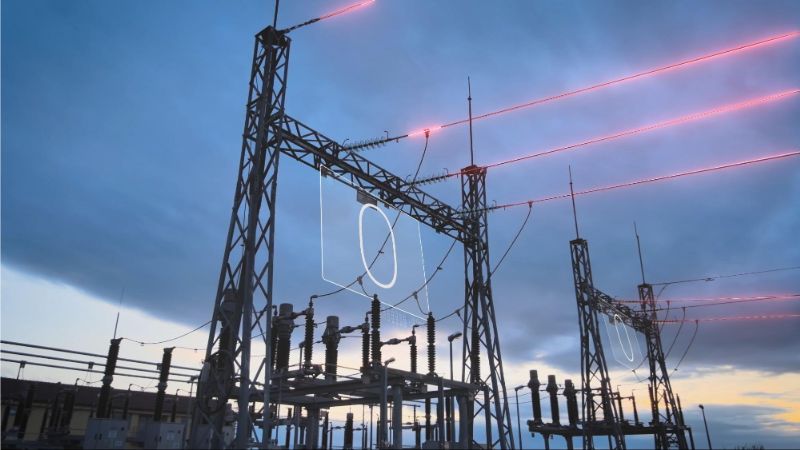
Power grid. Image used courtesy of Adobe Stock
Problems Plaguing Electromagnetic Transient and Software Simulation Tools
Current simulation resources are not maximized for efficiency and performance. Artificial intelligence innovations have assisted utility companies in reallocating resources and balancing power between underutilized and overused transformers. The potential to use software to facilitate such reallocation has always been significant. Yet, such software has remained only potentially useful due to performance slowness and computing costs.
EMT software, in particular, has faced significant challenges limiting its utility in real-time grid management. Historically, EMT analysis has been costly and extremely time-consuming. The high computational demands of simulating electromagnetic transients accurately mean that processing speeds are slow, leading to delays in obtaining crucial data. These delays are problematic because grid management decisions must be made swiftly to maintain stability and prevent outages.
Inverter-based resources (IBR) further complicate this landscape. Unlike traditional synchronous generators, IBRs such as solar panels and wind turbines interface with the grid through power electronic inverters with different dynamic characteristics. These inverters can introduce fast transients and control interactions that are challenging to model accurately and quickly with traditional EMT tools.
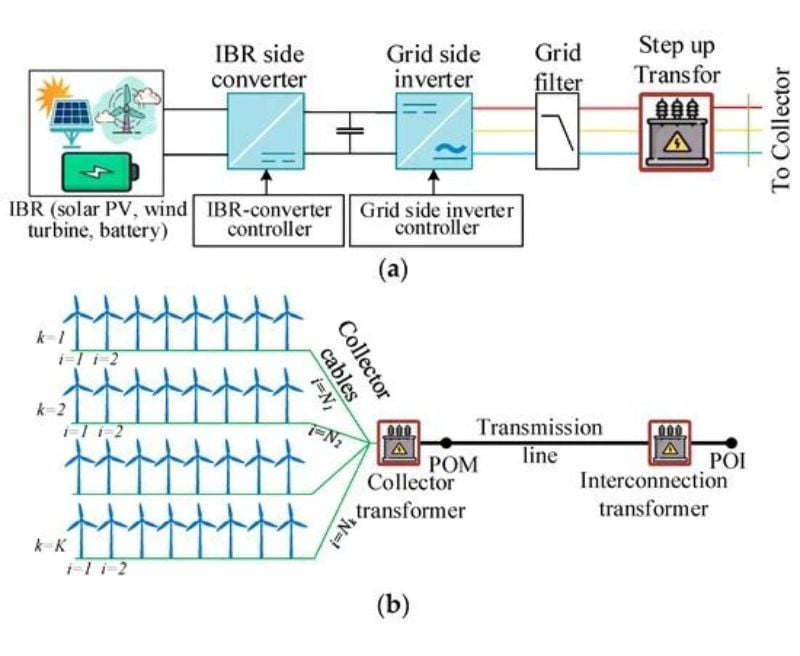
Diagram of an IBR system. Image used courtesy of Himadry, et al.
IBR's complex behavior under various operating conditions adds another layer of difficulty to predicting and managing grid stability. As a result, improving EMT simulations’ speed and accuracy is crucial for effectively integrating renewable energy and maintaining a resilient power grid.
Without effective integration, cascading failures are inevitable. Interconnected networks and various complexities associated with renewable energy resources impact the grid in new and challenging ways. Accurate modeling is critical for preserving grid functionality. Even if a model is accurate, very slow computing renders it useless.
EMT Algorithms and Graphics Processing Units
The research team at ORNL has introduced algorithms to address issues holding back the potential of EMT grid modeling. The lab’s software can simulate hundreds of IBRs affordably without introducing excessive cost or stubborn time delays.
Last year, the ORNL team successfully used EMT analysis to simulate a 2018 fault in California. The researchers used hardware at Southern California Edison and ran the simulation at an ORNL lab to precisely reproduce the failure of a large solar plant and its impact.
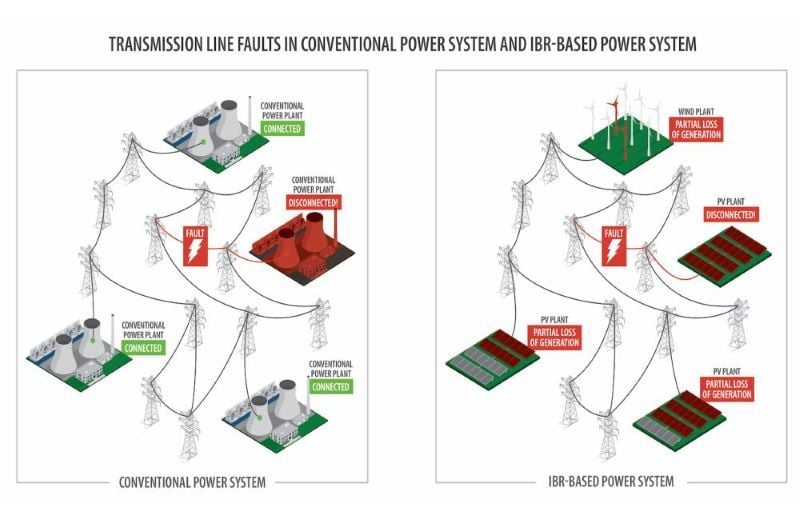
Cascading impact of IRB system failure VS conventional system. Image used courtesy of ORNL
One strategy the team is using involves multicore and graphics processing units (GPU) for faster EMT simulation. They have been able to reduce simulation time from days to minutes. Because EMT analysis involves solving complex differential equations describing the behavior of electrical systems during transient events, these calculations are computationally intensive and involve large datasets, making them time-consuming when performed on standard CPUs.
GPUs, originally designed for rendering graphics, excel at performing parallel computations. Unlike CPUs with a few cores optimized for sequential processing, GPUs have thousands of smaller cores capable of handling multiple operations simultaneously. This parallel processing capability is particularly well-suited for the matrix operations and repetitive numerical calculations required in EMT analysis.
Currently, the ORNL team is scaling up its modeling to run simulations including up to 100,000 IBR devices across the entire U.S. power grid. The speed, accuracy, and potential scope of this new step forward will take grid management to the next level as grid systems grow rapidly to accommodate renewable energy resources.