Facebook
 Google
 GitHub
 Linkedin
Model-Based Frequency Tuning for RF Power
This article examines the limitations of traditional impedance matching in semiconductor plasma processing and explores the benefits of Advanced Energy's Model Based Frequency Tuning (MBFT) algorithm.
Most RF generators used in semiconductor plasma process applications are designed to output optimal power at 50 +J0 Ω impedance conditions. An impedance condition away from the ideal 50 Ω state will result in variations related to total energy delivered, which impacts the repeatability of a deposition or etch process step. In low-pressure applications where RF power is critical for creating and sustaining a plasma with its oscillating electric field, the amount of power delivered in each process step must be tightly controlled and repeatable.
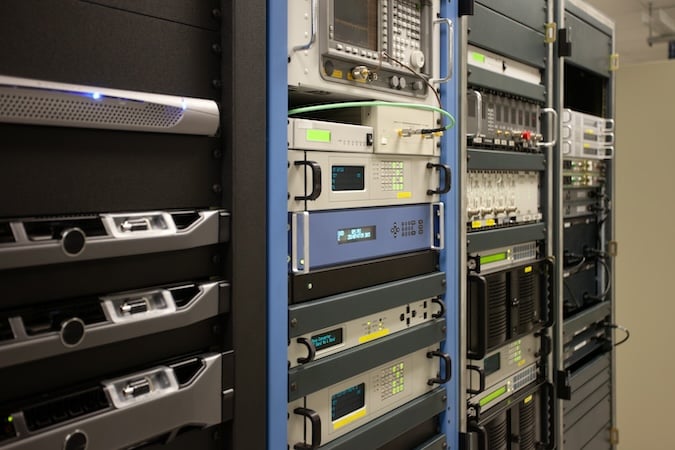
Image used courtesy of Adobe Stock
The traditional method for correcting impedance mismatches includes a mechanical RF match with motors that drive one or more variable vacuum capacitors. These are slow, mechanical adjustments to reach a tuned position over a time scale of seconds. In comparison, the plasma dynamics in semiconductor deposition and etch systems occur over a timescale of microseconds. Voltage and current output control must approach the speed of plasma dynamics characterized by impedance changes that occur in the single to 10s of microsecond timescale. RF generator improvements allowing controlled frequency adjustments via defined or learning algorithms deliver consistent power in each process step.
Frequency Tuning for RF Power
Semiconductor manufacturing processes that require RF power to shape the structures necessary in today’s advanced integrated circuit (IC) products require more repeatable power delivery than ever before. Slight variations in magnitude and timing of power delivered can drastically impact semiconductor chip yields. To accomplish reliable, repeatable results in etch and deposition process steps, developers of process recipes search for a “sweet spot” in process conditions to deliver optimal results, which is time-consuming due to the exceptionally large design of experiment matrices. For the most repeatable results, power delivery must converge as fast as possible to the “ideal” established setpoint for the energy necessary to enable successful process step results.
Many RF generators cannot perform frequency tuning. Fielded solutions include those with an RF delivery system made up of a fixed match and a fixed frequency RF generator power delivery system. Today's best-known method improves on the fixed match by using a variable matching network with mechanical motors and variable vacuum capacitors to convert a non-50 Ω load to a 50 Ω load, allowing the generator to deliver power optimally. This approach loses efficacy in today's dynamic pulsing process steps where the mechanical match, operating in seconds, cannot keep up with the microsecond timescale pulse states and variations in setpoint. Pulsing and setpoint changes modify the impedance “seen” by the RF generator.
Recently, RF generators have begun to incorporate the ability to operate over a variable frequency range (typically ±3 to 5%) to better keep up with these impedance changes without having to move vacuum capacitors. Power delivery improved with an updated algorithm that actively tuned the match to automate the frequency changes, which sped up the time to optimize the power delivery. The full scheme included optimizing RF power delivery performance at the highest setpoint state. Then, the RF generator would adjust the fast-operating frequency tuning knob to improve power delivery at lower power states.
Model-Based Frequency Tuning
These modern systems rely on simplified frequency tuning algorithms included in the RF generators, which are referred to as a “search and rescue” tuning mode. These basic algorithms work by comparing Γ2, Gamma (reflection coefficient) squared, measurements of a CURRENT step to a PREVIOUS one, and adjusting the frequency to meet delivered power requirements. With Model-Based Frequency Tuning (MBFT), Advanced Energy (AE) developed a means to best accommodate power delivery requirements into current complex plasma loads, which are responsive to the dynamic steps within each recipe.
A primary goal of tuning functionality has been to achieve faster tune times and more reliable power delivery by improving the tuning algorithm. When making changes to tuning functionality that impact the delivery of voltage and/or current, it is important to recognize that approaches without active tuning elements, like slow mechanical RF match load translation, will narrow the operational space. Fortunately, most high-volume processes have limited allowable operational spaces due to the need for repeatable operation and performance. Also, many currently implemented algorithms for frequency tuning are slow to converge on an optimum and can get “stuck” in local minima. It is also essential that the algorithm remains straightforward and adaptable to various plasma chamber systems.
MBFT Tuning Algorithm
AE’s latest approach, its eVerest RF generator platform, delivers significantly better results, thanks to a wide internal operating range with a flat high voltage standing wave ratio (VSWR) power delivery profile and a frequency operating range of ±10%. As AE introduced multi-level pulsing (MLP) of two or more power states, the necessity for rapid tuning convergence on an optimal and state-to-state RF frequency became crucial to meeting the repeatability requirements of process steps.
To accomplish repeatable performance for each step in a process etch or deposition step, AE pioneered an optimal MBFT algorithm. The AE MBFT tuning algorithm incorporates a set of pre-learned model information unlike what is used in previously available algorithms. Key to this is the incorporation of real-time measured phase angle (θ) instead of measurement and response to changes in Γ2. The frequency step direction and size are calculated from the angle and a defined coefficient. To expand operational capability, the higher VSWR operation and expanded operational frequency (±10%,) in the eVerest RF generator give sufficient operational headroom for processes to run.
The latest model-based algorithm assumes that the impedance moves clockwise with frequency increase, as described in Figure 1.
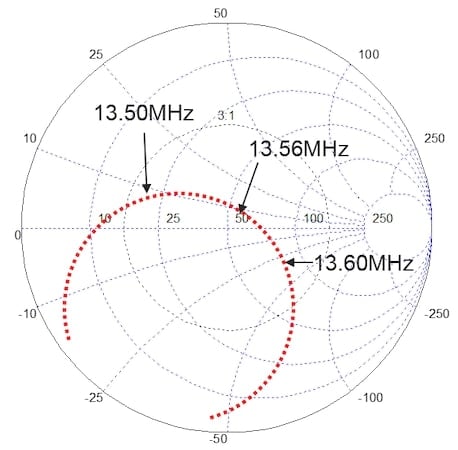
Figure 1. The model-based algorithm assumes that the impedance trajectory with frequency circles around clockwise on the Smith Chart. Image used courtesy of Advanced Energy
The reference vector is introduced to represent an approximated model. The impedance is tuned at the cross-section of the impedance trajectory and the reference vector. Figure 2 shows the goal of the reference vector.

Figure 2. The goal of the reference vector. Image used courtesy of Advanced Energy
The reference vector is defined by setting a reference angle. The reference angle is what users need to set, while the reference vector is what the algorithm uses. Figure 3 shows the reference angle for the given reference vector.
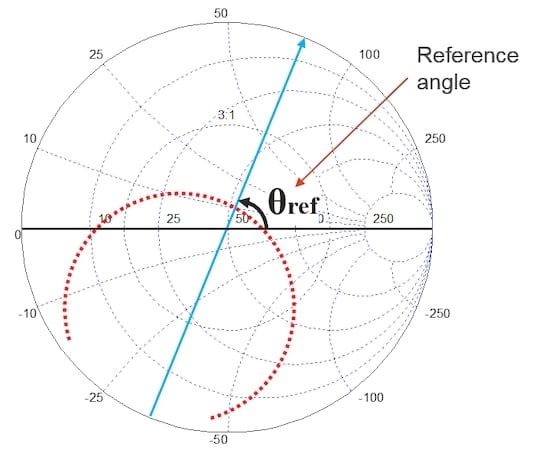
Figure 3. Reference angle to define the reference vector. Image used courtesy of Advanced Energy
In this example, the reference angle for the reference vector is about 70 degrees. Although the algorithm can work regardless of whether the reference point setting is good or bad, for best performance, it is recommended to have a reference point within the impedance trajectory circle rather than outside. The model-based algorithm moves the frequency to the point, minimizing the measured angle. This desired angle can be set to non-zero using a parameter called detune angle. This is used in cases where plasma instability is present within a detune angle. Figure 4 shows where the frequency is tuned with the given detune angle. In addition to the MBFT algorithm, the eVerest RF generator uses proprietary methods to handle power and frequency pulse state-to-state transitions to further optimize power delivery and prevent transients.
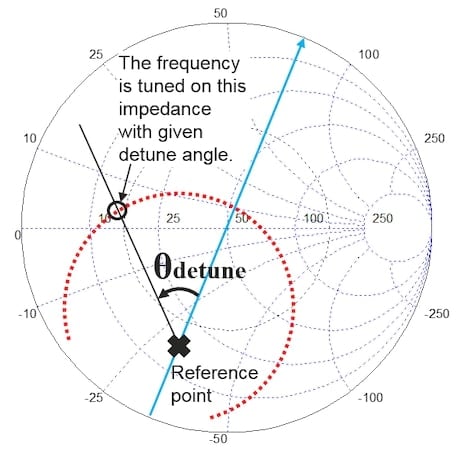
Figure 4. Detune angle. Image used courtesy of Advanced Energy
Advanced Energy MBFT Algorithm Takeaways
The Advanced Energy MBFT algorithm, made possible by the capabilities of the eVerest RF generator, results in a rapid reduction of reflected power compared to other available RF power delivery systems. The “smoother” power delivery while frequency tuning is underway enables improved process repeatability due to a more stable and consistent delivery of RF power. Ongoing work in this field will continue to evolve the speed and repeatability of power delivery optimization. As models continue to be developed and generator capabilities advance, the RF delivery systems will be further simplified to optimal power delivery solutions.