Facebook
 Google
 GitHub
 Linkedin
Hydrogen Fuel and MW Charging Tech Boost Fleet Electrification
Honda, Prologis Mobility, and Sensata have introduced technologies to advance clean trucking and electric fleet technology.
Fleet electrification is progressing rapidly, but widespread adoption continues to run into complex engineering bottlenecks, from powertrain durability and charging infrastructure gaps to high-voltage power management under extreme load conditions. As carbon-neutral targets grow more ambitious, OEMs, suppliers, and fleet operators are under increasing pressure to bridge technology readiness with real-world deployment.
At the Advanced Clean Transportation (ACT) Expo in April, three advances in electric trucks and fleet charging could push technology from theoretical readiness to engineered reality. Honda unveiled a next-gen hydrogen fuel cell module, Prologis introduced a prefabricated megawatt-capable charging unit, and Sensata showcased a high-voltage distribution unit to increase performance in heavy-duty electric vehicles.
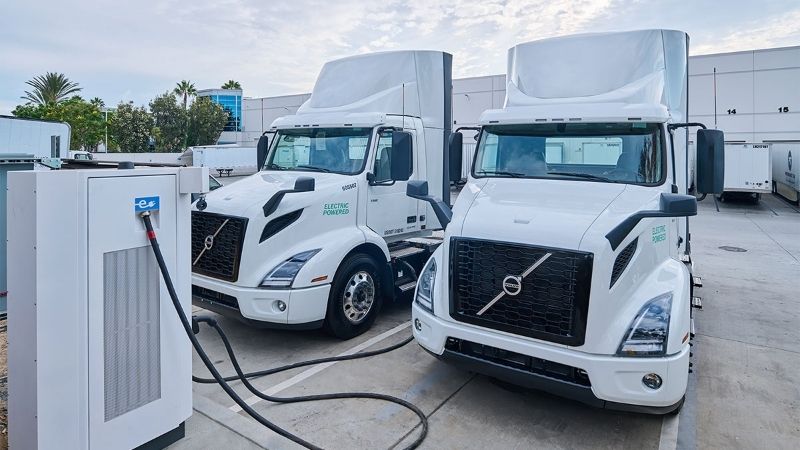
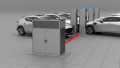
Electric fleet charging. Image used courtesy of Prologis Mobility
Honda’s Next-Generation Fuel Cell Module
Honda debuted its next-generation fuel cell module, a compact and highly adaptable system poised to enter production in 2027. Designed in partnership with General Motors, the system delivers 150 kW of net power output in a 300-liter volume.
Engineers focused on improving volumetric power density by a factor of three and slashing costs by 50%, compared to Honda’s previous generation stack. Notably, the new module is built for modular integration across various applications from Class 8 trucks to stationary power systems and construction machinery, making it a versatile solution in decarbonization efforts. Its cold-weather performance down to -30°C and tolerance up to 60°C ensures high reliability across climates.
Honda’s concept Class 8 truck, powered by three of these modules, achieves a range exceeding 500 miles while hauling up to 82,000 lbs GVW, showing hydrogen’s viability in long-haul use cases where battery weight and recharging times remain obstacles.
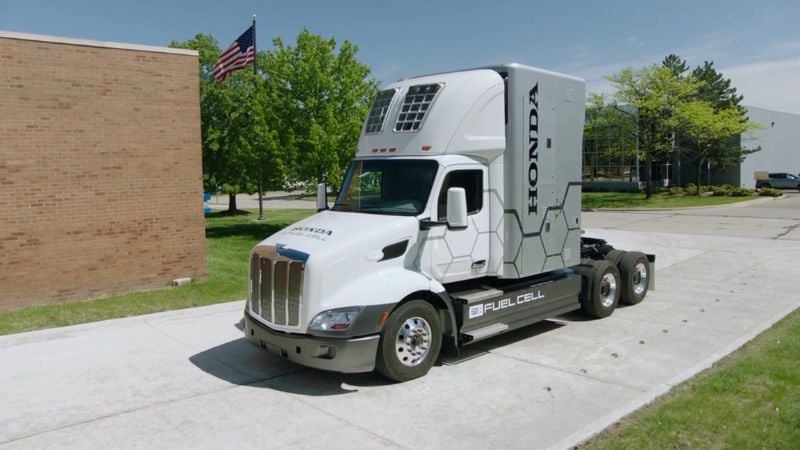
The Honda hydrogen fuel cell truck. Image used courtesy of Honda via PR Newswire
Honda continues to seek new business collaborations as the company is positioning itself as a key player in hydrogen-powered products for commercial trucking and stationary power generation. Honda’s flexible fuel cell technology offers solutions for decarbonizing multiple industries, including hydrogen-fueled construction machinery and industrial power stations. The deployment of Honda’s Class 8 hydrogen fuel cell truck concept and the fuel cell power generator points toward a future where hydrogen power can help reduce the heavy transport sector’s reliance on diesel, aligning with global decarbonization efforts.
Prologis’ Modular EV Charging Platform for Fleet Deployment
Prologis Mobility addressed a different but equally urgent infrastructure challenge: how to deploy high-powered EV fleet charging without years of utility coordination. Its modular, skid-mounted charging platform presents a scalable and flexible way to bring megawatt-class charging to commercial fleets.
Each unit comes pre-integrated with power cabinets, cable management, dispensers, and networked charge control, and supports up to 1.2 MW of dynamic load, including megawatt charging system compatibility. Designed to be placed on-site before full utility interconnection, these modules allow operators to test vehicle routes, validate equipment, and even launch early fleet operations using temporary power sources or battery-microgrid hybrids.
The modular platform’s flexibility could solve some issues within the charging infrastructure gap. Prologis is looking to remove the traditional issue of fleet operators facing delays from local utilities. The new system allows the quick setup of high-capacity charging stations in locations where grid connections might otherwise hold up deployment. This also reduces the need for heavy construction and extended permitting processes, a benefit that speeds up the transition to electric fleets. Prologis has already committed to testing these modular units with public charging hubs, such as the Vernon, California site, which is set to open this summer.
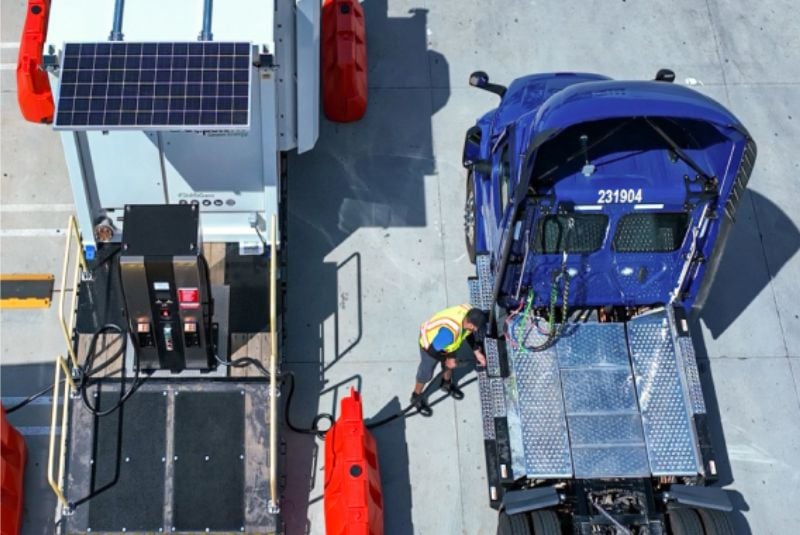
Mobile truck charging. Image used courtesy of Prologis Mobility
As part of their broader goals, Prologis is also looking at redeploying these modular stations as fleet needs evolve. This will allow charging infrastructure to be dynamically adjusted based on fleet size, usage patterns, or geographic expansion. In an age where fleet electrification must grow rapidly, Prologis’ pre-fabricated approach offers an adaptive solution for companies eager to accelerate EV adoption.
Sensata’s High Voltage Distribution Units for Megawatt Charging
Sensata Technologies introduced production-ready high-voltage distribution units (HVDUs) that are megawatt-capable and engineered for Class 6-8 trucks and buses. These systems consolidate multiple components such as fuses, contactors, charge controllers, insulation monitoring devices, current sensors, and active thermal management, all housed within IP-rated enclosures that withstand commercial fleet environments.
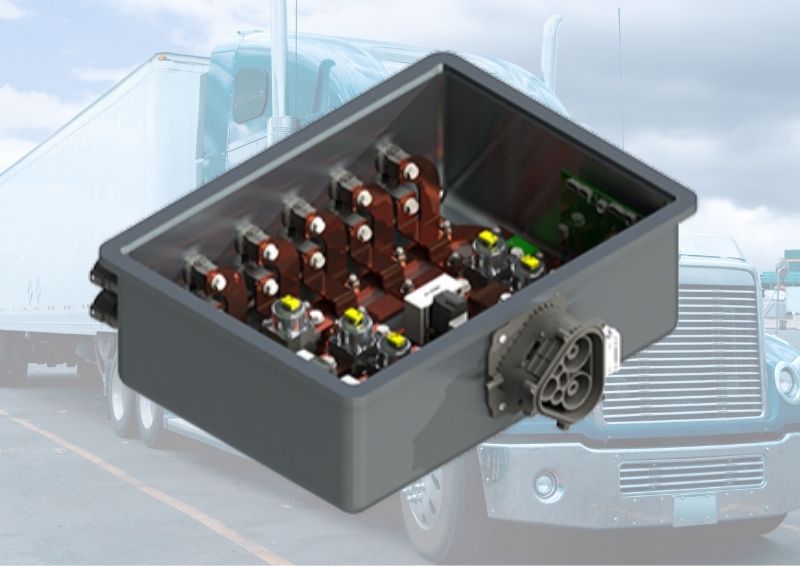
High-voltage distribution unit. Image used courtesy of Sensata
Sensata’s design allows coordination with onboard chargers and traction inverters, while offering smart fault isolation and continuous diagnostics. The company’s Charge PDUs take this further, enabling controlled and efficient high-voltage current routing both during operation and during MCS charging sessions. The hardware supports charge rates up to 3 MW, which helps unlock faster depot turnaround and uptime for electric truck fleets. Sensata’s innovative systems also manage thermal loads and enhance safety, making them ideal for heavy-duty commercial vehicles that must endure tough conditions.
Sensata’s trucks show the importance of power management systems by bringing megawatt charging into the mainstream. Their HVDUs integrate into electric trucks’ larger powertrain systems, enabling safe, efficient, and reliable charging and contributing to the viability of high-powered electric trucks for long-haul freight.
Engineering is actively addressing the challenges of electrification and zero-emission transport. As these solutions evolve from concept to deployment, the industry is poised to overcome current barriers and drive forward the next wave of sustainable transportation.