Facebook
 Google
 GitHub
 Linkedin
DC-DC Converter Modules Propel Formula EV Race Car to Victory
The Japanese student team implemented Vicor Power’s DC-DC converter modules to lighten up their winning car and improve performance.
The Japanese student team implemented Vicor Power’s DC-DC converter modules to lighten up their winning car and improve performance.
For electric race cars, performance is even more critical than conventional road EVs. Every small bit of additional performance matters and can be the difference between winning and losing a race.
In Japan, a Student Formula Team has turned to DC-DC converters to reduce weight and improve performance in their race cars. At the same time, TDK—whose components are used in many EVs and have partnered with Formula E teams—is now sponsoring the Tokyo E-Prix in the Formula E World Championship.
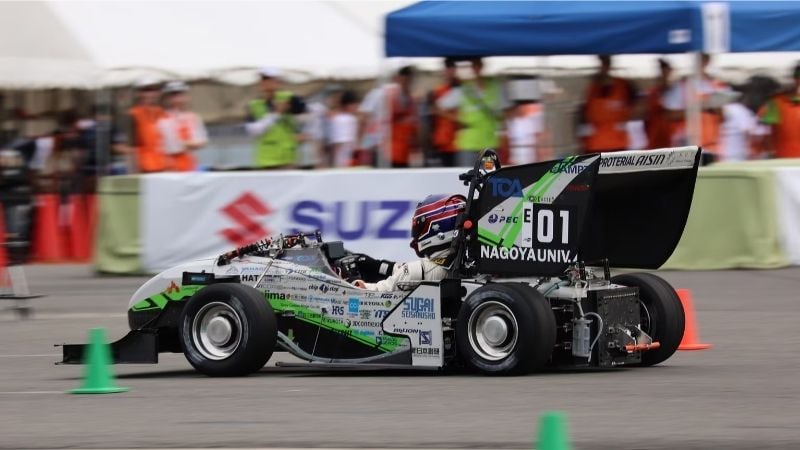
Electric race car. Image used courtesy of Vicor
Keeping EV Racing Fast and Light
Nagoya University Formula Team FEM engineered the electric vehicle that won first place at the 2025 Formula SAE Japan competition. This year, the team replaced their older DC-DC converters with small, lightweight power modules from Vicor Power.
DC-DC converters are critical power electronic devices in EVs that convert high voltage DC into low voltage DC, typically from somewhere between 400-800 V down to either 12 V, 24 V or 48 V. These converters are critical in EVs because they take the high voltage used to power the motor to power the EV’s auxiliary systems, such as the lighting and sensors.
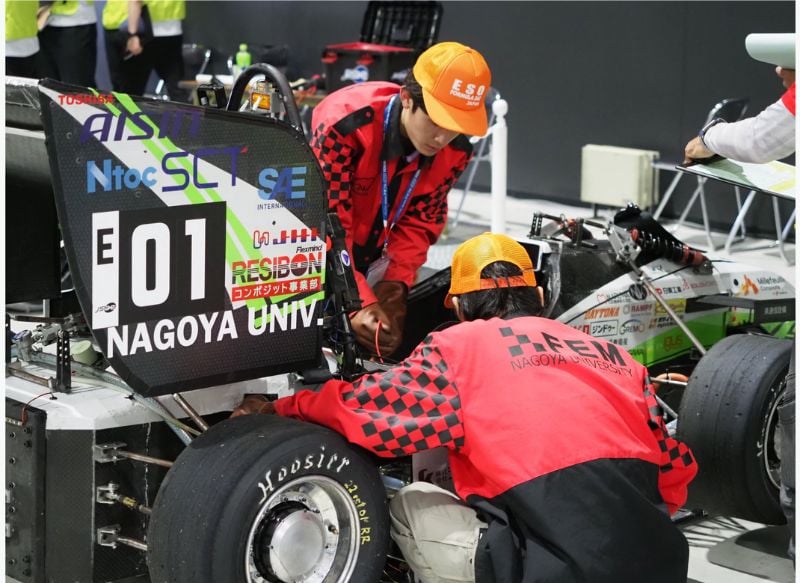
The FEM team makes last-minute adjustments to its EV race car. Image used courtesy of Nagoya University
The motor uses a high-voltage battery because supplying a low voltage to the motor would result in a high current, leading to increased in-circuit losses and lower conversion efficiency. A voltage of 400 V or higher is needed to keep current low and efficiency high. However, this voltage is too high for many auxiliary systems.
FEM has also focused on building lightweight race cars because lower weight improves a vehicle’s performance in the race. The team won the Lightest Weight Award in the Student Formula Japan Championship, reducing the weight of their vehicle from 230 kg to 219 kg. This drive for lighter weight and improved performance led the team to choose Vicor Power’s DC-DC converters.
DC-DC Converters to Improve Race Car Performance
The team stated its previous converters were large and heavy, used excessive power, and had a tendency to overheat. The converters were so hot that they couldn’t touch them after a race. The team had to install additional cooling systems to prevent overheating, which worked against their goal to reduce the vehicle’s weight.

The DC-DC converter’s role in an EV. Image used courtesy of Vicor
Instead, the team turned to some compact converters that could handle the 600 V to 24 V conversion their EV race car needed.
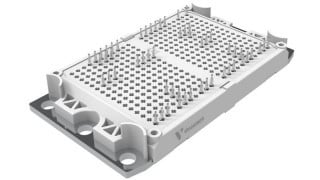
They used Vicor’s isolated bus converter BCM4414 to first create an intermediate voltage from the high-voltage battery, then convert it to the 12 V and 24 V outputs using two DC-DC converters (DCM3623). After conversion, the voltages were used to power the car’s cooling fans and pumps.
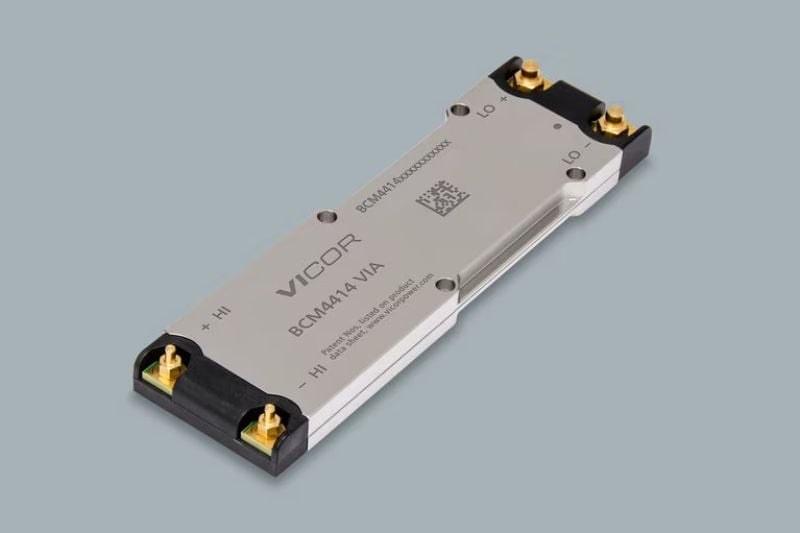
The BCM4414 bus converter. Image used courtesy of Vicor
Because the new module is small (it fits in your hand), it could easily fit into the racing EV, where space is at a premium. Additionally, a racing car is more stable at lower centers of gravity. The components’ small size enables installation high up on the vehicle, which improves the vehicle’s driving performance.
The team plans to further build on these developments next year to improve the vehicle’s weight and to simplify the circuitry. To do this, the team stated that they will integrate a low-voltage battery charging system into the DC-DC converter.
TDK Becomes Partner for Formula E World Championship
In other EV race-car developments, TDK—a company with thousands of components in both EVs and internal combustion engine vehicles—has announced that it is becoming a title partner of the ABB FIA Formula E World Championship and sponsoring the 2026 Tokyo E-Prix this summer.
TDK has a significant presence in EV racing with its components, and last year became the Official Technology Partner of the Porsche Formula E Team and the Porsche Coanda Esports Racing Team. It was previously a partner of the NEOM McLaren Formula E Team.