Facebook
 Google
 GitHub
 Linkedin
AI-Enhanced Platform Coordinates Solar, EVs, Batteries
German startup RAZO Energy is using AI and real-time data to optimize EV charging, solar, and storage.
Rooftop solar panels, electric vehicles, and home batteries are now commonplace across millions of homes, especially in Europe. But many of these devices still operate in silos. A home may have a solar photovoltaic (PV) system, a wall battery, and a charger, but these devices might not respond to real-time grid conditions or price signals. The result is underutilized solar, unnecessary grid draw, and missed opportunities to tap into dynamic pricing.
RAZO Energy, a spinoff from the Karlsruhe Institute of Technology, has developed a cloud-based platform to address this integration gap, allowing users to control their energy consumption. Through its mobile app, RAZO dynamically adjusts energy flow based on solar production forecasts, current consumption, and grid prices. The system uses an AI-based mathematical optimization model.
For example, the software might prioritize EV charging during midday solar peaks or pre-charge the battery when electricity is cheapest. Its solar surplus forecast uses hourly weather data and system-specific parameters like PV orientation and size to calculate available solar.
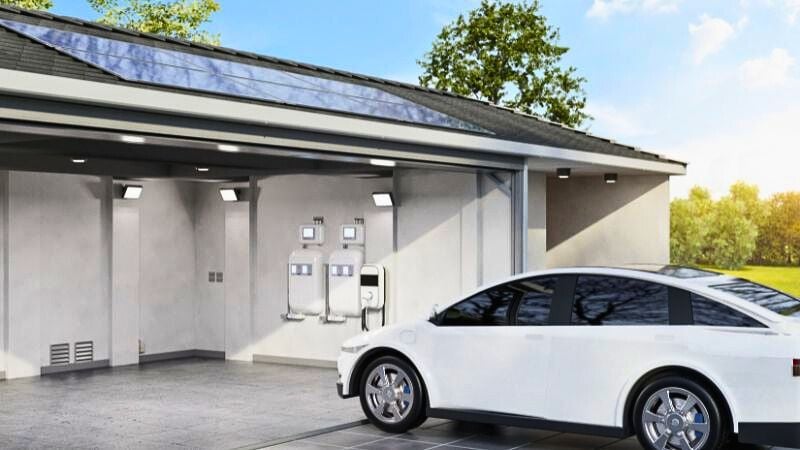
RAZO’s platform optimizes charging, storage batteries, and EVs. Image used courtesy of Adobe Stock
RAZO’s Solution
The core issue RAZO aims to address is the lack of intelligent, dynamic control in residential distributed energy systems. It optimizes across multiple variables, such as intermittent generation, fluctuating electricity prices, shifting household demand, and various devices from different manufacturers.
According to RAZO, users have seen EV charging costs drop from about €6 to €2 per 100 kilometers (or around $10.40 to $3.50 per 100 miles) when using the system’s intelligent charging features. These figures come from comparisons of controlled versus uncontrolled charging and reflect the benefits of aligning demand with solar output and off-peak grid pricing. (Actual savings may vary by location, depending on local rates and solar availability.)
The general concept is nothing new, as demand response and virtual power plants have been around for years. However, RAZO allows residents to optimize their energy consumption automatically without the complexity of contracts and managing load profiles.
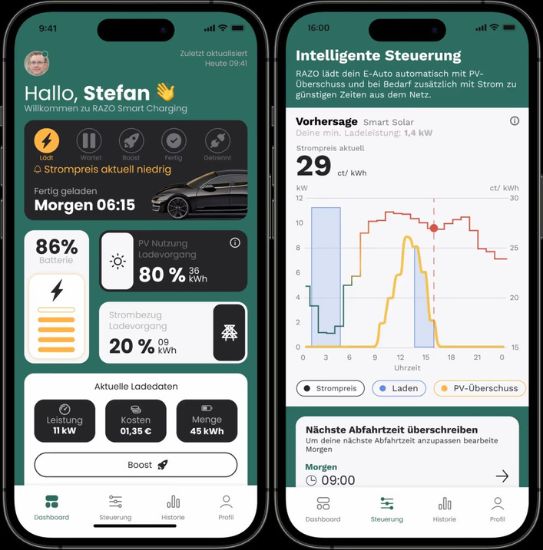
RAZOs mobile app. Image used courtesy of RAZO Energy
Smarter Energy Control
A single 11 kW EV charger has a high power draw, potentially even doubling a household’s peak load. Without coordination, large-scale EV adoption places undue stress on distribution networks, especially during evening hours when solar production drops and grid demand spikes. When hundreds or thousands of homes shift loads in sync with renewables, peak demand flattens, local stress drops, and grid reliability improves.
Germany, RAZO’s home market, is experiencing these ongoing pressures as distributed generation grows faster than centralized supply, yet control systems remain behind. Without better integration, this fragmentation risks grid instability.
Government policies have accelerated these trends. The Netherlands has had explosive solar adoption thanks to its subsidies and net metering program. Germany’s Renewable Energy Sources Act offers fixed payments for solar energy, while Italy’s Superbonus provides a 50% incentive for residential PV systems. The Netherlands now leads Western Europe in home solar adoption, covering 34% of homes (nearly 3 million), according to data compiled by Sunsave. Germany ranks second with over 4 million homes. Separately, a BSW-Solar industry survey found that 80% of German residential solar installations now include a home storage system. Of those, about 40% are paired with a heat pump or wall box for EV charging.
Battery-EVs have already reached a 15% share of new car registrations in Europe so far this year. Also, battery prices have dropped more than 89% since 2010, making these products more accessible. But if they aren’t intelligently coordinated, both households and grid operators face increasing operational complexity, unnecessary energy costs, and diminished system efficiency.