
 Facebook
 Google
 GitHub
 Linkedin
Why Fragmented Intelligence Undermines Grid Reliability
Relying on periodic snapshots for transformer health leads to costly failures, but continuous, real-time hydrogen monitoring can avoid them.
In 2023, BP’s Whiting refinery in Indiana was forced to shut down after a transformer failure triggered a plant-wide power outage. The refinery, BP’s largest in North America, was putting out 435,000 barrels of oil per day. The evacuation that followed was the largest the site had seen in years. Within hours, gasoline and diesel prices jumped more than 20 cents per gallon. It took two months for the refinery to restart.
Transformer failures rarely happen without warning. They happen when monitoring is absent or when warnings are ignored. When important monitoring signals go undetected, it can mean the difference between routine maintenance and a multimillion-dollar disaster.
Whether it impacts a refinery or a battery power plant, every unplanned outage carries an outsized impact on public perception and real-world penalties. Utilities are benchmarked against reliability metrics that track customer power losses and downtime, such as SAIDI and SAIFI. Each failure is a knock on those metrics, with the potential for automatic fines and low customer satisfaction scores.
Transformer monitoring data is readily available to provide operators with the situational intelligence needed to predict failures and mitigate their effects. Ratepayers and regulators are monitoring performance after the fact. The onus is on grid owners and operators to monitor available intelligence to preempt costly service disruptions.
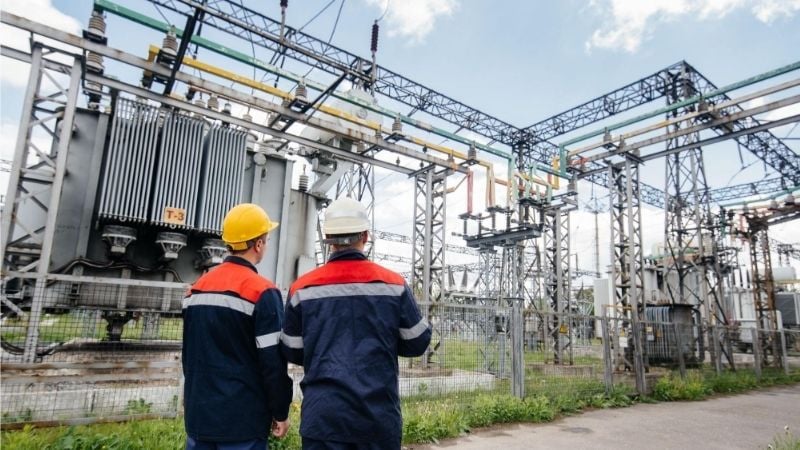
Evaluating grid assets.
Under Pressure
Today, America’s transformers are operating in crisis mode. Designed for steady, one-way power flow, they now handle the complex, bidirectional demands of renewable integration, often with minimal oversight. Many of these transformers exceed their expected lifecycles by more than a decade, compounding the risk of unexpected outages.
The unseen threats to grid reliability are becoming apparent as the utility industry races toward an intelligent grid. Increasingly, operators are integrating sensors, AI-driven analytics, and real-time control systems to manage increasingly complex networks and proactively prevent equipment failures.
The promise is compelling: a digitally connected infrastructure that anticipates stress, rebalances loads, and makes faster, smarter decisions about aging assets. But that promise depends entirely on the data feeding it.
Right now, the grid is not only suffering from a lack of data but also from fragmented intelligence. When critical information lives in silos, early warnings are missed and become late, costly decisions.
A Snapshot Is Not Intelligence
Traditionally, utilities rely on Dissolved Gas Analysis (DGA) to assess transformer health. Oil samples are drawn manually and sent to a laboratory, typically every 12 to 18 months or longer. These tests identify specific gases such as hydrogen, ethylene, and acetylene, which signal internal transformer distress or potentially imminent catastrophic failure.
DGA results offer a single point-in-time snapshot that misses critical day-to-day and seasonal changes. When transformer faults happen, they typically develop from first gassing to complete failure within six months. A fault can begin, escalate, and become irreversible between one sample and the next.
Hydrogen is the earliest sign of internal transformer distress, forming when insulating oil begins to break down under abnormal heat or moisture. It can appear months before any visible sign of a problem. Persistent hydrogen monitoring captures the rate of change, which allows operators to see abnormalities and react in real time. When hydrogen data lives in a lab report or is only reviewed once a year, it’s not intelligence; it is a historical record.
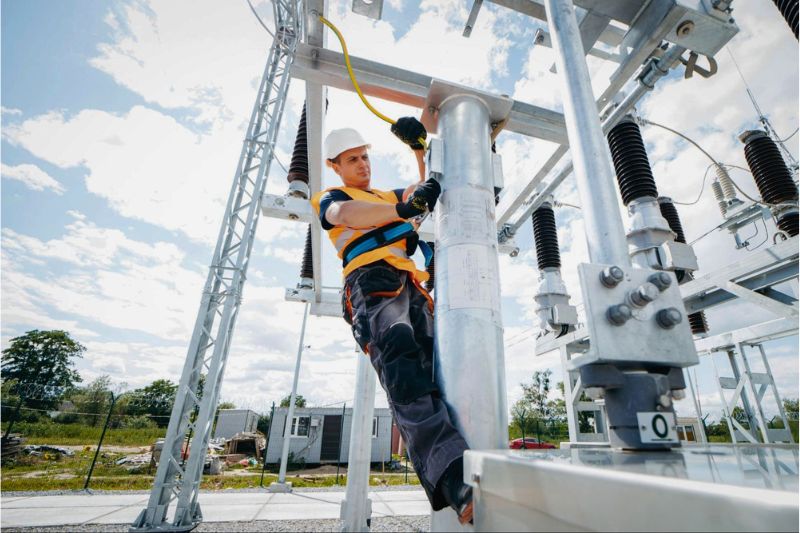
Inspecting equipment.
By the time it informs a decision, the window for preemptive action may already have closed. Given the age of the transformer fleet and supply chain delays, utilities need a viable strategy to bridge these gaps.
The Supply Chain Makes It Worse
Approximately 55% of America's distribution transformers are more than 33 years old and approaching the end of life, according to NREL. Domestic production capacity cannot meet replacement demand, and lead times for new units now stretch two to three years or more. NREL further warns that aging infrastructure under heavier loads will accelerate failure rates, particularly after 2030. Beyond the procurement headache, these challenges are driving changes to asset strategy.
A utility managing hundreds of thousands of transformers (or millions for the largest U.S. utilities) cannot afford to guess when one might fail. A 30-year-old unit that is actively generating hydrogen is a far more urgent priority than a 35-year-old unit operating cleanly. Without real-time data, that distinction is impossible to make. Every replacement decision becomes a calculated guess, and in a constrained supply environment, a wrong guess can mean years of unnecessary risk on one asset and unnecessary delays waiting for a replacement transformer.
Regulatory compliance and customer expectations compound the risks of failure. In an industry where trust and reliability are paramount, utilities are held accountable for customer satisfaction, and outages remain the single greatest driver of customer dissatisfaction. When a utility misses the mark, it can drive down its Net Promoter Score (NPS), which may directly weaken its position in rate case proceedings or undermine efforts to raise money for capital improvements.
Closing the Loop on the Intelligent Grid
Continuous hydrogen monitoring closes the gap left open by periodic sampling. Compact solid-state sensors can be installed directly on a transformer’s main tank, requiring no calibration for up to 10 years, and providing a real-time stream of hydrogen concentration data. The moment levels begin to rise, operators receive an alert. The warning reaches the right people in minutes rather than months.
More importantly, hydrogen data can be integrated directly into the control environments and asset management platforms that utilities are already building. Through direct integration, hydrogen readings can feed into SCADA systems, grid management dashboards, and fleet monitoring platforms.
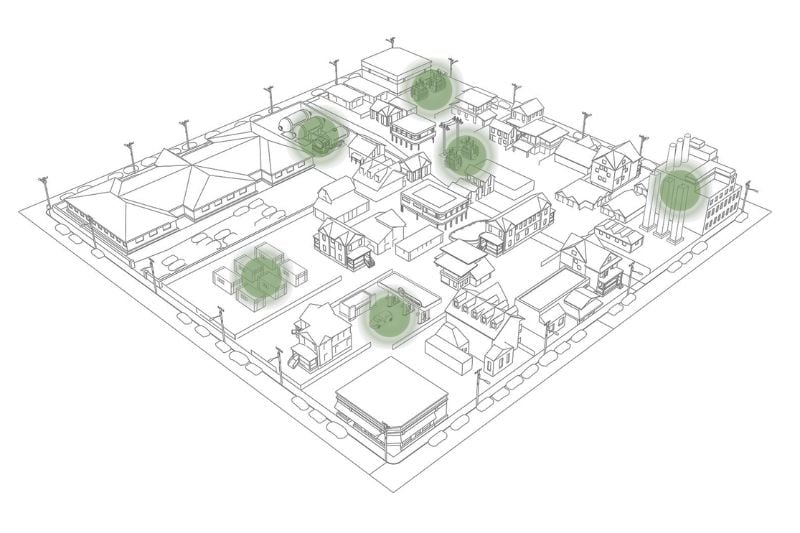
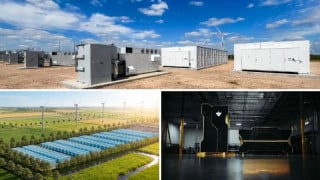
H2Scan's hydrogen sensing areas.
With that integration in place, asset management decisions become data-driven rather than intuitive. Replacement schedules align with actual risk rather than age. Load rebalancing happens proactively rather than reactively. According to the U.S. Department of Energy, predictive maintenance enabled by continuous monitoring can extend transformer life by up to 20% and reduce maintenance costs by up to 25%. In an environment where transformer life extension is the norm, every additional year of service is operationally valuable.
From Detection to Decision
The intelligent grid vision only holds together if the data flowing into it is timely, accurate, and complete. Many of the most expensive grid failures begin as unshared insights or missed data points. Utilities that close the data gap can improve reliability, extend asset life, and avoid costly outages.
The technology is available, affordable, and proven. The cost of a hydrogen sensor is a fraction of the losses from a single major outage. The return on investment is not only measured in increased earnings, but in addressing reliability as table stakes, avoiding multimillion-dollar penalties, and clearing the way for capital investment approvals from regulators.
All images used courtesy of H2Scan






Very informative content regarding industrial grounding systems. High-quality Earthing Rods Supplier products and advanced ESE Lightning Arrester Supplier solutions are essential for preventing electrical damage and improving lightning protection performance.
The assertion is that hydrogen gas generation is an indication of a problem.
For those few of us who are not a daily part of large power distribution, could you explain the mechanism of failure occurring in a transformer that produces excess hydrogen gas. That is an intersting thing that I had not been aware of. I am aware of gas detection systems but not these kinds.