Facebook
 Google
 GitHub
 Linkedin
AMI 2.0: Grid Management Tools Integrate Artificial Intelligence
MicroEJ, GE Vernova, and Landis+Gyr are implementing artificial intelligence to improve grid reliability and operations.
The steady increase of renewable energy sources, the expansion of distributed energy resources (DERs), and consumer expectations are pushing the aging grid infrastructure to its limits. Managing grid efficiency while embracing innovation requires utilities to adopt smarter technologies to enable real-time insights, predictive maintenance, and enhanced operations.
The energy sector is rising to this challenge by deploying AI-enabled smart meters, grid orchestration software, and advanced management systems. Solutions from industry leaders such as MicroEJ, GE Vernova, and Landis+Gyr are paving the way for a more connected, resilient, and consumer-focused grid. By leveraging advanced technologies, utilities can enhance grid performance, improve consumer engagement, and accelerate the transition to a sustainable energy future.
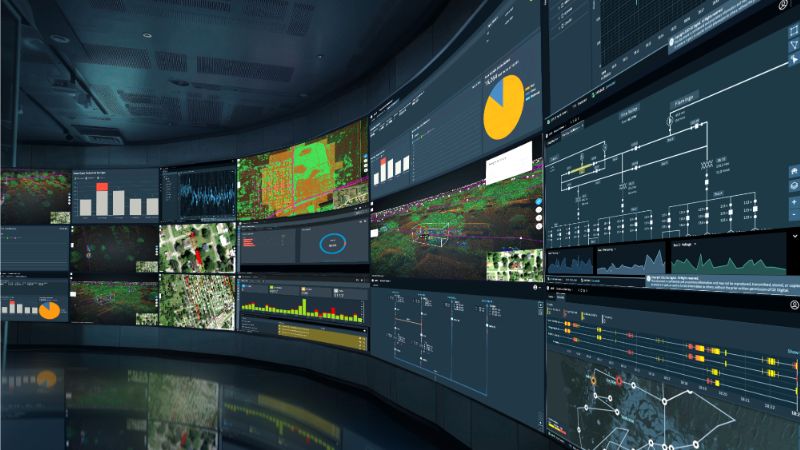
Grid management tools. Image used courtesy of GE Vernova
VEE Energy
MicroEJ's VEE Energy has introduced an approach to smart metering designed to enhance existing hardware. Utilities can upgrade standard meters into intelligent, AI-enabled devices without costly replacements. This solution leverages edge intelligence to enable utilities and third parties to deploy artificial intelligence applications directly on their meters.
VEE Energy improves grid reliability and user engagement by providing granular, real-time data insights. Its collaboration with industry leaders such as Landis+Gyr has enabled advanced edge intelligence, such as Landis+Gyr’s Revelo meters. This scalable and cost-effective approach is helping utilities worldwide transition to AMI 2.0, a more connected and adaptive grid infrastructure.
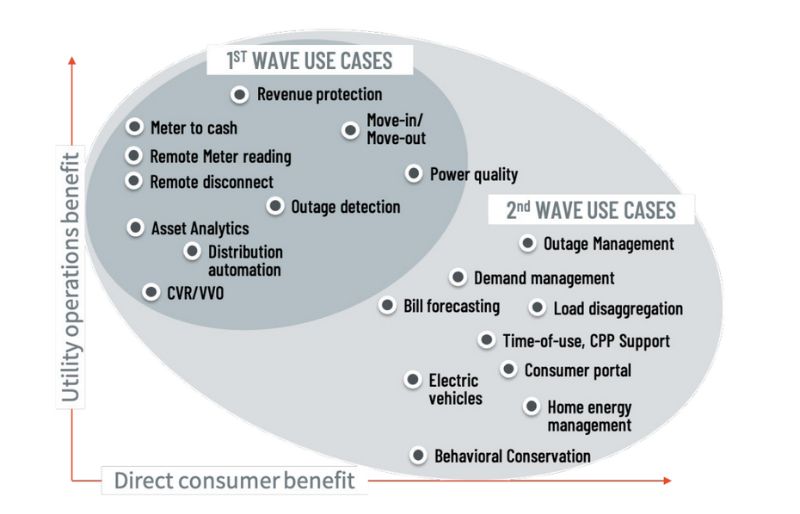
Utility operation and benefits of VEE Energy’s smart meters. Image used courtesy of VEE Energy
GE Vernova’s GridOS
GE Vernova’s GridOS by One Grid Operation in Norway exemplifies how grid orchestration software improves energy management. GridOS integrates advanced distribution management systems (ADMS) and distributed energy resource management systems to provide visibility and control of DERs, including wind power, battery storage, and electric vehicles. By implementing a hybrid cloud strategy, with ADMS running on-premise and other applications in the AWS Cloud, One Grid Operation aims to improve grid conditions.
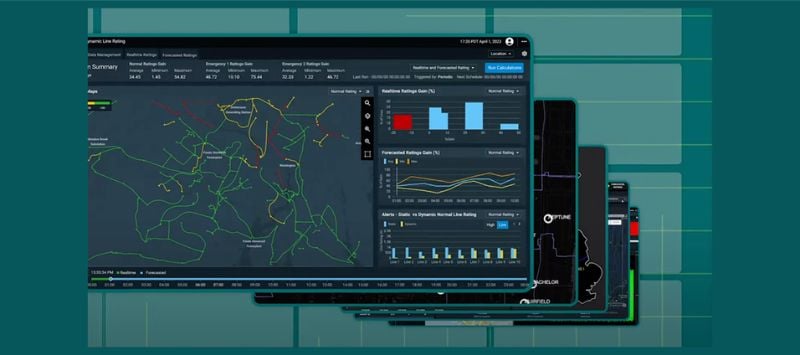
Grid orchestration software. Image used courtesy of GE Vernova
Effective grid orchestration can transform energy management, helping utilities improve modern grids. Solutions like GridOS deliver tangible benefits that address key challenges.
- Fewer network outages: GridOS users have experienced a 21% reduction in network outages, ensuring more reliable energy delivery to consumers.
- Faster restoration times: With 17% faster recovery rates, utilities can restore power more efficiently after disruptions.
- Greater renewables integration: Grids managed with GridOS handle up to 70% renewables penetration, enabling the adoption of sustainable energy sources.
- Lower inertia management costs: Utilities can reduce inertia management expenses by up to 40%, supporting cost-effective operations in renewable-heavy networks.
Landis+Gyr and Sense
Landis+Gyr’s collaboration with Sense in the Asia-Pacific region highlights the role of grid-edge solutions in the energy transition. By integrating Sense’s machine learning software into Landis+Gyr’s smart meters, utilities gain access to analytics and high-resolution waveform sensing capabilities. This enables utilities to proactively manage peak demand, predict fault conditions, and deliver safety alerts, providing the visibility needed for a flexible, user-centric grid.
The partnership offers real-time energy management tools that identify energy usage by household devices and integrate with solar panels, batteries, and EVs. In regions like Australia and New Zealand, where renewable adoption is surging, these insights empower users to make informed decisions regarding energy use.
Moving Forward
The innovations from MicroEJ, GE Vernova, and Landis+Gyr represent a step forward in addressing the challenges of modern grid management. By combining advanced software, edge intelligence, and data analytics, these solutions enable utilities to optimize operations, enhance grids, and engage consumers more effectively.