Facebook
 Google
 GitHub
 Linkedin
Supercapacitors: Improving STATCOM Ops, Enhancing Grid Stability
Grid operators can improve power quality, stabilize voltages, and achieve stability using static synchronous compensators.
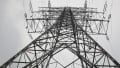
Renewable energy sources are being embraced globally in an effort to reduce carbon footprints and combat climate change. At the same time, the proliferation of electric and hybrid vehicles, as well as high-power users like data centers and smart grids, has resulted in an unprecedented demand for clean, reliable, and affordable electricity. One of the main challenges of power grid design is maintaining stability and power quality, as distributed energy resources create more complex and dynamic power flows.
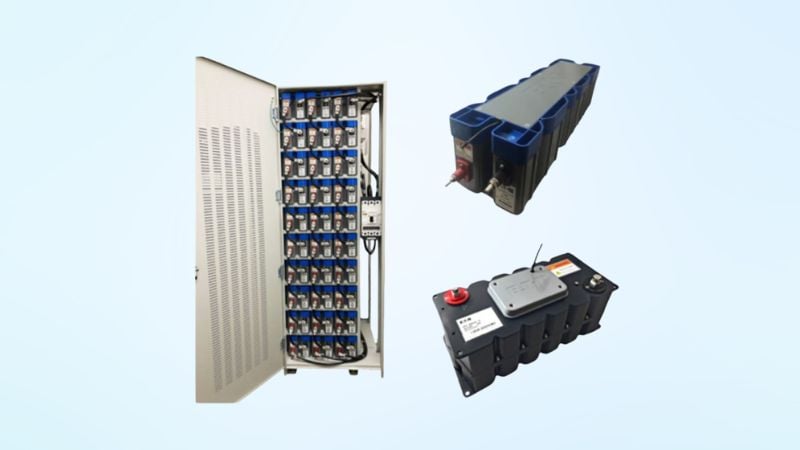
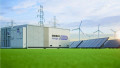
Supercapacitors for grid operations.
Fluctuations in renewable energy outputs, fluctuations in load patterns, and other disturbances tend to cause voltage and frequency deviations that can damage or impair equipment, disrupt operations, and cause blackouts. A grid with low inertia is particularly susceptible to these fluctuations, as the reduced percentage of energy from turbines (which have built-in inertia) leads to more instability as power generation sources and large loads come online and offline. To address these issues, operators can use static synchronous compensators (STATCOM) to stabilize voltages, improve power quality, and enhance grid stability.
Applying STATCOMs in Power Installations
STATCOMs are power electronic devices connected in shunt with the power grid to provide fast, dynamic control of reactive power. They work by injecting or absorbing reactive power as often as required to maintain voltage stability and compensate for disturbances caused by load fluctuations, faults, or other events. By responding in real-time to changes in grid conditions, STATCOMs can help to prevent voltage collapse, improve power quality, and enhance the overall reliability and efficiency of power systems.
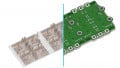
A typical STATCOM system consists of three major components: a voltage source converter (VSC), a coupling transformer, and a control system. The VSC is responsible for converting DC from an energy storage device into AC power to be injected into the grid. VSCs typically utilize insulated-gate bipolar transistors (IGBTs) and other power components to perform conversion, in addition to advanced pulse width modulation (PWM) techniques for ensuring precise and efficient control.
The coupling transformer connects the VSC to the power grid and allows the STATCOM to inject or absorb reactive power as needed. It also provides the necessary isolation between the VSC and the grid, protecting the STATCOM from transients and other disturbances. Lastly, the control system monitors grid conditions and determines the reactive power that must be injected or absorbed to maintain voltage stability. In the event of power fluctuations, this system sends control signals to the VSC to adjust its output, ensuring that the STATCOM responds rapidly to changes in grid conditions.
Energy Storage Limitations in STATCOM Applications
While STATCOMs are valuable for maintaining grid stability, their performance is limited by their inability to provide active or real power compensation. They typically compensate for reactive power issues alone, failing to address high penetrations of renewable energy sources. Fluctuations in renewable energy outputs and load patterns can be mitigated using active or real power compensation provided by enhanced or grid-forming STATCOMs – advanced STATCOMs incorporating energy storage systems that allow them to provide both reactive and active power.
However, batteries—the go-to energy storage options for STATCOMs—tend to degrade over time, with their performance and capacities diminishing with each charge and discharge cycle. This leads to lower effectiveness, high replacement costs, and shorter lifetimes. Additionally, batteries pose safety risks because they can overheat easily or explode if damaged, and they contain heavy metals and toxic elements that can cause harm if not properly disposed of.
Flywheels, another alternative, offer high power densities and fast response times; however, they contain complex mechanical systems that require specialized maintenance and are prone to failure. Specifically, flywheels' high rotational speeds and powerful magnetic fields can stress bearings, seals, and other components, leading to wear and tear. Moreover, both batteries and flywheels have a relatively high total cost of ownership. Higher costs make them less economically viable for large-scale STATCOM installations, particularly in applications requiring low maintenance and long-term reliability.
Supercapacitors: Efficient Energy Storage Solutions for STATCOMs
Supercapacitors, also called ultracapacitors or electrochemical double-layer capacitors (EDLC), are a viable alternative to batteries and flywheels for energy storage in STATCOM installations. Unlike batteries, which use chemical reactions, supercapacitors store energy in an electric field and utilize high-surface-area electrodes and electrolytes to achieve ultra-high capacitances, allowing them to charge and discharge more efficiently than batteries, with minimal degradation over time.
_highlighting_the_double_layer_composed_of_the_inner_and_outer_Helmholtz_planes_(IHP_and_OHP).jpg)
Diagram of a supercapacitor (or electric double-layer capacitor) highlighting the double layer composed of the inner and outer Helmholtz planes (IHP and OHP).
A major benefit of supercapacitors for STATCOMs is their ultra-high power density. Because they can deliver very high currents in short bursts, supercapacitors can provide the fast, dynamic response needed to stabilize the grid during disturbances. They also charge and discharge rapidly, allowing them to respond in real time to changes in grid conditions.
Supercapacitors also have extended operational lifetimes. Unlike batteries, which must be replaced every few years, supercapacitors can last for decades with minimal maintenance. They can undergo millions of charge/discharge cycles with the full depth of discharge needed for constant grid stabilization, making them more cost-effective and reliable in the long term. Supercapacitors are inherently safer than batteries because supercapacitors do not contain hazardous materials and are not prone to overheating, thermal runaway, or explosions.
Key Considerations for Integration
Integrating supercapacitors into a STATCOM involves several keys:
- sizing the supercapacitor bank to meet the power and energy requirements of the intended application
- designing the interface between the supercapacitors and STATCOM’s power electronics
- developing control strategies to optimize the performance of the system
Sizing the supercapacitor bank is a critical step in the design process because it determines the amount of energy that can be stored and the maximum power that can be delivered. Designers must analyze the specific requirements of the STATCOM application, including the expected magnitude and duration of voltage disturbances, heat generation, the required response time of the system, and the overall power rating of the STATCOM.
After the supercapacitor bank has been sized, the next step is to design the interface between the supercapacitors and the STATCOM’s inverter. A direct connection from the supercapacitors to the DC link or input of the inverter eliminates the need for a DC/DC converter and enables efficient and streamlined power flow, reducing losses and simplifying the overall system design. A wider voltage range on the DC link can optimize the use of supercapacitors by allowing them to utilize more of the stored energy. Some STATCOMs operate over kilovolts or tens of kilovolts. The safety controls and protection are also critical.
The control system for a supercapacitor-based STATCOM must also be carefully designed to optimize system performance. Algorithms can monitor the supercapacitors' state of charge, regulate the inverter's output, and coordinate the overall operation of STATCOMs with other grid-connected devices. Moreover, advanced control techniques, such as Finite Set Model Predictive Control (FS-MPC), can help improve the speed and accuracy of the STATCOM’s response to changing grid conditions.
Supercapacitor-based STATCOMs can be implemented at both utility- and commercial-scale power levels. Utility-scale supercapacitor-based STATCOMs are designed for high-voltage, high-power applications, typically operating at voltage levels between 35 kV and 100 kV AC, with a corresponding DC voltage of about 100 kV. These systems can produce power compensation of 20 MW to 150 MW, making them ideal for large-scale grid stabilization and support applications. At these power levels, the supercapacitor banks must be designed and constructed for reliable and safe operation using modular, rack-mounted supercapacitor units that can be easily scaled up and maintained.
Commercial-scale supercap-based STATCOMs are designed for lower-voltage, lower-power applications operating at voltage levels below 10 kV AC, with a corresponding DC voltage of up to 1.5 kV. These systems offer reactive power compensation of a few MVA, making them ideal for local grid support and power quality improvement.
Eaton Supercapacitor Modules and Cabinets for STATCOM
Eaton’s XLHV supercapacitor modules and XLCV cabinets provide an efficient, reliable, and cost-effective solution for dynamic power compensation and grid stability.
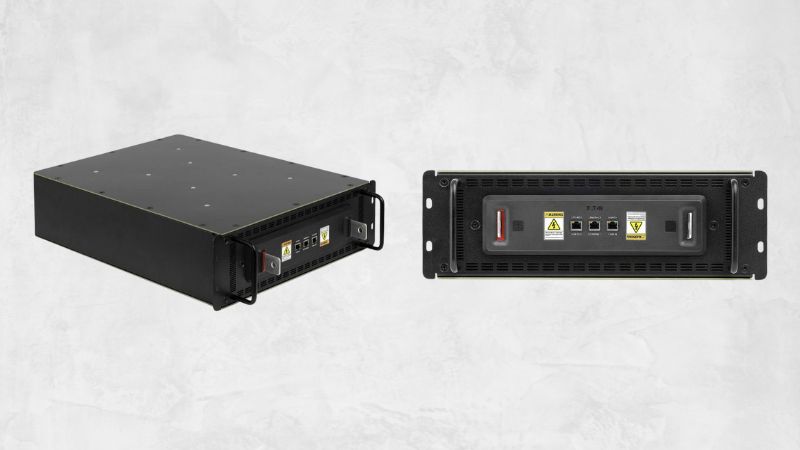
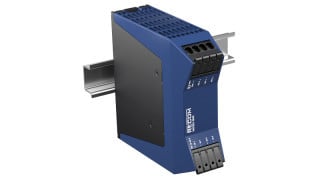
XLHV supercapacitor modules.
The XLHV supercapacitor modules are high-voltage, high-capacitance devices with a compact, lightweight design and a wide operating temperature range. The modules will achieve the desired voltage and capacitance ratings when connected in series or parallel and are available in different capacitance and voltage options to meet a range of application requirements.
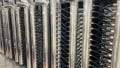
For large STATCOM installations, Eaton offers XLCV supercapacitor cabinets, turnkey solutions providing a complete, integrated supercapacitor system in a single, easy-to-install package. The cabinets offer all the necessary components, including supercapacitor modules, power electronics, and control systems, and can be customized to meet specific requirements. Eaton’s XLCV cabinets are designed for higher reliability and low maintenance, with built-in monitoring and diagnostic systems to ensure optimal performance over the long term.
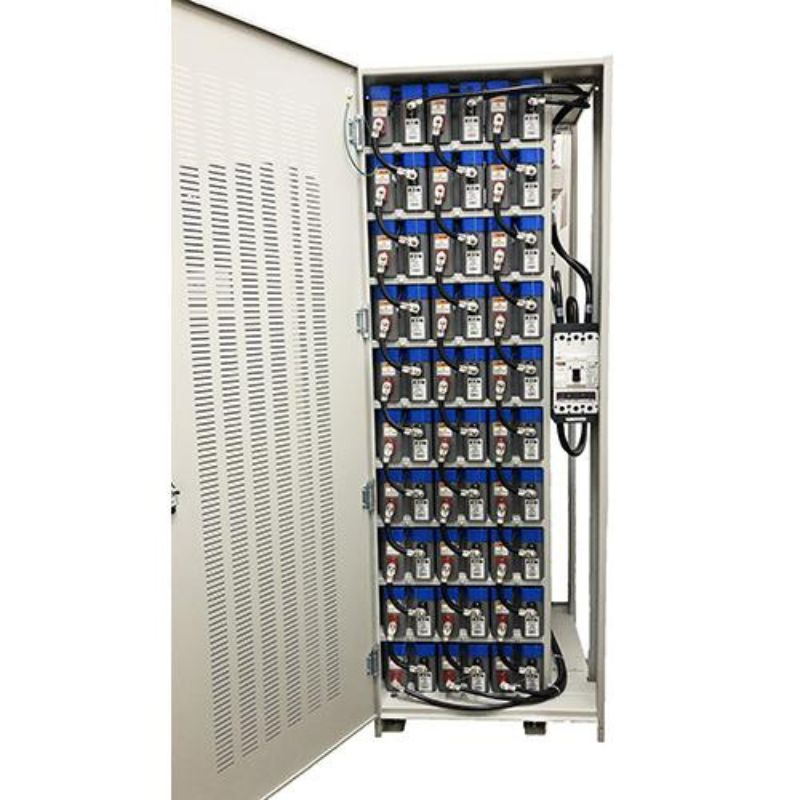
Supercapacitor cabinet.
The XLHV modules and XLCV cabinets are designed to provide fast, dynamic responses to changing grid conditions, with sub-millisecond response times and high power densities of up to 10 kW/kg. These products can be used in a range of STATCOM applications, including voltage regulation, power factor correction, and harmonic filtering.
Flexible, Scalable Solution
Supercapacitors are preferred to other common energy storage solutions for STATCOM applications. With high power density, long operational lifetimes, and inherent safety advantages, they offer the fast, reliable, and cost-effective performance required in increasingly complex and dynamic power installations. Eaton’s XLHV supercapacitor modules and XLCV supercapacitor cabinets are holistic solutions for integrating supercapacitors into STATCOMs. With advanced features and custom designs, these products offer grid operators and engineers a flexible, scalable, and reliable solution for dynamic power compensation and grid stability.