Facebook
 Google
 GitHub
 Linkedin
Locating the Disconnecting Means on a Motor Branch Circuit
Learn to locate the controller and local motor disconnecting means in a motor branch circuit.
Learn to locate the controller and local motor disconnecting means in a motor branch circuit.
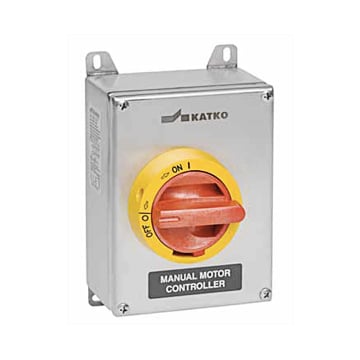
Image used courtesy of WestShoreControls
NEC’s Article 100, “Definitions,” defines a “disconnecting means” as a device, group of devices, or other means to disconnect the circuit conductors from their supply source.
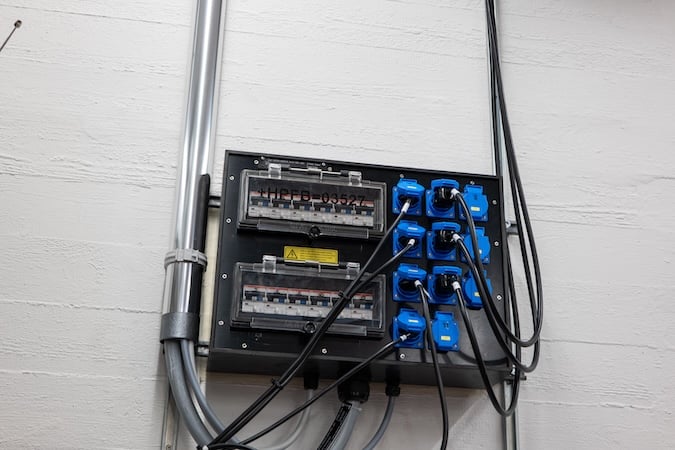
Image used courtesy of Adobe Stock
The rules for disconnecting means ensure the safety of electricians and maintenance staff while they service motor-operated machinery and its circuits.
NEC Article 430. Part IX Disconnecting Means
NEC Section 430.101 General
Part IX mandates a device to disconnect the motor and its controller from all ungrounded supply line conductors.
The relative location of the motor controller disconnect and the separate (local) motor disconnect required in a motor branch circuit is shown in Figure 1. Section 430.102 provides detailed rules regarding these specific locations.
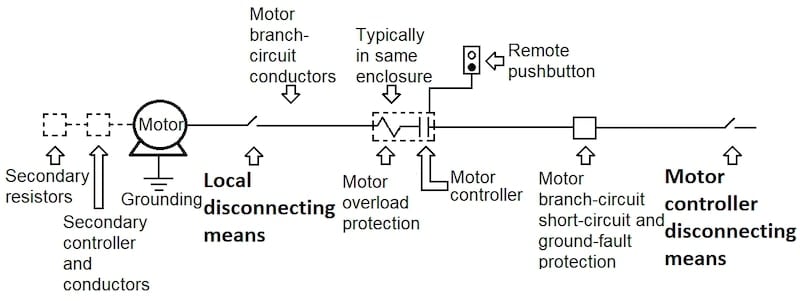
Figure 1. Relative location for the motor and controller disconnecting means in a motor branch circuit. Image used courtesy of Lorenzo Mari
NEC Section 430.102 Location
Section 430.102(A) Motor Controller
- Provide an individual disconnecting means for each motor controller to disconnect the motor controller.
- Locate the disconnecting means in sight from the motor controller location.
This section mandates a means to disconnect each motor branch circuit. The basic requirement applies to motor circuits with ratings up to 1 kV; there is an exception for motors rated above 1 kV.
Per Article 100, “Definitions,” “in sight from” means that the equipment is visible and located at no more than 15 m from other equipment.
In Figure 1, note that the motor controller is the magnetic contactor rather than the remote pushbutton station.
Figure 2 shows a controller disconnecting means in sight from the motor controller. In this case, the disconnecting means could be either a lock-open type or a non-lock-open type.

Figure 2. Disconnecting means being in sight of the motor controller location. Image used courtesy of Lorenzo Mari
Figure 3 shows the section of the motor circuit to place the controller (magnetic starter) disconnecting means. The distance between the controller and the disconnecting means cannot exceed 15 m.
The fused switch is out of sight from the controller and may be a lock-open or non-lock-open type.

Figure 3. Section of the motor circuit to place the controller disconnecting means. Image used courtesy of Lorenzo Mari
Exception N° 1: For motor circuits above 1 kV, a motor controller disconnecting means may be out of sight of the motor controller if it is lockable per Section 110.25, and the motor controller has a label indicating the location of the disconnecting means.
Section 110.25 requires a lockable disconnecting means to be locked in the open position.
Figure 4 shows a lockable disconnecting means out of sight of a high-voltage motor controller. The controller has a warning sign or label giving the location of the disconnecting means.

Figure 4. Lockable disconnecting means out of sight of a medium-voltage motor controller. Image used courtesy of Lorenzo Mari
Exception N° 2: A group of coordinated motor controllers driving several parts of a machine or apparatus may use a single disconnecting means. The disconnecting means must be in sight of the motor controllers and all of them in sight of the machine or apparatus.
This exception is a practical consideration for complex industrial machinery that utilizes multiple motors to operate various equipment parts.
Figure 5 illustrates a single disconnecting means positioned near a group of coordinated controllers mounted adjacently.

Figure 5. Single disconnecting means in a multi-motor machine. Image used courtesy of Lorenzo Mari
Exception N° 3: There is no requirement to position the disconnecting means in sight from valve actuator motor (VAM) assemblies that include the controller if doing so poses additional or increased hazards to individuals or property, and the following conditions are satisfied:
- The valve actuator motor assembly features a warning label indicating the location of the disconnecting means.
- The disconnecting means is lockable under Section 110.25.
According to Article 100, “Definitions,” a “valve actuator motor (VAM) assembly” is a manufactured assembly used to operate a valve. It consists of an actuator motor and components such as motor controllers, torque switches, limit switches, and overload protection.
VAMs are typical in industrial facilities to control process fluids. The motors are short-time duty with high torque.
Section 430.102(B) Motor
- Provide a disconnecting means for a motor per sections 430.102(B)(1) and (2).
Section 430.102(B)(1) Separate Motor Disconnect
- Install the disconnecting means in sight from the motor and driven machinery.
Figure 6 illustrates a separate motor disconnect located in sight from the motor and the driven machinery.
The pushbutton station operates the magnetic starter, which serves as the motor controller; recall that the pushbutton station itself is not the motor controller.
The fused switch—the disconnecting means for the motor controller–is a non-lock-open type because it is in sight of the motor controller.

Figure 6. Separate motor disconnect in sight from the motor and driven machinery locations. Image used courtesy of Lorenzo Mari
The wires connecting to the pushbutton station may fail, causing the magnetic contactor to remain closed. As a result, the motor could continue running even when pressing the off button. In such a situation, the electricians and maintenance personnel may open the motor disconnect to stop the motor.
Section 430.102(B)(2) Motor Controller Disconnect
- If in sight from the motor and driven machinery locations, the motor controller disconnecting means–required per Section 430.102(A)–may serve as the motor’s disconnecting means.
Exception to sections 430.102(B)(1) and (2): The motor disconnecting means shall not be required under either of the following conditions if the motor controller disconnecting means required in Section 430.102(A) is lockable per Section 110.25.
1. Where the location of the disconnecting means for the motor is impractical or creates additional or increased hazards to persons or property.
2. If only qualified personnel service the equipment in industrial settings with documented safety procedures, maintenance, and supervision.
It is acceptable to place the disconnecting means in a remote location if positioning it within sight of the motor and driven machinery is unviable or would increase the risk to personnel or property. This practice is also appropriate in industrial settings where only trained personnel are responsible for servicing the equipment.
The Informational Note N° 1 gives the following examples of increased or additional hazards:
- Motors rated over 100 hp.
- Multimotor equipment.
- Submersible motors.
- Motors with adjustable speed drives.
- Motors located in hazardous locations.
The Informational Note N° 2 references NFPA-70E-2021, the Standard for Electrical Safety in the Workplace. This standard is essential for employee safety and outlines rules that, among other things, mandate locking off and tagging out disconnect switches.
Figure 7 shows a motor controller disconnecting means–the lockable fused switch–out of sight of the motor and the driven machinery. Per the exception to sections 430.102(B)(1) and (2), a disconnecting means for the motor is not needed if the motor controller disconnecting means is lockable in the open position and one of the two conditions cited above applies.

Figure 7. Motor disconnecting means per exception to sections 430.102(B)(1) and (2). Image used courtesy of Lorenzo Mari
Under this arrangement, electricians and maintenance personnel can lock open the disconnect ahead of the motor controller to ensure the motor is de-energized while working on it.
A disconnect or panelboard located in a locked room or having a lockable door does not comply with Section 430.102.
NEC Section 430.103 Operation
- The disconnecting means must comply with the following terms:
◦ Must open all ungrounded supply conductors.
◦ No pole can operate independently.
◦ May share the same enclosure with the motor controller.
◦ It cannot close automatically.
Providing a disconnecting means to open all ungrounded conductors allows for the safe, periodic inspection and servicing of motors and their controllers.
The disconnecting means must disconnect the controller and the motor and cannot be part of the controller. However, installing a disconnect and motor controller within the same enclosure is permissible. An example is a combination of a fused switch and a magnetic starter.
The disconnecting means must handle high currents to interrupt locked rotor or overload currents if the motor controller fails to open the circuit under any of these conditions.
The disconnecting means must not close automatically. The NEC added this requirement in the 2008 edition.
NEC Section 430.104 To Be Indicating
- Design the disconnect to indicate whether it is in the open (off) or closed (on) position.
NEC Section 430.105 Grounded Conductors
- One pole of the disconnecting means may open a grounded conductor. However, if it opens the grounded conductor, it must simultaneously open all other circuit conductors.
The disconnecting means in a motor circuit may open the grounded conductor if all poles operate simultaneously.
For example, a 240-V, single-phase, 3-wire circuit with one grounded conductor requires a two-pole disconnect switch. However, a three-pole switch is acceptable if all poles operate simultaneously.
NEC Section 430.107 Readily Accessible
- Keep at least one of the disconnecting means readily accessible.
According to Article 100, “Definitions,” “readily accessible” means that it can be quickly reached for operation, renewal, or inspections without requiring the use of tools (other than keys), climbing over or under, removing obstacles, resorting to portable ladders, and so forth.
A readily accessible disconnect must be available only to those who require easy access. This definition does not prohibit using locks to ensure that equipment is not readily accessible to anyone unauthorized. For example, it is acceptable to lock the door to the room where the equipment lies as long as authorized personnel have access to the key or combination needed to unlock it.
Locating The Disconnecting Means Takeaways
- Part IX of Article 430 applies to disconnecting means for all motors.
- Disconnects safeguard electricians and maintenance staff while doing their jobs.
- Motor controllers must have a readily accessible disconnecting means within sight and no more than 15 m away.
- Motors rated above 1 kV may have a lockable motor controller disconnecting means located out of sight, with a label on the motor controller indicating the disconnecting means’ whereabouts.
- Motors must have a readily accessible disconnecting means in sight from the motor and driven machinery.
- The motor controller disconnect may act as the disconnecting means if in sight from the motor and driven machinery.
- The disconnecting means must open all ungrounded conductors and indicate the “off” and “on” positions.
- A disconnect may open a grounded conductor if it simultaneously opens the ungrounded conductors.