Facebook
 Google
 GitHub
 Linkedin
Gen 4 Technology Platform Delivers “Flexibility Without Compromise”
To learn about Wolfspeed’s Gen 4 technology, we talked to Elif Balkas, the company’s CTO and a Ph.D in materials science.
This article is published by EEPower as part of an exclusive digital content partnership with Bodo’s Power Systems.
Wolfspeed has launched its Generation 4 technology platform. What’s new, what’s special?
From its inception, the Gen 4 platform was designed to comprehensively improve system efficiency and prolong application life, even in the harshest of environments, while helping to reduce system cost and development time. And we intentionally focused on specific figures of merit and device performance specs to enable it. Let me give you a few examples.

Elif Balkas, CTO of Wolfspeed. Image used courtesy of Bodo’s Power Systems [PDF]
We made significant improvements to holistic efficiency during the common switching behaviors. Our Gen 4 products improve conduction losses in hard and soft-switching applications. For example, systems such as traction inverters for EVs or industrial motor drives operate across a wide load range and spend a significant portion of its operating time at low power levels. Our Gen 4 platform helps to mitigate conduction losses with up 21% reduction in Rsp at operating temperatures. Reducing conduction losses improve efficiency across the load spectrum, translating to extended EV range, better energy ratings for HVAC systems, and lower cooling costs in server farms due to reduced heat dissipation requirements.
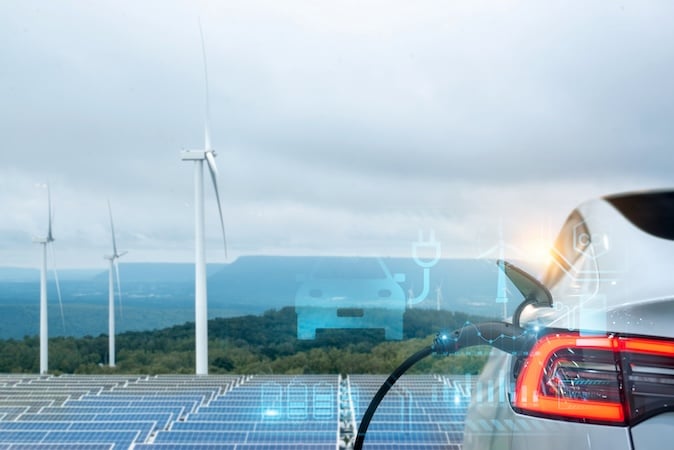
Image used courtesy of Adobe Stock
What about hard switching applications and durability?
Hard switching applications such as industrial motor drives, power supplies for AI data centers, and active front-end (AFE) converters for grid-connected systems will benefit from up to 15% lower switching losses. The reduction of switching losses offers two primary advantages. First, design engineers can increase switching frequency, enabling smaller, lighter systems. Alternatively, they can prioritize efficiency gains by reducing heat dissipation, lowering system-level costs through smaller heat sinks or reduced cooling requirements. These benefits are not mutually exclusive, giving engineers the flexibility to optimize designs based on their specific needs. These enhancements were made in parallel with the platform’s 175 °C RDSON.
Additionally, for system durability, we choose to focus on maximizing short circuit withstand time to give design engineers that extra safety margin. For some automotive applications, there is a need to push the system to its maximum and perform in overstress or overload conditions during a very limited time in its operation life. For those specific application use cases, we qualified our die products at 185 °C continuous operation and 200 °C limited life operation.
The soft-body diode enables faster switching with less losses and ringing via a 27% reduction in VDS overshoot. In addition, it also minimizes EMI during reverse recovery scenarios without trade-off to the recovery charge, streamlining the EMC Compliance process and allowing for smaller, lower cost EMI filters. And I would be amiss not to mention the improvements we’ve done to the cosmic ray immunity, that boasts up to 100X improvement in failure-intime (FIT) rate compared to Wolfspeed Gen 3 devices.
Engineers are under permanent cost pressure…
…and we know this, of course. For us it is all about helping our customers to optimize systems cost by enabling to minimize the maintenance cost with more durable systems, shorten the production time and design cycles by moving to new architectures and platforms, and lower BoM by reducing the number of passive components.
Gen 4’s ability to integrate a new soft body diode design significantly reduces EMI during reverse recovery, streamlining the process for EMI certification and allowing for smaller EMI filters. It’s up-to 600 capacitances ratios allows for safer and cleaner switching at high dv/dt, without parasitic overshoots. Additionally, Gen 4 allows for up to 30% higher power output within the same footprint. In a practical example, a system engineer can reduce the count of SiC components by 30% in their design without any trade-offs to the system performance, which has a positive impact on system cost, weight and size.
What are the main target applications and markets of the Generation 4 platform?
The potential applications our Gen 4 platform can support are virtually endless. This technology will serve as the new foundation for Wolfspeed’s long-term R&D roadmap of application-optimized power modules, discrete and bare-die solutions. It truly provides the flexibility for our customers to request products that prioritize performance benefits optimized for their specific application requirements, versus having to make tough tradeoffs based on the development platform limitations–whether you are working on power supplies for EVs, motor drives, energy storage, data centers for AI, or renewable energy applications.
Currently our available portfolio of Gen 4-based parts consists of 24 individual part numbers varying in form-factor, voltage nodes and packaging options. Over the next year and a half Wolfspeed will be releasing Gen 4-based products across our entire portfolio including specifically optimized Gen 4 products for individual applications.
Are you already able to give us a first best practice example of a Gen 4 application?
Gladly. One example that right away comes to mind is EPC Power, a premier utility-scale inverter manufacturer. They have partnered with us to create the industry’s first utility-scale string-style inverter that addresses a wide range of power and voltage levels. From the start of our work together, EPC Power has made it clear they wanted to create a new system that is low maintenance, easily serviced and mass produceable for rapid global deployment.
I am going to touch on just one aspect of this successful partnership. The key to solve their design challenges was to utilize the newly released Gen 4 2300-V Wolfspeed Wolfpack™ modules in their new “M” inverters. The change has enabled the shift from a typical three-level architecture to a simplified 2-level power conversion system, reducing the driver count and control complexity. In addition, this solution significantly cut development time and cost by moving the system design from a legacy bus bar to lower cost PCBs.
This article originally appeared in Bodo’s Power Systems [PDF] magazine.