Facebook
 Google
 GitHub
 Linkedin
Designing for Speed: What OEMs Need To Know When Integrating High-Speed Drives
High-speed industrial applications (120 Hz+) require specialized variable speed drives (VSDs). Learn how OEMs are upgrading technology to meet industry demand for faster, more efficient motors across various sectors.
This article is published by EEPower as part of an exclusive digital content partnership with Bodo’s Power Systems.
Our accelerating world calls for ever faster motors. From wastewater treatment to data centers, industries all over the world are scaling up to meet bold challenges and increasing demand. Original equipment manufacturers (OEMs) are responding with upgraded technology to provide their industrial clients with the efficient performance they need so they can scale. As a result, we’re seeing the rise of a new generation of high-speed industrial applications – defined by high-speed motor frequencies of 120 Hertz (Hz) and over. This article explains why specialized variable speed drives (VSDs) are needed to work with these applications.
New Possibilities
High-speed motors open up new possibilities. Efficient cooling for bigger buildings and more advanced data centers. Faster, more thorough aeration and cleaning of wastewater. All while using significantly less energy than it would take to do the same job with traditional motors.
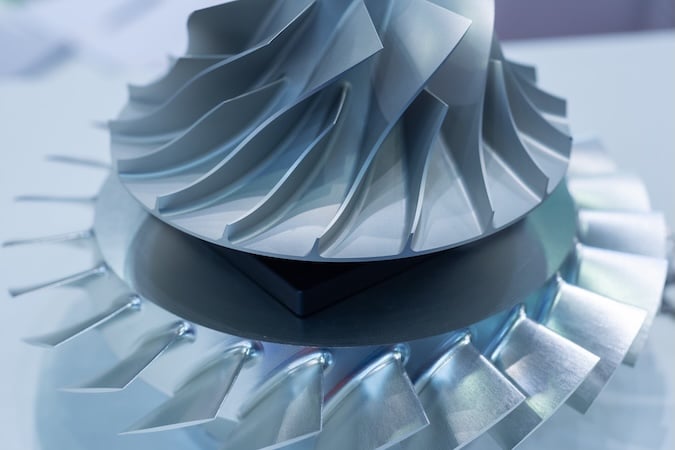
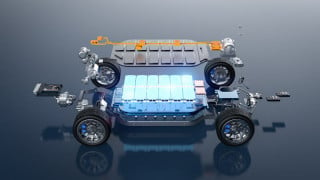
Image used courtesy of Bodo’s Power Systems [PDF]
But like any emerging technology, high-speed applications also bring new challenges. Higher speeds also mean greater stress on the motors, components, and surrounding equipment. And in the large-scale facilities and processes these applications support, the impact of downtime for maintenance or repairs, planned or unplanned, can be drastic. In large-scale food and drink refrigeration, downtime could mean huge amounts of food spoiling and going to waste. In data center cooling systems, downtime could reduce computation speeds or lead to lost data. In offices and residential buildings, the occupants won’t stay quiet for long when the air conditioning system goes down.
One challenge is that the standardization familiar from more traditional industrial motors has not yet arrived for high-speed applications. This makes an OEM’s choice of drive crucial to the success of the application. A good high-speed drive must be versatile enough to control any number of unique high-speed motor designs, while consistently supplying enough current for these powerful machines. And that’s not the only consideration for OEMs joining the high-speed revolution.
Advanced Technology Brings New Complexities
ABB’s own definition of a high-speed application is when the motor frequency is over 120 Hz. And beyond this limit, a high-speed drive needs a higher-than-usual switching frequency. VSDs control the motor by sending out pulses of voltage. The switching frequency (SwF) determines the length of the pulses.
Each pulse nudges the output frequency to match the desired pattern; so while the output voltage follows a digital sawtooth pattern, the output frequency resembles the smooth analogue sine wave created by more traditional fixed-speed drives.
SwF for motor control is like resolution for picture quality. The higher the SwF, the more closely and accurately the drive can control the output frequency, nudging it moment by moment towards the desired smooth sine wave.
The latest high-speed drives can achieve a SwF of 18 kilohertz (KHz) – or even higher, though most still need a separate sine filter to further smooth the output frequency.
But a higher SwF also presents some challenges. This is because a high SwF can cause high Total Harmonic Distortion (THD). This can exacerbate overheating, which necessitates output current derating. Overheating is an issue in many high-speed applications before we even consider the way the drive delivers power. Industrial heat pumps and cooling compressors naturally operate at high temperatures, and anywhere components are moving at high speed, they will generate a certain amount of heat.
THD quantifies the amount of harmonic distortion present in a signal. Harmonic distortion refers to the presence of frequencies that are multiples of the fundamental frequency of a signal, and THD is expressed as a percentage of the fundamental frequency’s power. In simple terms, THD indicates how much a signal deviates from a perfect sine wave due to the presence of unwanted harmonic frequencies. A lower THD value generally indicates a cleaner, less distorted signal, while a higher THD value suggests more distortion.
To decrease the heat generated, most high-speed applications also use air bearings or magnetic bearings to reduce friction. But it is important to note that in magnetic bearings, magnetization starts to decrease above 80°C, and the rotor can become demagnetized if the temperature reaches 160°C or higher, causing motor failure and leading to costly downtime.
Therefore, to prevent damage, most high-speed applications specify a temperature range within which the drive must reduce its output to cool the motor down. But during any time this output current derating is in effect, the application is not operating at peak efficiency.
Then there’s the issue of electromagnetic compatibility (EMC): essential for regulatory compliance in the European Union, but often neglected in other regions, where it’s treated as less of a priority by governments and regulators.
Many industrial applications need an EMC filter to reduce the transfer of electromagnetic noise between the drive and the mains power supply. Without an EMC filter, electromagnetic interference can disrupt other local businesses in the form of flickering lights and can even disrupt local radio broadcasts.
High-speed applications, with their higher SwF and motor frequencies, need different kinds of external filters to protect the local grid. Filters like a motor sine filter and line EMC filter are usually additional pieces of equipment, separate from the drive, which need space and expertise to install and maintain, and can add new points of failure to the overall system.
Since this technology began emerging, some OEMs may have decided not to pursue high-speed applications because of these considerations. But advances in high-speed drive technology, including the ACS880 high-speed drive from ABB, combined with new demands and new challenges facing the industry, make now the perfect time to reassess the potential of high-speed applications.
Turbo-Boosting Efficiency in Key Industries
Traditional industrial blowers and compressors use oil-free screws to accelerate the air flow. Oil-free screws are mechanically complex, so they need regular maintenance, and their bearings (which, despite the name, are oil-lubricated) can require additional cooling.
Thanks to advancements in high-speed motors and drives, many of the applications that have traditionally used oil-free screws can now upgrade to superior impeller-based designs. Impellers can be mounted directly on the motor axle and have far fewer moving parts, so they need relatively little maintenance, can operate for much longer lifetimes, and cut out the need for oil-based lubrication. Aerodynamic impellers also move air with more efficiency than a traditional screw. High-speed motors and impellers are at the heart of a new generation of turbo blowers and turbo compressors that are already helping a range of industries to advance.
Turbo blowers are mainly used to aerate water. This process is the most energy-intensive part of wastewater treatment, accounting for 50% of a plant’s total energy consumption. Switching to highspeed applications has unlocked energy savings of up to 45% in wastewater treatment plants - compared to lobe or screw compressors. One of the United Nations’ Sustainable Development Goals calls for water and sanitation for all. To achieve this without also massively increasing energy consumption, high-speed applications are a must for the water and wastewater industry.
Aeration using turbo blowers can also increase fuel efficiency for large seagoing vessels by injecting a layer of air bubbles between the water and the ship’s hull. This reduces drag, letting container ships and similarly sized vessels slice through the water, using less fuel to maintain the same speed.
Turbo compressors, meanwhile, are solving scaling and efficiency challenges in heating, ventilation, air conditioning, and refrigeration (HVACR). Bigger buildings, more advanced data centers, global food and drink supply chains: in a heating climate, all these applications call for large-scale, efficient cooling and refrigeration, and centrifugal chillers powered by turbo compressors are meeting this need.
And at the other end of the temperature scale, turbo compressors also allow heat pump technology to work at an industrial scale, so district heating, industrial ovens, and chemical process plants can all switch away from using gas for heating – reducing their emissions and their exposure to volatile commodity prices.
Next-Generation High-Speed Drives are Accelerating the Industry
But what about all those challenges holding back some OEMs from embracing high-speed applications?
As industries and governments balance reducing energy and emissions with meeting increasing global demand – for water, for food, for physical goods, for data and computation – anyone still cautious about offering high-speed applications, whether alongside or instead of traditional applications, is liable to be left behind. But cautious OEMs may be reassured to know that high-speed drive technology is advancing alongside high-speed motors and their applications.
The incoming generation of specialized high-speed drives, led by the ACS880 high-speed drive from ABB, offers significantly improved efficiency, ease of installation, and longevity. Perhaps the most attractive feature of the ACS880 drive is that it significantly reduces the need for current output derating, giving OEMs and their clients access to more optimized solutions with the space and cost savings of high-speed applications.
The ACS880 offers 2-phase modulation with a maximum SwF up to 18 KHz (the upper limit of what most equipment can stand) or 3-phase modulation with a SwF up to 12 KHz. Combined with real-time monitoring and sophisticated remote motor control, these systems allow the drive to be calibrated to run most high-speed applications at the lowest possible temperatures, preventing the heat buildup that triggers derating.
The flexibility and control these combined systems afford also mean that OEMs installing the ACS880 can, in some cases, do away with separately installed sine filters. And the ACS880 has a built-in EMC filter. So instead of three separate pieces of equipment all needing expert installation and maintenance – a drive, sine filter, and EMC filter, each representing a separate potential cause of downtime – OEMs can plan for a single, compact, easily installed high-speed drive. ABB high-speed drives only need maintenance once every nine years on average, so clients can count on high levels of uptime over the long term.
Even outside the European Union, where the issue is hardly regulated, EMC will become a more and more important consideration as more high-speed applications are connected to the grid.
Thorough Testing is Key to Success
With standardization still some way off for high-speed applications, the design of the drive motor control algorithm is all-important for good equipment performance. OEMs considering switching drive suppliers can’t assume the same settings will carry over. The SwF that worked for one combination of drive and motor will not necessarily be the SwF a new drive needs to get the best out of the equipment. At this stage in the technology’s evolution, it’s still best to test high-speed applications and drives together thoroughly before putting them to work and joining the high-speed revolution.
This article originally appeared in Bodo’s Power Systems [PDF] magazine.