Facebook
 Google
 GitHub
 Linkedin
Analayzing Thermal Effects on DC Link Capacitors
Understanding thermal stress in smart grid capacitors can help extend DCLC lifespan.
Thermal stresses can affect the life of direct current link capacitors (DCLC) used in smart grids. DCLCs, based on metalized film capacitor (MPFC) technology, are a critical part of power electronics. In power electronic systems, DCLCs are primarily used to store energy, filter harmonics, and sustain the voltage to provide instantaneous energy transfer and reactive power conversion functions.
However, the effects of thermal stress on the lifetime of DCLCs are not widely reported. A joint academic-industry project between Wuxi Power Filter Co. Ltd and Tsinghua University examines these effects.

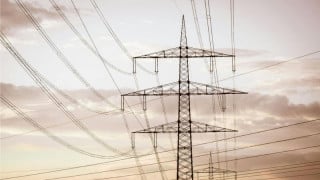
DCLCs are used in smart grids. Adapted from images used courtesy of Canva
DCLCs in Smart Grids
DCLCs have a shell, terminal, multiple elements, connecting copper bars, and insulating regions. They can be flat or cylindrical. The study focused on cylindrical DCLCs containing two metalized propylene films wrapped around the mandrel, with metal electrodes at either end.
Smart grids use DCLCs in flexible DC transmission. They are a core technology for the converter valves within smart grids. The number of DCLCs used in a flexible DC transmission project can be in the tens of thousands, so it’s crucial to understand these device’s lifetimes.

Capacitor structure. Image used courtesy of Sun et al.
Factors Affecting Thermal Stress in DCLCs
Most research has focused on how thermal stresses affect DCLCs’ performance, but few have examined thermal stresses on their lifetimes. In studies of MPFCs, results have shown temperatures have an adverse effect on self-healing capabilities, field strength, and lifetimes. Studies on other capacitors act as a reference point for looking at the thermal stress effects on DCLC lifetimes.
In DCLCs, when the element’s temperature changes, it generates thermal stresses on the films. Thermal stresses arise during manufacturing and while operating the electronics. Thermal stresses in DCLCs can be removed by heat-setting processes (HSPs) that provide irreversible thermal shrinkage characteristics. HSPs involve placing elements, heat setting, cooling and element removal. Elements are also shaped through other HSP processes. So, it’s necessary to understand the positive effects of HSP and the negative impacts of operating temperature on DCLCs.
Study Targets Thermal Stress Effects on DCLCs
In the study, the researchers applied thermal stresses at two different heat setting temperatures to investigate the DCLCs’ breakdown voltage strength. They also performed life-aging analyses at five different test temperatures to provide information about how the thermal stresses at different operating temperatures influenced the DCLC lifetime.
The analyses showed that the thermal stresses caused by the heat setting process and the operating temperature influenced the DCLC lifetime and breakdown voltage strength.
The study showed that increasing the heat setting temperature by 5°C improved the withstand voltage capability from 7000 V to 7200 V, corresponding to a 2.86% improvement in the breakdown strength. This change in heat setting temperature also yielded a capacitance change rate of -3%, and increasing the heat setting temperature also increased the crystallinity and insulating properties of the dielectric material inside the DCLC, leading to longer lifetimes of 1700 h instead of 1500 h in this test.

Capacitance change rate. Image used courtesy of Sun et al.
However, the researchers found that thermal stresses generated during operation significantly degraded the DCLC’s lifetime at elevated operating temperatures. When the operating temperature was increased from 55°C to 85°C, the DCLC’s lifespan dropped from 4200 h to 500 h. They also found it possible to simultaneously enhance the lifetime with heat-setting temperatures (HST) while reducing it under high operating temperatures.
Study Sets Groundwork for More Robust Analyses
The study concluded that thermal stresses play a key role in DCLC devices’ capacitance and lifetimes. HST is beneficial, while high operating temperatures are detrimental. Thus, it’s important for smart grids to keep operating temperatures down.
The study also found that thermal stresses influence the self-healing characteristics and discharging mechanism. Future work can examine how thermal stresses affect the overall performance and lifetime of DCLCs and provide a framework for industries to produce DCLCs with better lifetimes for smart grids and other high-power applications.