Facebook
 Google
 GitHub
 Linkedin
What Are the ‘Hidden Costs’ of Renewable Energy?
A report on renewable energy in Texas suggests that solar and wind energy have higher costs than expected.
Texas produces more renewables than any other U.S. state. In 2024, solar and wind generated more than 70% of its electricity. It added about 78 GW of grid-scale renewables and plans an additional 102 GW by the end of 2025, according to the Electric Reliability Council of Texas (ERCOT).
Yet, while the renewable surge may help reduce carbon emissions, it may also cost Texans more money. A report from the Texas Public Policy Foundation estimates that ancillary services needed to keep renewable energy flowing totaled about $2.3 billion in 2023, costing Texas taxpayers about $788 million.
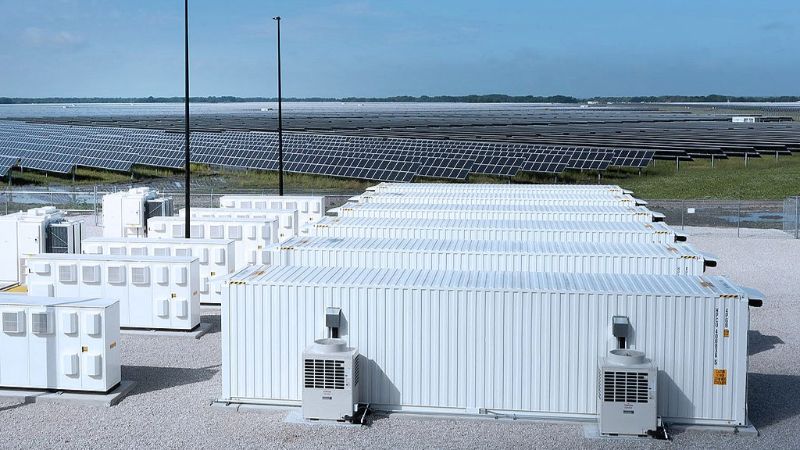
Solar farm and battery storage in Texas. Image used courtesy of Wikimedia Commons
Compensating for Intermittent Renewables
Solar and wind are reliable only when the sun shines or the wind blows. Adding battery energy storage systems provides energy backup when weather conditions interfere with generation. Still, when low renewable production is prolonged, such as during winter or a storm, natural gas power plants must be fired up to fill the energy gaps.
The report claimed the variability of renewables reduces energy efficiency because power plants need to ramp up and down auxiliary power to balance the fluctuations of wind and solar generation. These “hidden costs” are passed onto users, resulting in increased electricity prices. Electric bills in Texas have increased by nearly 20% over the past three years.
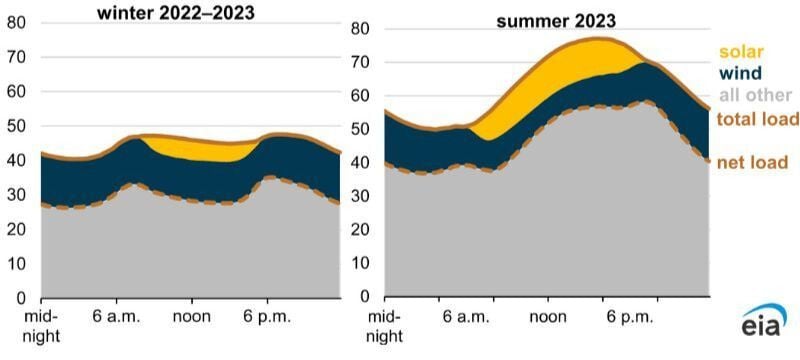
Renewable energy production in Texas by season. Adapted from images used courtesy of the Energy Information Administration
The Texas Public Policy Foundation (TPPF) used one year, 2023, to calculate the cost of renewable energy fluctuations and market price spikes. Inflation and delivery costs accounted for part of the increase, but wholesale electricity prices were also responsible. In 2023, natural gas prices were near historic lows, but Texas prices were 38% higher for electricity.
The report finds that renewable energy was a significant factor in cost increases. Wind and solar energy accounted for 42% of ancillary services in 2023. Ancillary services include strategies to ensure grid reliability, such as load and frequency regulation, voltage support, replacement reserve, and black starts after an outage. These ancillary costs negate renewables’ lower operating costs, the TPPF claims.
Replacing Renewables With Natural Gas
Considering ancillary costs, natural gas plants are more efficient and cheaper to operate than wind or solar facilities, according to the report.
The TPPF used the UPlan Network Power Model (UPlan-NPM), which combines physical and economic models that simulate the market for ERCOT, which covers more than 90% of Texas. The analysis considered energy generator types, locations, sizes, transmission lines, and load locations. This model determines energy prices based on the marginal cost of each generator.
The TPPF modeled four scenarios: the base case for 2023, without solar, without wind, and without either renewable. The model excluded energy storage systems used with renewable energy facilities. For each scenario, natural gas generation was modeled to replace the removed renewable source.
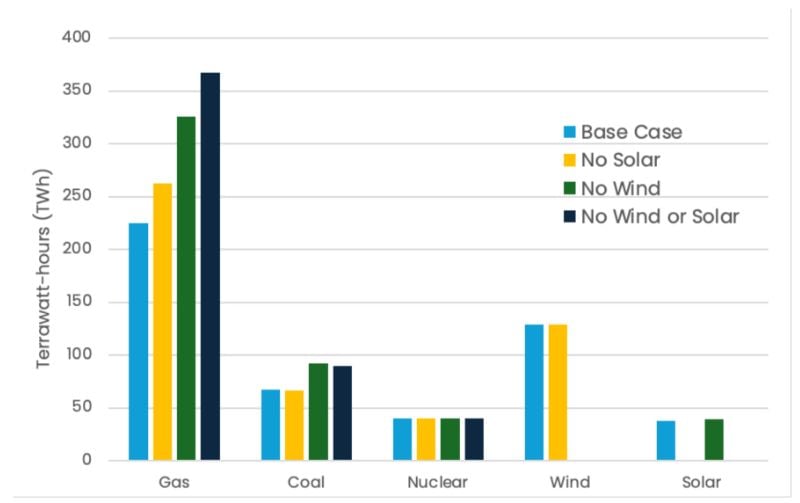
Annual generation modeled in the four scenarios. Image used courtesy of the TPPF
Nuclear energy remained constant across all four scenarios. Coal generation was also relatively stable when solar was removed. However, coal generation increased by 33% in the scenario without wind. Natural gas showed the highest increase (63%) when both wind and solar were excluded because natural gas was chosen to replace the lost wind and solar generation. However, the TPPF stated that the increase in gas generation would likely lead to higher capacity.
The TPPF also stated that several ERCOT policies contribute to higher prices. ERCOT uses a single market clearing price that pays all energy generators the same price, regardless of their dispatchability. Wind and solar are always dispatched first. When generation wanes, other sources must compensate by increasing their output. Finally, by law, ancillary services costs must be passed onto consumers.
Considering market prices and volatility, the analysis concluded that using gas generation instead of wind and solar reduced the maximum price of electricity.
Recommendations for Texas Renewables
The Texas Public Policy Foundation recommended that ancillary costs and other services for reliability should be allocated to renewable energy generators based on their variability. The TPPF reasoned that putting the burden on solar and wind generators will incentivize developers to improve their performance.
The second recommendation was to pay generators based on their performance. The TPPF proposed that ERCOT should set reliability standards for all generators and then reward them fairly based on their ability to meet those standards. This would effectively reduce payments to unreliable generators, ensure reliability, and make electricity more affordable.