Facebook
 Google
 GitHub
 Linkedin
Transformer Supply Chain Woes Persist as Energy Demand Grows
Wood Mackenzie reports that surging demand and stalled supply chains leave the U.S. short on transformers.
Transformers, the infrastructure behind modern electricity transmission and distribution systems, face a significant supply deficit in 2025, according to Wood Mackenzie.
Since 2019, demand for high-voltage power transformers and generator step-up transformers (GSUs) has surged by 116% and 274%, respectively—faster than U.S. production capacity can handle. Substation demand increased by another 91%, while the distribution transformer market saw steady growth across pad-mount three-phase (demand up +77%), pad-mount single-phase (+39%), and pole-top (+30%) equipment.
Record-high electricity consumption, which could soon surpass its previous peak set in 2024, is driving this surging transformer demand. The Energy Information Administration estimates commercial electricity sales will increase by 3% this year and 4.5% in 2026, driven by demand from data centers.
Electricity sales to industrial users are projected to grow 2% in 2025 and 3.5% next year, further fueling the need for transformers. Additionally, more than half of the country's in-service distribution transformers have been in operation for more than three decades and are approaching the end of their service life.
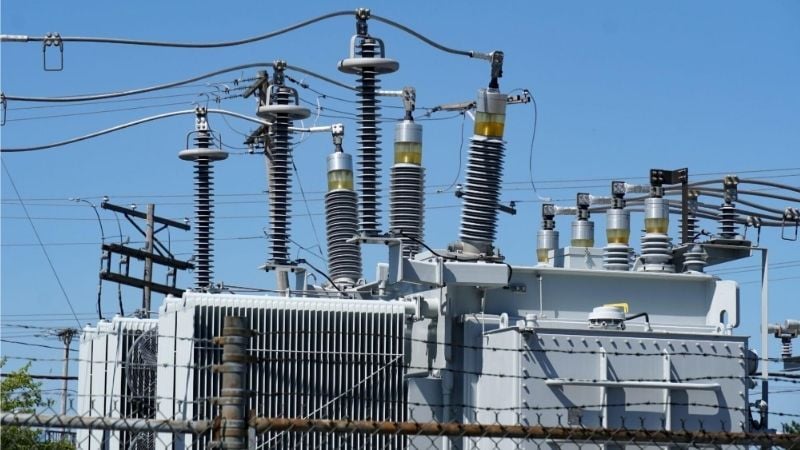
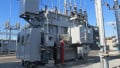
Substation power transformer. Image used courtesy of Adobe Stock
U.S. Transformer Supply Deficit
Supply has not kept up with demand, escalating lead times and costs across all market subsectors. Wood Mackenzie projects that power and distribution transformers will see 30% and 10% deficits this year.
Lead times for power transformers and GSUs have consistently exceeded 100 weeks—about two calendar years—since 2023. They remained elevated in Q2 2025 at ~2.5 years (128 weeks) for power transformers and ~2.8 years (144 weeks) for GSUs. Distribution lead times averaged 30 weeks in Q2 compared to a 100+ week peak in 2023.
Some of the largest transformer original equipment manufacturers (OEMs) have increased their domestic production capacity over the last few years to address the shortage. Plans for U.S. expansions since 2023 total in the billions of dollars. Eaton invested $340 million to add its third three-phase transformer production site in the U.S., with a new facility in South Carolina coming online by 2027. Siemens Energy is also building a $150 million transformer facility in North Carolina, expected to start production in early 2027. Hitachi Energy is expanding its dry-type transformer manufacturing capacity in Virginia and in Pennsylvania, via another manufacturing facility for high-voltage switchgear and breakers.
While factory construction is underway, utilities routinely rely on foreign-sourced equipment to fulfill project timelines. Imports represent about 80% of all U.S. power transformer supply and half of the distribution.

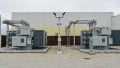
An Eaton transformer manufacturing facility. Image used courtesy of Eaton
One significant challenge is market volatility for grain-oriented electrical steel (GOES), which started in 2020 when prices reached record highs. The U.S. industry relies on one domestic GOES producer, AK Steel. This limited supply has forced many OEMs to lean heavily on imports for semi-finished transformer cores or raw GOES.
Labor gaps in transformer manufacturing expertise are another challenge, as firms struggle to find expertise for the highly technical manufacturing process and niche specifications of copper windings for transformer production. Wood Mackenzie reports OEMs cited labor shortages as a key barrier to scaling output.
Ongoing Tariff Pressures
New tariffs are expected to raise transformer prices and tighten supply chains, with imported and domestically produced units subject to higher unit costs due to the 50% copper tariff, 50% India and Brazil tariffs, and 35% on non-USMCA-compliant Canadian imports. Additional tariffs could be possible, pending agreements with China and the European Union. Wood Mackenzie expects that imports from some high-tariff countries will further worsen lead times.
Imports from Mexico and Canada will be exempt from tariffs under USMCA compliance, making suppliers in those countries more attractive for U.S. developers and utilities. OEMs are increasingly importing finished transformer cores from Canada and Mexico to hedge tariff volatility on transformer prices. Monthly transformer core imports surpassed $40 million in 2025, a significant jump from $10 million in 2018 when the original tariffs started.
Wood Mackenzie reports that the federal policy changes could also impact power transformer and GSU demand. Legislation reduces support for clean energy generation projects, a large subset of demand for GSUs and power transformers.
Transformer Market Outlook
Market demand is projected to stay strong in 2026, beating 2024 levels by 21% for power transformers and 16% for GSUs. Distribution transformers will likely see more sustained growth due to ongoing load expansions and investments in transmission and distribution projects. The demand for pad-mount single-phase and three-phase transformers is expected to grow by 11% and 20% by 2030.
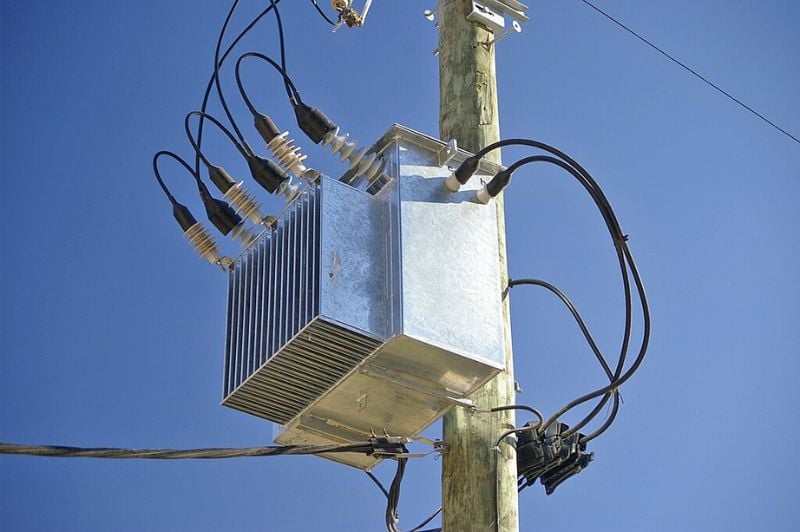
Pole-mount transformer. Image used courtesy of Wikimedia Commons
Looking forward to the next five years, Wood Mackenzie predicts that most specifications in the market will remain in a marginal shortage by 2030, with varying levels of improvement across power transformers, GSUs, and pad-mount transformers. Pole-mount transformers, on the other hand, will hit a market surplus.
Supply deficit levels for higher-voltage transformers are expected to improve substantially over the next five years. The power transformer shortfall could fall from 30% this year to 5% by 2030, while the GSUs may drop from 47% to 14%. On the distribution-market side, the pad-mount three-phase transformer shortage will likely worsen due to more industrial data centers, electric vehicle charging systems, and manufacturing plants. However, pad-mount single-phase transformers should drop below a 5% deficit by 2030.
Current trade policy and the ongoing supply shortfall are expected to push transformer prices by a further 20-30% in the coming years overall, depending on the type of specification.