Facebook
 Google
 GitHub
 Linkedin
EV Chargers Offer Smarter, Automated, and Flexible Options
The electric vehicle charging industry pushes to integrate AI, robotics, mobile units, and bidirectional charging for a wide range of needs.
As electric vehicles change in use and technology, EV chargers must keep pace. Traditional charging infrastructure cannot always serve the needs of heavy machinery, fleets, grid-connected vehicles, and electrifying industrial sites.
The EV charging has made significant advances in installation, power delivery, and energy management. Latest developments include bidirectional capabilities, AI and robotic chargers, and mobile charging units.
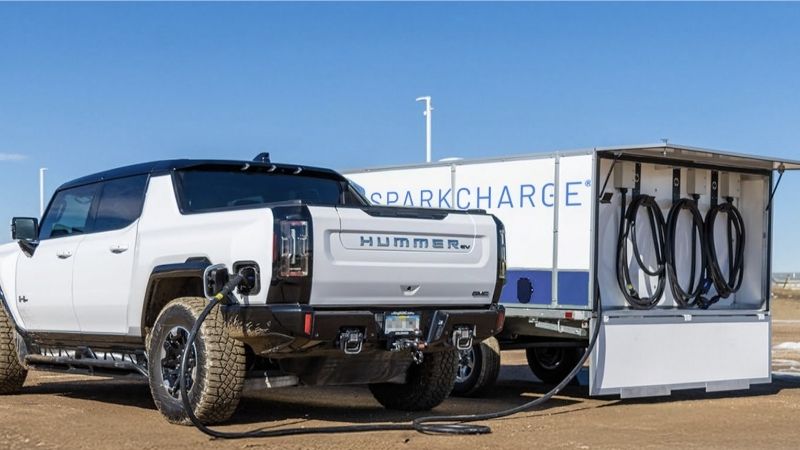
A mobile EV charger. Image used courtesy of SparkCharge
Komatsu and Tesla Co-Founder Launch 6 MW Charger
Komatsu and Dimaag have introduced a Mobile Megawatt Charging System (MWCS) designed for heavy machinery on construction sites.
The platform is an all-terrain mobile device with 4-wheel drive and 4-wheel steering, meant to recharge electric construction equipment between shift changes to reduce operational downtime. For charging, the MWCS integrates a 295 kWh battery pack, a megawatt charging system connector rated at 1,500 A and 1,000 V, and a high-efficiency DC-DC converter architecture. It supports power delivery of up to 6 MW. It includes a long-life battery energy storage system with dedicated thermal management to control internal temperatures during high-rate charging cycles.
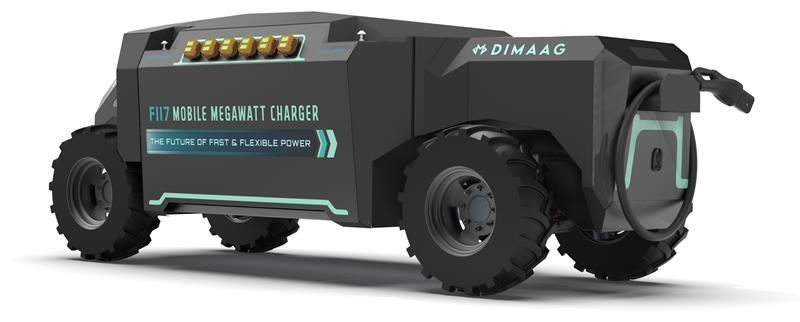
The Mobile Megawatt charger. Image used courtesy of Diamaag
Komatsu intends to conduct real-world trials in 2025. Ian Wright, an original Tesla co-founder, is the engineering vice president of Diamaag.
Hatch to Manufacture Argonne’s Bidirectional EV Charging System
Hatch has licensed an advanced EV-grid communication platform from Argonne National Laboratory to commercialize and manufacture bidirectional charging systems in the U.S.
The technology enables two-way power transfer between electric vehicles and the grid. The system functionally serves as an intelligent middleware layer to manage energy flow and EV interactions while integrating predictive control and load balancing. This platform provides an operational foundation for vehicle-to-grid functionality by enabling electric vehicles to discharge stored energy back into the grid to support stability and peak load events.
Hatch will produce the system at its Waukegan, Illinois, facility and expects the system to reduce energy costs and support renewable energy integration by allowing EVs to act as distributed energy assets.
Hyundai and Kia Test AI-Powered Robotic EV Charging
Hyundai and Kia have partnered with Incheon International Airport to pilot an AI-driven autonomous charging system at the airport. The robotic EV charger uses computer vision and articulated robotic arms to locate charge ports and initiate connections without human intervention. The companies’ Robotics Lab supplies both the hardware and AI control software for full-cycle automation, and the pilot will focus on charging a fleet of airport-operated electric vehicles as part of Incheon’s larger initiative to install 1,110 EV chargers by 2026.
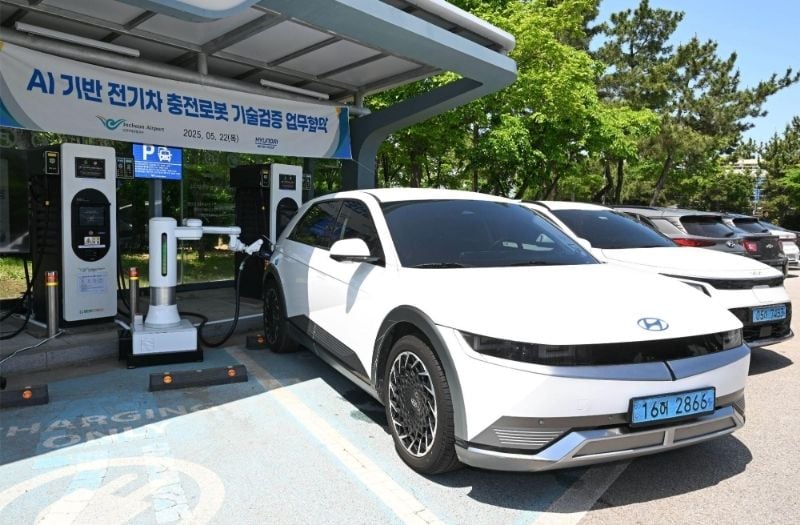
AI-powered EV charging. Image used courtesy of Hyundai
The airport’s fixed traffic patterns and controlled environment provide a solid testbed for the robotic system, where AI algorithms will dynamically distribute power across multiple vehicles and anticipate maintenance needs through predictive diagnostics. The system will also unlock support for vehicle-to-grid applications by managing bi-directional power flows.
SparkCharge Raises $30M
SparkCharge has raised $30.5 million in funding to accelerate the deployment of its mobile, off-grid EV charging infrastructure across North America.
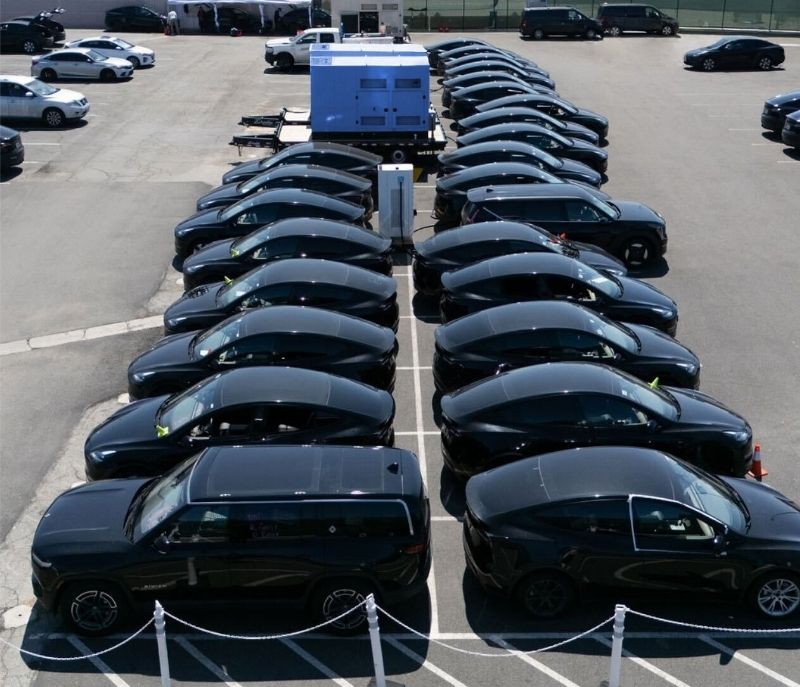
SparkCharge charging-as-a-service. Image used courtesy of SparkCharge
The company operates a charging-as-a-service model that circumvents traditional permitting and grid-access delays by deploying battery-powered fast chargers rated between 80 and 300 kW. These mobile units can be delivered on demand to fleet depots, public spaces, or maintenance hubs. To support high-capacity fleet operations, SparkCharge also offers a 180-500 kW modular microgrid hub capable of off-grid fast charging multiple EVs simultaneously. The system scales into permanent infrastructure over time and provides end-to-end services from planning to deployment.
To date, SparkCharge has delivered over 4 million kWh of electricity and claims to have offset more than 500,000 gallons of gasoline. The company’s footprint spans all 50 U.S. states and parts of Canada and Mexico.
Charging the Future
With advances ranging from AI-powered charging solutions to fundraising for mobile EV chargers, the EV charging industry is a hot market right now. Notably, each of these is a broader reconfiguration of how power is distributed, controlled, and monetized.
This trend away from static, utility-constrained charging points and toward responsive, service-based platforms signals a future where energy delivery becomes more like logistics than infrastructure.