Facebook
 Google
 GitHub
 Linkedin
Demand for Energy Efficiency Fuels Heat Pump Growth
A BCC Research report revealed that heat pumps are drawing interest as a critical solution for energy-saving next-generation heating and cooling.
Heat pumps are increasingly popular for heating, cooling, and hot water across industrial, commercial, and residential buildings. They provide cleaner, energy-efficient alternatives to conventional gas and oil-fired boilers. A report from BCC Research projects that the global heat pump market will reach $134 billion by 2030, growing at 7.7% annually from its 2024 valuation of $88 billion.
Favorable government policy, steady technology improvements, and energy economics drive growing demand. Moreover, heat pumps pair well with renewable power sources and modern building systems using sensors and automation for energy management.
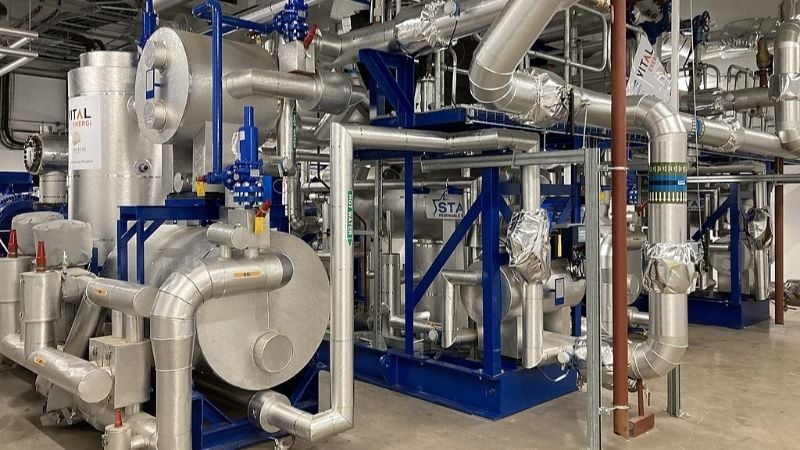
Industrial heat pump equipment. Image used courtesy of Wikimedia Commons
Technical Advances and Challenges
New designs like dual-fuel and hybrid heat pump configurations are entering the market, alongside advanced refrigerants such as R-454B (Puron Advance), which have a lower environmental footprint. Manufacturers are also experimenting with 3D printing to improve component performance and reduce material waste.
Despite their technical maturity and advantages, heat pumps still face challenges, mostly due to high installation costs. According to GreenMatch data cited by BCC Research, the supply costs for heat pumps range much higher ($3,068-$24,293) than gas boilers ($639-$4,475).
However, the long-term economic payback of heat pumps remains a key selling point, with lower annual operating costs ($703-$1,406, compared to $869-$2,045 for boilers). Heat pumps also produce far lower carbon dioxide emissions, at around 850 kg versus 2,500 kg for gas boilers.
Heat Pump Efficiency and Key Market Drivers
Heat pumps cycle a refrigerant through four thermodynamic stages: evaporation, compression, condensation, and expansion. Heat pumps are used in heating, ventilation, air-conditioning devices, water heaters, and appliances.
Over the years, advancements in components like compressors, heat exchangers, and digital controls have consistently raised system efficiency. According to the International Energy Agency, heat pumps can be up to five times more efficient than natural gas boilers. GreenMatch reports 450% efficiency for ground-source heat pumps and 350% for air-source systems, compared to only 95% for gas boilers. That's also much higher than electric and biomass boilers, which top out at 99% and 91% efficiency, respectively.
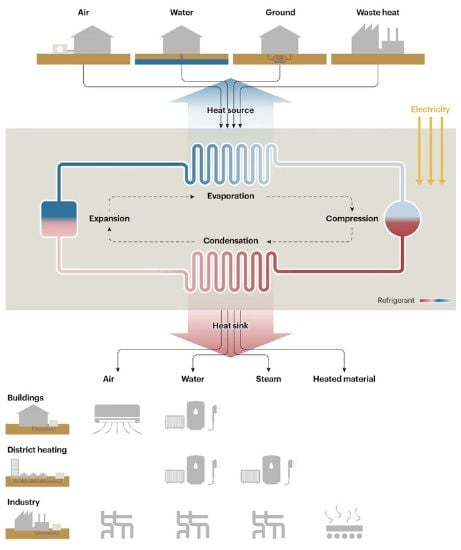
How a heat pump works. Image used courtesy of the International Energy Agency
Heat pumps are also gaining traction in industries like chemical processing, metal fabrication, food and beverage, and pulp and paper production—all sectors motivated to replace fossil fuels with low-emission, electrically-powered alternatives, including heat pumps.
BCC Research cited several examples of applications requiring high-temperature industrial heat pumps. In the food and beverage industry, they can be used in smoking, drying, and sterilization processes. Chemical facilities can support thermoforming, compression, and boiling, as well as various plastics processes like pre-heating, pallet drying, and injection molding.
The ability to integrate with renewable systems adds further market value. Combining heat pumps with solar thermal systems or thermal energy storage can allow excess energy to be stored and reused, improving system flexibility and reliability as resources can be released as needed. BCC Research's report also discusses newer developments in this area, such as TESUP, a U.K.-based company combining heat pumps with wind turbines to provide heating and cooling in off-grid or microgrid setups.
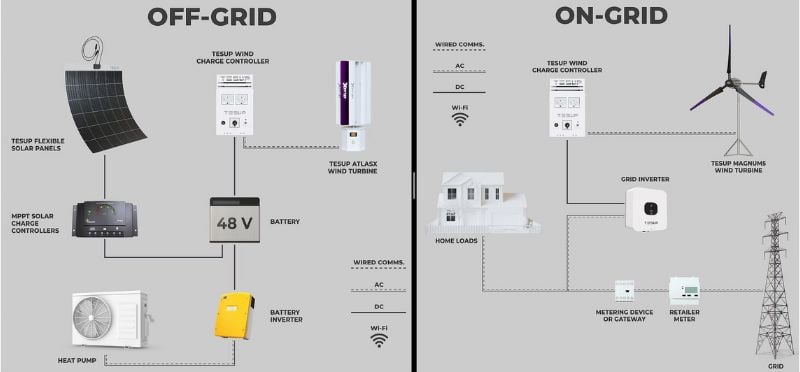
TESUP integrates heat pumps with wind turbines. Image used courtesy of TESUP
Regionally, the Asia-Pacific market dominated the global heat pump market in 2024 with a 36.6% share, followed by North America (26.5%), Europe (24.5%), the Middle East and Africa (7%), and South America (5.4%).
Still, upfront costs remain a significant barrier to growth, particularly in residential applications. Ground-source heat pump systems for single-family homes cost roughly 50% more than traditional air-source heat pumps. Dual systems can also add another 20-25% to the cost. BCC Research also cites macroeconomic headwinds—including post-pandemic disruptions, the war in Ukraine, recessionary pressures in Europe, and China’s real estate slowdown—as limiting factors for growth in the foreseeable future.
Heat Pumps for Commercial Buildings and Geothermal Applications
The growing deployment of heat pump systems in commercial buildings represents a clear opportunity. New construction projects increasingly feature integrated automated "smart" infrastructure—networks of sensors and automated controls that manage everything from HVAC to fire detection and elevator systems. Some buildings also incorporate external pressure and temperature gauges to respond to real-time environmental conditions.
Within commercial buildings, heat pumps operate as part of a larger building energy management system, adjusting performance in real time based on changing conditions. This setup also enables remote diagnostics, predictive maintenance, and energy optimization.
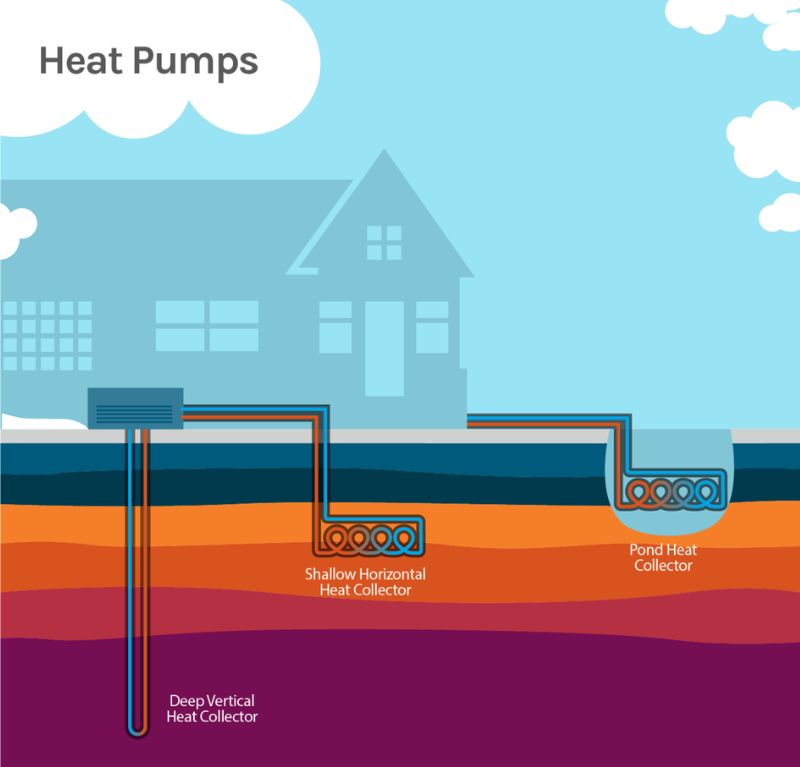
Geothermal heat pump systems. Image used courtesy of Department of Energy
Geothermal heat pumps are also gaining attention. Advances in heat exchangers, variable-speed compressors, and embedded digital controls (including AI and IoT for remote monitoring and energy optimization) have improved efficiency and system adaptability. Hybrid ground-source systems, combining geothermal loops with supplemental heat sources, are becoming more attractive, providing a balance between installation costs and year-round efficiency.