Facebook
 Google
 GitHub
 Linkedin
25 Emerging Companies Pitch the Future of Energy at Distributech
Energy startups pitched their ideas to energy experts at Distributech in EPRI’s Incubatenergy Labs annual competition.
Startup and early-stage energy companies from seven countries demonstrated innovative concepts in grid modernization, decarbonization, electrification, and more at Distributech 2025 in Dallas last week.
What is Incubatenergy Labs? Video used courtesy of IEL
EPRI’s Incubatenergy Labs (IEL) invited the companies to showcase their products and ideas for generation, transmission, storage, and distribution technologies, including artificial intelligence and analytics. The “pitch day” allowed the startups to receive feedback from experts and energy providers from around the world.
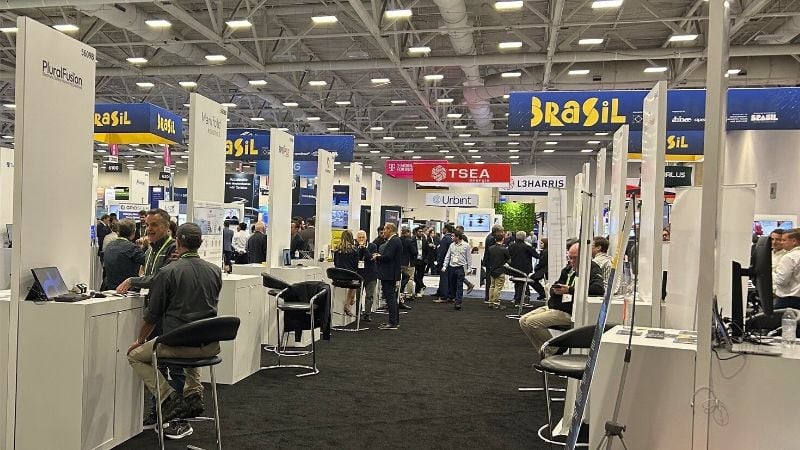
Distributech 2025. Image used courtesy of EPRI
Next Energy Tech
The companies’ pitches covered artificial intelligence, grid resilience, distributed energy, battery technologies, and improving existing grid infrastructure.
- Advanced Infrastructure Technology demonstrated its software that allows utilities to better forecast future load growth. Its featured product is LAEP+, a Net Zero digital twin planning tool. The U.K.-based company works with renewable energy developers, distribution network operators, and electric vehicle solution providers.
- AssetCool offered two main products, New Line and Retrofit. New Line is a coating for cables applied during manufacturing. Retrofit is a semi-autonomous robotic system that applies the coating to existing conductors. The coating increases conductor capacity by up to 30% by reflecting solar radiation and improving heat dissipation.
- Blue Frontier explained its desiccant-enhanced cooling solutions that can protect grid-interactive commercial buildings and the grid from prolonged heat waves. The company’s energy storage
- Criticality Sciences presented NetResilience, its intelligence software platform for grid resilience. The platform identifies critical assets at risk for cascade failure and proposes optimized strategies to mitigate them.
- CVector explained its industrial SaaS platform to help projects, such as emerging climate technology, run reliably and profitably with real-time intelligence. The live models optimize weather, control system data, and market information to enable faster decisions.
- Derapi pitched its universal API designed to resolve interoperability in distributed energy resources (DER) devices. The system works as a “universal translator” to allow any DER device to connect with any virtual power plant, energy management system, or other platform.
- Edge Zero presented a real-time distribution transformer-level monitoring system to enhance grid visibility. The system integrates hardware and software to help utilities optimize their asset use and support DER integration.
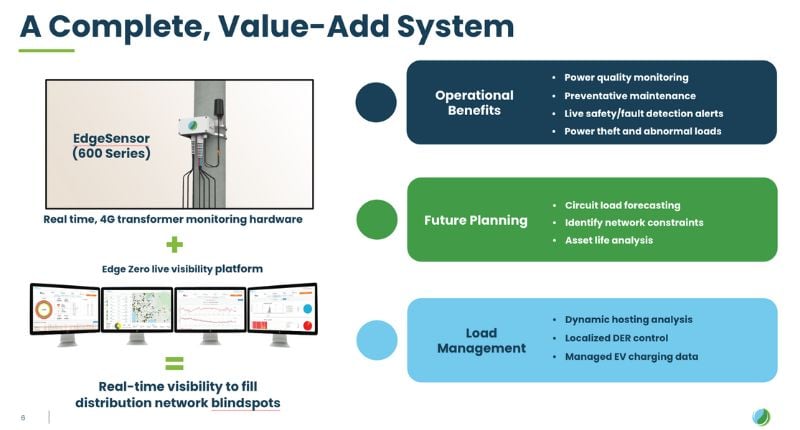
Edge Zero’s Distributech presentation for grid monitoring. Image used courtesy of Edge Zero
- Edo demonstrated its solution for transforming commercial buildings into virtual power plants. The system integrates hardware, software, and services to allow utilities to optimize demand flexibility and energy efficiency. It streams real-time data and accurately predicts load curtailment.
- Energy Robotics pitched its robot and drone inspection solutions. The hardware-agnostic Robot Brain empowers robots and drones to autonomously collect data, detect anomalies, and perform predictive maintenance while inspecting assets in power, oil and gas, and industrial settings.
- GridCARE demonstrated an AI-powered platform for utilities that uses nationwide heatmaps to show optimal locations for interconnection of generation and load. The models help maximize existing grid capacity by using GETs and flexible interconnections.
- Heat Inverse pitched a cooling film that can be rolled onto equipment to create passive cooling. The film reduces power consumption, maintenance costs, and emissions.
- HeyCharge presented its offline EV charger management technology. The platform does not need internet connection and enables charging in low-coverage areas such as parking garages.
- InGeniti pitched Optima, its technology to monitor and optimize any electrical device’s performance. The intelligent, unified solution has applications for utility management, real-time grid monitoring, and renewable energy systems.
- Kevala pitched Predictive Interconnection Siting Metrics (PrISM), its concept of a collaborative, single-pane-of-glass environment for utilities and decision-makers to visualize and plan for DER interconnection. The platform delivers hourly hosting capacity to provide insights into how proposed projects could interconnect, predicts costs and timelines, and shows hourly locational marginal carbon metrics.
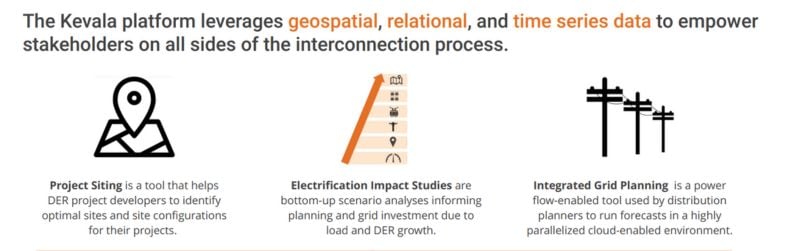
Kevala’s Incubatenergy presentation at Distributech. Image used courtesy of Kevala
- Molecule Systems explained Mos Fusion, its scalable DER management platform to enable utilities to integrate multiple DERs while maintaining control and responsiveness. The system uses cloud-based flexibility and real-time edge control for reliability in fluctuating grid conditions.
- OnePredict demonstrated its digital platform that analyzes industrial big data and enables machine intelligence. It combines domain knowledge and AI to detect problems and provide prescriptive and preventive maintenance.
- Otoro Energy presented its organo-chrome flow battery technology for long-duration and cost-effective energy storage. The water-based batteries are made from nonflammable, nontoxic, and non-critical materials sourced domestically.
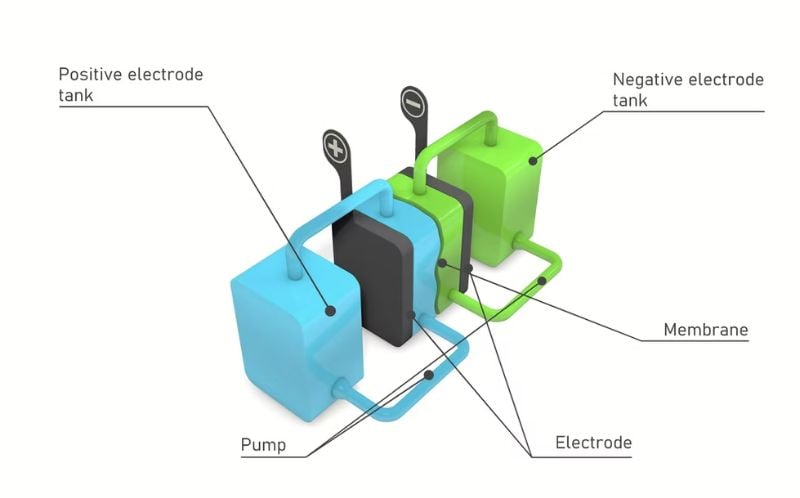
Flow battery. Image used courtesy of Otoro
- Peoples Energy Analytics pitched a business solution for reaching low- and moderate-income utility customers using meter analytics.
- Presev demonstrated its AI technology that uses radar technology to scan and capture underground data and transforms the signal data into a 3D map, providing a clear view of buried infrastructure. The map-making process is faster and more accurate than traditional methods.
- Prüfentronik pitched its ultraviolet sensors that detect high-voltage corona discharge on utility equipment. The sensors offer a cost-effective alternative to corona cameras.
- Soraytec presented its IoT solution for continuous, real-time power quality monitoring for electricity distribution companies. Sensors are installed directly at the medium voltage lines rather than using instrument transformers. The solution decreases the frequency and duration of interruptions while reducing costs.
- Sunairio demonstrated its high-resolution climate simulations for seasonal and long-term resource adequacy planning to assist decision-making in grid planning. The system translates probabilistic weather risks hourly, up to 15 years in the future, into energy risks for load and solar and wind assets.
- Suryatech pitched the AmpLiFi EV Charging Bank, a portable Level 2 charging solution that converts 110 V outlets to 240 V. The technology enhances EV charging accessibility and avoids the need for electrical upgrades. Its solar and battery storage compatibility can reduce grid dependency.
- Treeswift presented its AI-driven vegetation management platform. The platform uses LiDAR, mounted robotic sensors, 360° cameras, and microphones to help utilities mitigate risks, meet regulatory standards, and improve grid reliability.
- Vie Technologies demonstrated its AI-driven predictive maintenance solution to identify failure risks in transformers and other equipment. Using advanced IoT sensors and predictive analytics, the technology can detect problems and recommend repairs faster and more accurately than conventional methods.
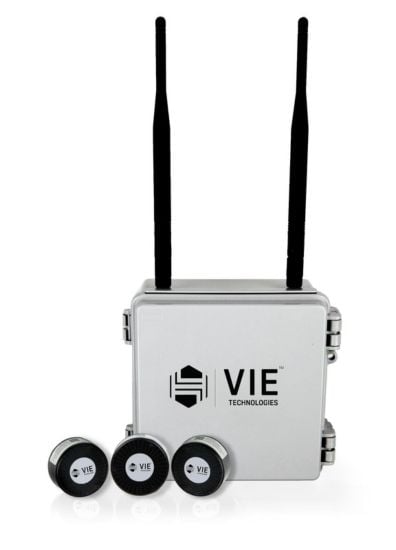
Sensors and gateway. Image used courtesy of Vie Technologies
Incubatenery Next Steps
This year, EPRI’s IEL selected 24 finalists from about 350 applicants. IEL expects anywhere from 15 to 20 projects from Pitch Day to proceed to the next step, which is a four-month demonstration period. EPRI and participating utilities will select the pilot projects and cover demonstration costs. IEL aims to fund as many projects as possible.
IEL will showcase the pilot projects at Incubatenergy Labs’ Demo Day in Nashville in October. The event is sponsored and hosted by the Tennessee Valley Authority.
In the program’s seven-year history, nearly 100 companies have competed, with about $15 million in funding.