Facebook
 Google
 GitHub
 Linkedin
2024 Wind Momentum: Expanding Infrastructure, Advancing Technology
In 2024, wind energy expanded and continued its rise as a dominant renewable resource.
As climate change intensifies and energy demands grow, wind power has become a leading technology in the global transition from fossil fuels. Yet, the wind energy sector still faces multifaceted challenges, including technological limitations, ecological concerns, and infrastructure constraints.
Ultimately, sophisticated solutions are needed to overcome barriers like low wind speeds, wildlife protection, and complex energy transmission networks. In 2024, a myriad of developments in wind energy technology aimed to reshape the approach to renewable power generation and distribution.
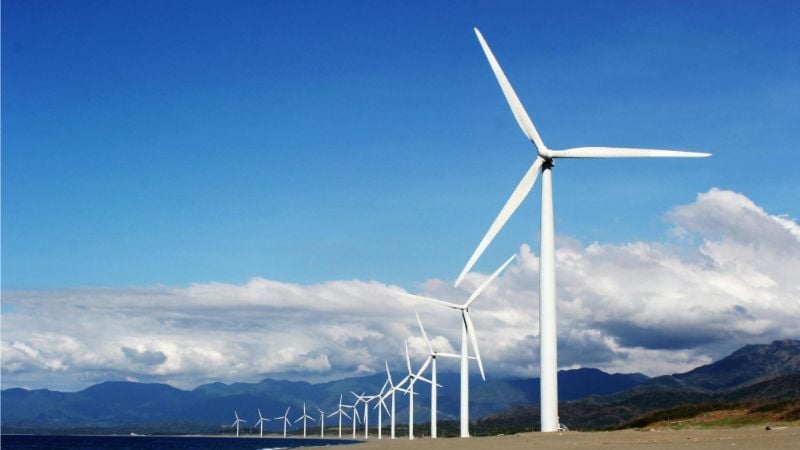
Wind energy. Image used courtesy of Pexels
DOE’s Offshore Power Grid
Transmitting electricity from distant wind farms to onshore communities has hindered the U.S. East Coast's offshore wind potential. Traditional point-to-point transmission methods are costly, inefficient, and often time-consuming. To address these issues, the U.S. Department of Energy, in collaboration with 10 Northeast states, proposed a novel offshore electric power grid.
This system features a "meshed" or "backbone" design connecting wind farms via shared transmission lines. Stretching from North Carolina to Maine, the grid aims to support 85 GW of offshore wind power by 2050, approaching the national goal of 110 GW.
With bidirectional capabilities, it transmits electricity from both offshore farms and onshore generators. Reducing beach crossings and transmission cable miles by 35-60% minimizes environmental impact while improving efficiency. Also, its unique positioning in federal waters allows the grid to avoid many land-based conflicts, and studies indicate its benefits could outweigh costs nearly threefold.
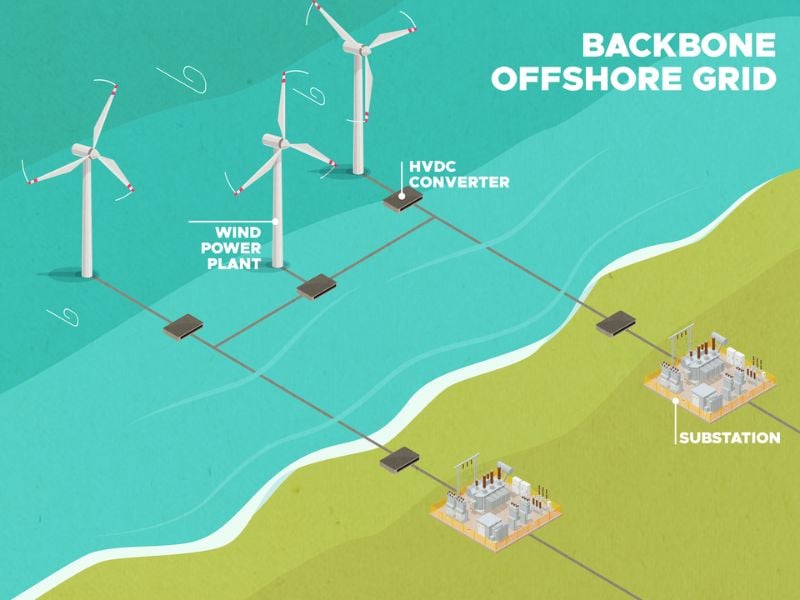
Backbone design for wind power transmission. Image used courtesy of Pacific Northwest National Laboratory/Stephanie King
Addressing Lower Wind Speed
The wind energy industry faces significant challenges in developing efficient wind turbines for low wind speed regions. In response, AES Corporation's Delta Wind project in Mississippi deployed the nation's tallest onshore turbines, standing 692 feet tall and designed to generate power in low wind conditions.
The 184.5-megawatt wind farm in Tunica County features turbines with specially designed foundations that enable dual-use land management, minimizing agricultural disruption while generating renewable energy for approximately 80,000 homes. The project's architectural design addresses previous land feasibility and ecosystem preservation obstacles by incorporating larger rotors to increase energy capture.
Beyond technological innovation, the wind farm is expected to generate $100 million in local tax revenue. The project has already attracted interest from major companies like Amazon, which plans to purchase energy for regional data centers.
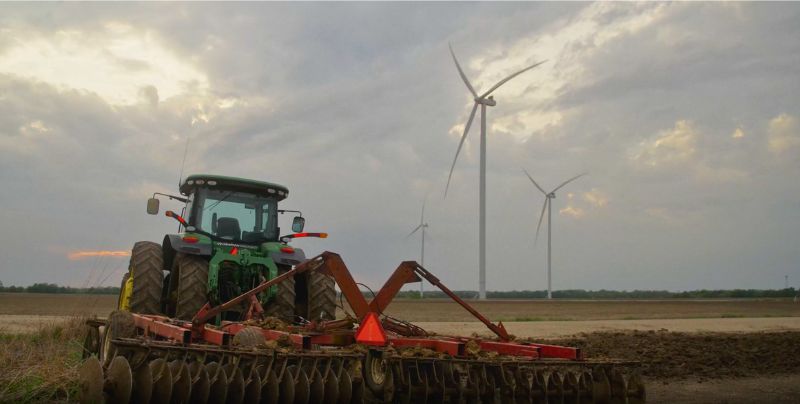
Wind turbines in Tunica County, Mississippi. Image used courtesy of AES
Offshore Wind Floating Radars
Offshore wind farms can contribute to bird and bat mortality due to turbine blade collisions. To mitigate the harm, Robin Radar, a Hague-based company, developed a floating radar system combining advanced technologies to protect wildlife while maintaining renewable energy production.
The solution integrates MAX bird and bat radar systems from Robin Radar, DHI's alert system, cameras, sensors, AI software, and MIDO's FLORA 1 floating platform. This system can automatically shut down or slow turbines when large numbers of birds approach. At a wind farm 53 kilometers off the Dutch coast, the floating radar platform promises continuous, round-the-clock monitoring of bird movements.

Floating online radar system. Image used courtesy of Robin Radar
Wind in the Future
The 2024 developments in wind energy have set the stage for a major year ahead. As these projects unfold, 2025 could mark a turning point for wind energy, pushing it closer to becoming a primary pillar of global renewable energy strategies.