Facebook
 Google
 GitHub
 Linkedin
EV Fast Charging: 8 Companies Expanding the Infrastructure
EV fast chargers have become more prominent internationally as electric cars increase their market share. Which companies produce the best machines? Research and development have improved these chargers.
Increasing electric vehicle adoption requires giving drivers better fast charging options at public stations. Otherwise, they may opt for gas-powered cars and disregard the newer electric models. Yet, public charging stations are hard to find in some regions, and many chargers lack the latest fast-charging technology.
Take a tour of ChargePoint’s hardware engineering and testing facility. Video used courtesy of Out of Spec Reviews
Manufacturers are working to integrate Level 3 fast chargers and to make the chargers accessible and compatible with various EV models. They continue introducing fast-charging options worldwide, with leading companies making their mark on EV infrastructure.
Here’s a roundup of the latest developments in EV fast charging.
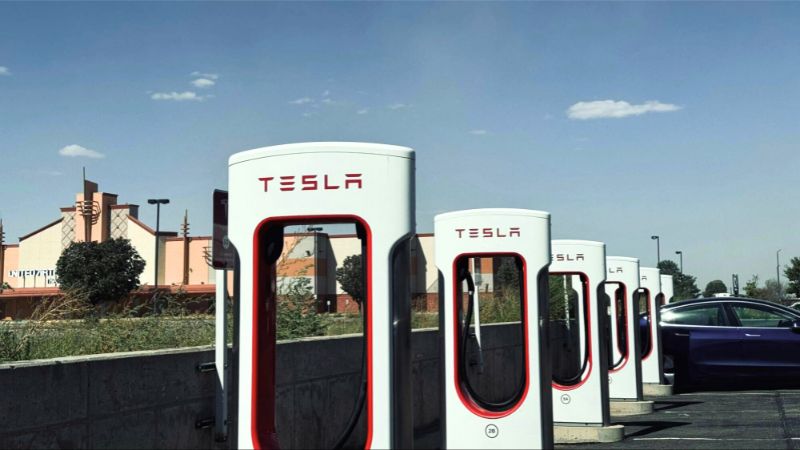
Tesla Superchargers. Image used courtesy of Unsplash
Tesla
Tesla is a world leader in EV fast charging, boasting stations nationwide and on multiple continents. The California-based automaker says its superchargers have a maximum rate of 250 kW and only require a short time to charge. Tesla’s charging infrastructure is the most extensive worldwide, and recent developments have advanced the industry.
Last year, Tesla opened its first V4 supercharger in the Netherlands and displayed its power output. The new charger has extended cables and supports up to 250 kW per vehicle, expanding the previous maximum. While the output remains the same, the V4 charger can support increased power with research and development. Tesla has aimed for a 350 kW charger for a few years.
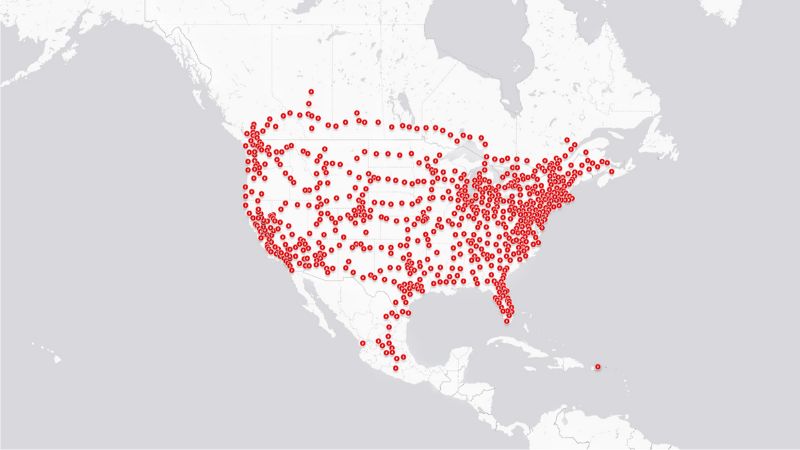
Tesla Supercharger locations in North America. Image used courtesy of Tesla
ChargePoint
ChargePoint has an extensive EV charging network worldwide, making it one of Tesla’s primary competitors. The Silicon Valley company powers 25,000 chargers and supports charging at prominent destinations like Disney World. Late last year, ChargePoint announced plans to install a DC fast-charging platform with an output of 500 kW.
The Express Plus Power Link 2000 DC supports the Mercedes-Benz public charging network through hardware and software innovation. These stations have customizable speeds to adjust to the vehicle’s specific needs. ChargePoint’s new stations are notable because they support simultaneous fast charging, allowing multiple users to take advantage of the 500 kW power.
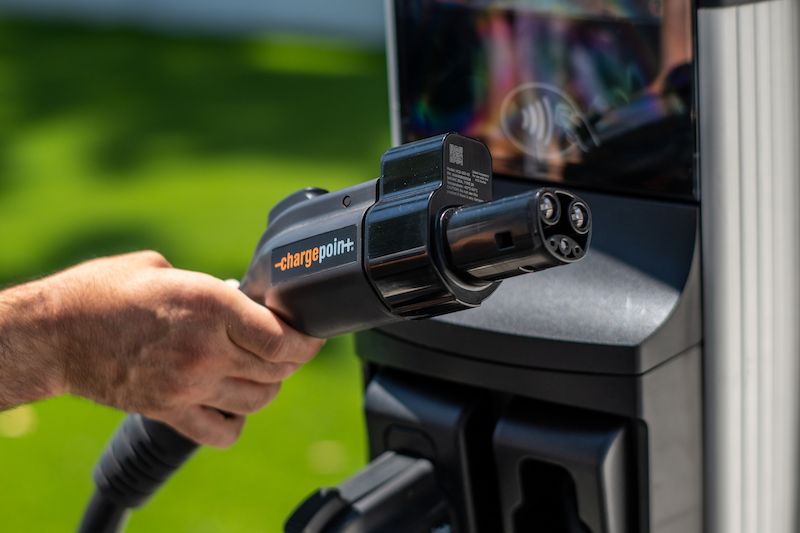
The Omni Port is compatible with Tesla and non-Tesla EVs. Image used courtesy of ChargePoint
Microchip Technology
Microchip Technology has become integral to American manufacturing, considering its microcontroller production during shortages. The corporation has also become involved in EV charging stations by producing fast-charging technologies. This Arizona-based company designs Level 3 DC fast charging stations ranging from 50-350 kW and 400-800 V. The company aims to redesign EV charging by bypassing a vehicle’s onboard charger and directly charging the battery management system. They claim this will significantly decrease charging times.
Microchip Technology has unveiled three new reference designs for its scalable EV chargers. These blueprints leverage existing components, such as the microcontroller and analog front end, to make charging faster. Microchip Technology’s reference designs include a three-phase AC commercial with OCPP and display. Alternatively, the company offers one with a system-on-chip design.
Siemens
Siemens has a significant role in the EV fast-charging space. The German technology company offers a few high-powered EV chargers, starting with the VersiCharge Ultra 175 kW DC. This machine ranges from 200V-920 V of DC output power and 380-480 V power supply voltage.
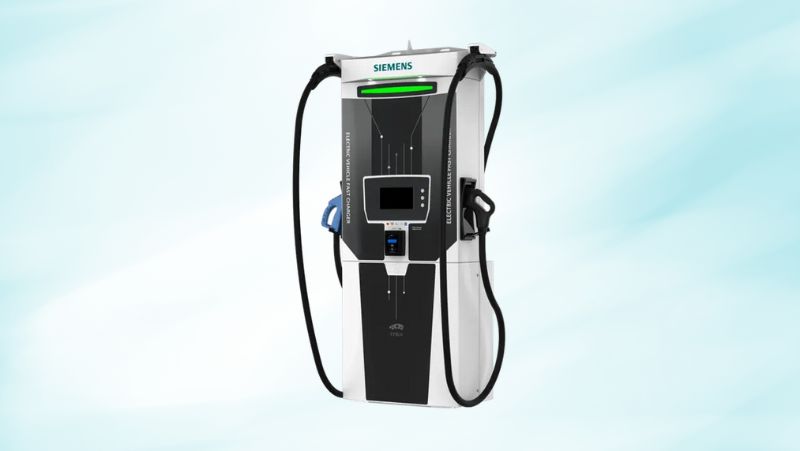
Versicharge DC fast charger. Image used courtesy of Siemens
One of Siemens’s most powerful options is the SICHARGE D, a compact system for electric cars and trucks. The SICHARGE D machines provide up to 400 kW on highway public charging stations through a pair of DC outlets. Clients can select whether they want liquid-cooled cables, which provide up to 500 A. Both machines offer efficiency above 95% during peak times.
Electrify America
Siemens’ role in EV fast charging expands to Electrify America, a company with a minority stake. The majority owner is Volkswagen, which established the business in 2016. The Virginia-based enterprise has become one of the nation’s leaders in electric public chargers. Like Siemens, Electrify America has multiple EV fast chargers from which businesses and localities can choose.
The Green Hyper-Fast charger is Electrify America’s best option, providing CCS connectors and a 350 kW power output. Teal Ultra-Fast is the middle-tier technology, with chargers providing up to 150 kW. The blue CHAdeMO gives the EV an output of up to 50 kW. Electrify America has expanded its fast-charging network by pairing with Hyundai and other leading EV manufacturers.
EVgo
EVGo is a Los Angeles-based subsidiary of LS Power and a prominent figure in the automotive industry’s EV infrastructure. This company has special partnerships with General Motors and Pilot Flying J convenience stores nationwide, providing fast chargers in these locations. EVGo has level 2 chargers, but its DC fast chargers have been the company’s leaders.
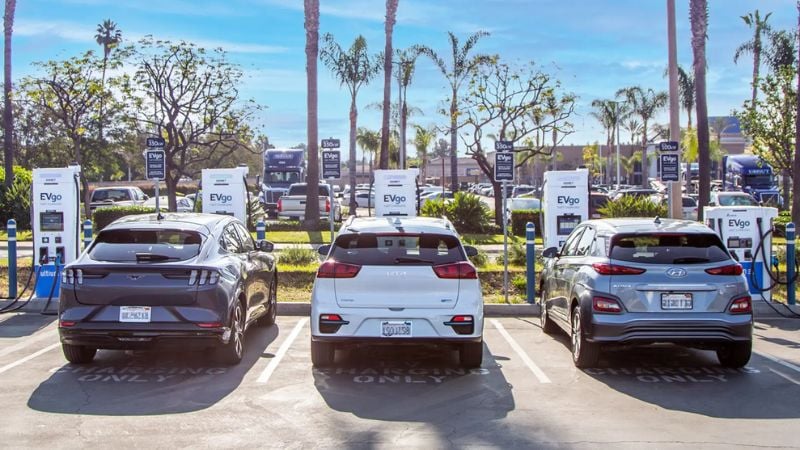
EVGo fast chargers in Los Angeles. Image used courtesy of EVGo
EVgo has added more DC fast chargers with varying power output. These machines range from 50 kW to 350 kW, depending on the vehicle’s battery management system. The chargers wield connectors from the Society of Automotive Engineers, leveraging dual-use combo and CHAdeMo technology. CHAdeMo is primarily for Japanese-manufactured cars, so North American vehicles typically use the CCS connector.
Blink Charging Co.
Blink Charging Co. started in consulting but has evolved into a top player in the EV industry. The company, based just outside Washington, D.C., has fast-charging systems in the U.S., Middle East, and Europe. Recently, the U.S. Postal Service awarded Blink Charging Co. a contract to be one of its charger suppliers for its EV fleet. With fast-charging technology, the company is on the upswing for the future of EVs.
Blink’s fast chargers provide drivers with 500, 750, and 1,000 power supply voltage. The 360kW charger produces up to 1,200 A, one of the industry’s highest outputs. Various vehicles can handle 60-360 kW or 140-500 A. Like other American charging systems, these charging stations provide CCS1 and CHAdeMo connectors for compatibility.
ABB
ABB is one of Europe’s most prominent EV charging producers, headquartered in Sweden and Switzerland. The multinational corporation is unique because it provides charging solutions for residential, business, and industrial settings. For example, ABB eMine FastCharge introduced a fully automated charging system for mining vehicles. The battery size matches 400 kWh and only needs about 40 minutes to charge fully.
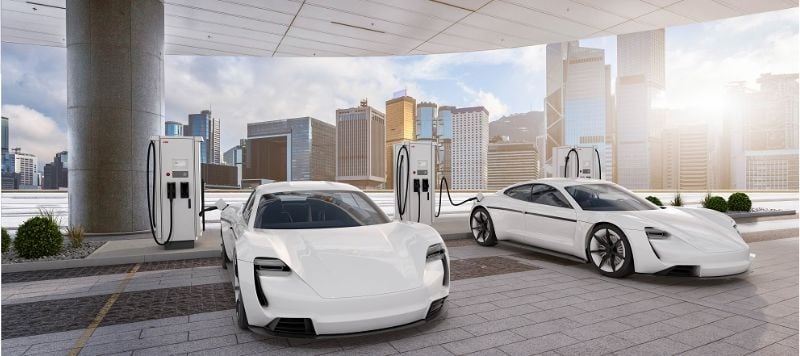
Terra HP charging stations. Image used courtesy of ABB
The Terra HP charging station is the company’s premier option for public chargers, ranging from 175 kW to 350 kW. These machines feature 500 A charging with minimized noise, and a voltage range of up to 920 V. ABB’s stations are flexible during installation, letting charger owners use integrated galvanic isolation and power-sharing technology to lower costs. In the future, expect to see ABB incorporate vehicle-to-grid technology to support electrical grids during peak demand.
Supporting the World’s EV Infrastructure
Car buyers worldwide are purchasing more EVs, so an extensive fast-charging network is necessary to meet the demand. The public-private partnership has spurred new DC charging stations to help drivers stay on the road longer. While numerous entities are building public chargers, these eight companies stand out because of their contributions to EV infrastructure.