Facebook
 Google
 GitHub
 Linkedin
Silicon Savior: Could Si Tech Unleash Better Batteries?
LFP batteries have been plagued by technical issues and high costs. Could new materials make a difference?
As the electric vehicle boom drives the demand for more advanced batteries, battery makers strive to make lighter and safer batteries with higher energy densities. Lithium iron phosphate (LFP) batteries have always been a safer and longer-lasting alternative to conventional lithium-ion (Li-ion) batteries, but they have been plagued by technical challenges over the years.
What is Polymer Matrix Silicon Anode technology, and how is it used in EV chargers? Video used courtesy of TechBlick
Paraclete Energy, a battery materials specialist, is challenging the debate by offering anode materials that could usher in cheaper LFP batteries. The company is innovating silicon materials, which have much potential for improving battery anodes. The advancement could increase longevity and reduce overall costs.
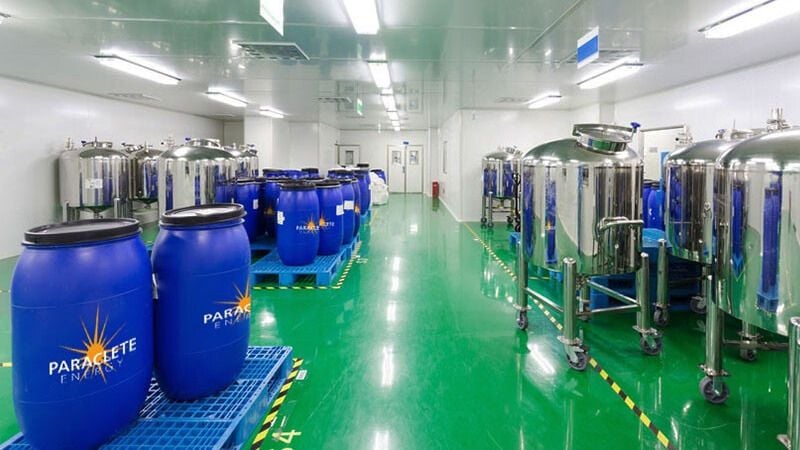
Paraclete’s silicon anode material in production. Image used courtesy of Paraclete Energy
Why LFP Batteries?
LFP batteries possess several benefits over lead-acid batteries and other lithium batteries. Some key areas where LFP batteries excel in performance include:
- Long life space
- No active maintenance
- Safe
- Lightweight
- High charge rate
- Excellent charge and discharge efficiency
- Excellent chemical and thermal stability
- Contains very few rare earth metals
Thermal stability is LFP batteries’ major advantage because it makes them intrinsically safer than most other battery architectures. The LFP is often referred to as the battery with the lowest risk of becoming critically damaged, including from collisions and short-circuiting. The higher thermal stability also means the batteries suffer less degradation at higher temperatures during rapid charge/discharge cycles, allowing them to cope with higher loads and faster charging.
Longevity is another key factor because LFP batteries can undergo up to five times as many charging cycles as lithium nickel manganese cobalt oxide (Li-NMC) and lithium nickel cobalt aluminum oxide (Li-NCA) batteries. LFP cells don’t offer the same capacity-to-weight ratio as other batteries, but the thermal stability enables the cells to be packaged much more tightly. Hence, the total capacity of LFP battery packs is comparable to other battery packs.
Finally, LFP batteries avoid using rare earth metals, including cobalt, nickel, and manganese, which can cause environmental harm. LFPs require less mining and avoid potential supply chain benefits if critical rare earth metal supply chains become bottlenecked.
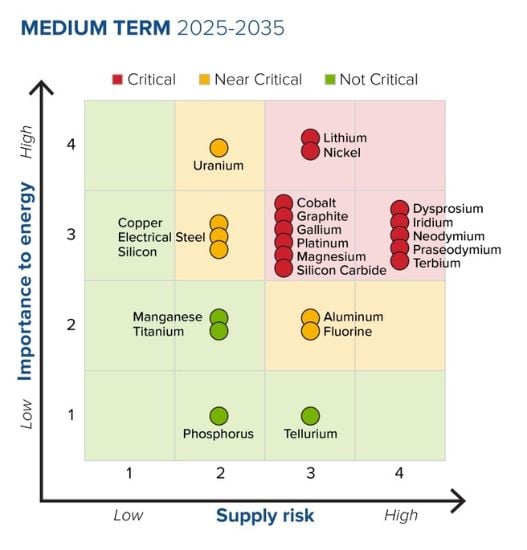
Supply risks for rare earth metals used in EVs will soon be at critical levels. Image used courtesy of Department of Energy
Silicon Anodes Could Reduce LFP Batteries Cost
In addition to EV use, LFP batteries are a preferred battery architecture for stationary storage applications. Paraclete is looking to help this transition by bringing down the cost of LFP batteries with their silicon-based anode materials, known as SILO Silicon.
Silicon is a material long touted for battery anodes due to its high theoretical energy density. However, while achieving high performance for a short operation time has been possible, many silicon anodes have catastrophically failed over longer cycling periods because the anodes undergo volumetric expansion (up to 400%). This expansion over time causes the anode to degrade, short-circuiting the battery and leading to permanent damage long before its theoretical lifetime.
However, Paraclete Energy has been tackling the volumetric expansion issues by encasing the silicon in a polymer matrix. The flexibility of polymers helps to avoid large volumetric expansion during cycling. With the polymer matrix, the solid electrolyte interphase layer forms on the outside of the polymer, so the electrolyte never comes into direct contact with the silicon particles.
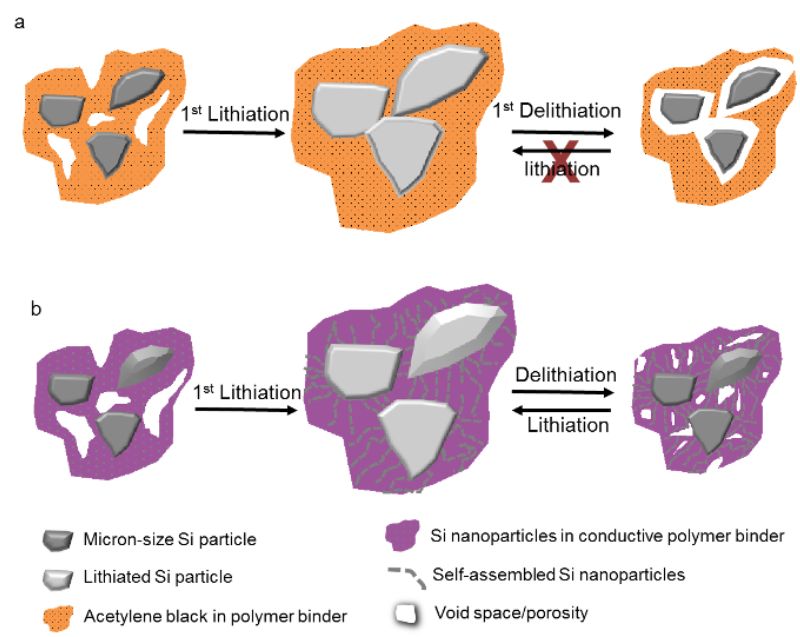
Research shows silicon coated in polymer forms a cushion against expansion. Image used courtesy of the Lawrence Berkeley National Laboratory
SILO Silicon anode materials could offer a high energy density and bring down the cost of LFPs to $35 kWh. This would be a vast improvement to LFP batteries using conventional graphite anodes, which cost an average of $53 per kWh. LFP batteries made with this silicon could cost up to 33% less per kWh than other LFP batteries. Paraclete states that batteries made with silicon anodes could deliver more energy for longer periods in both EV and stationary storage applications.
LFP Energy Density
Energy density plays a key role in reducing the cost per kWh. Because the silicon materials are encased in a polymer matrix, Paraclete Energy has been able to load more active silicon particles per area compared to other silicon anode efforts, leading to higher energy densities. Paraclete claims they have achieved an energy density of over 520 Wh/kg for their anodes—300% more than graphite anodes and 200% more than their closest silicon anode competitors.