
 Facebook
 Google
 GitHub
 Linkedin
Skip the Charge: Swappable Batteries Could Change EV-erything
With this tiny EV, drivers can swap out their batteries and return to the road in minutes. But can battery swapping work on a larger scale?
Range anxiety describes electric vehicle owners’ concern about easy access to charging options. While charging stations are popping up with increasing frequency, their distribution is uneven. Urban regions tend to have abundant charging options, while suburban and rural areas have a less developed charging infrastructure.
Battery swapping process. Video used courtesy of Silence
Spanish company Acciona and its car manufacturing division, Silence, are innovating a possible solution to EV adoption resistance through its swappable battery model. This model will allow drivers to forgo the purchase of batteries altogether. Instead, drivers can swap out batteries and charge when needed using home outlets.
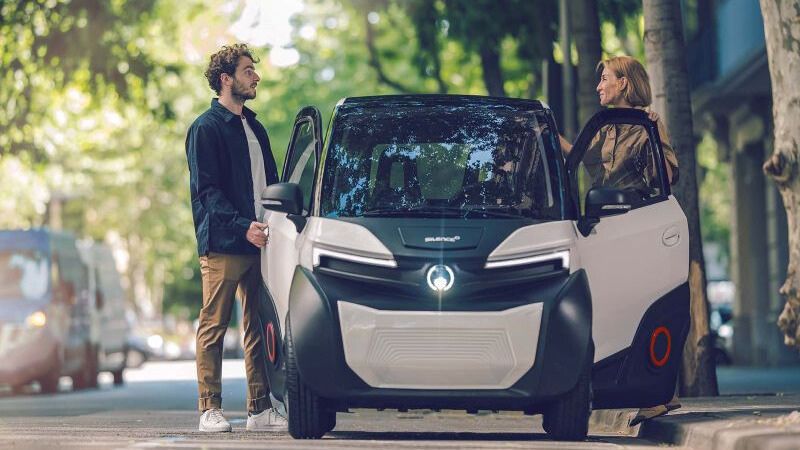
Acciona’s NanoCar with swappable battery capability. Image used courtesy of Silence
The Technical Challenges of Battery Swapping
In 2014, Tesla piloted a battery-swapping station that had a short life. By 2016, the swapping station was decommissioned and closed, with Tesla claiming it had insufficient consumer interest in the model. However, others suggest that battery swapping is the way to speed up EV adoption. A battery-swapping station obviates charging wait times and drastically reduces upfront costs. The most affordable model Acciona is rolling out will only cost $7,582, a dramatically different price point than most EVs in today's cost range.
There are significant technical challenges when considering the battery-swapping model.
One major concern is the variability in battery pack dimensions and configurations across manufacturers. This lack of uniformity extends to the electrical interfaces and cooling requirements, further complicating interoperability. For example, Tesla's battery packs have a different form factor and cooling system than those used by Nissan or BMW, making it challenging to create a standard swapping station to accommodate all types. Chemistry and materials vary, and properties change, making universal compatibility impossible.
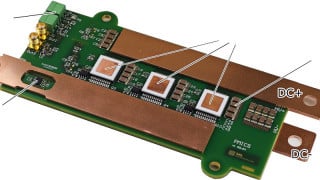
Additionally, battery management systems (BMS) vary significantly among manufacturers. These systems monitor and manage the battery’s health, charge, and discharge cycles and are tailored to specific battery chemistries and designs. Ensuring compatibility of BMS across different battery packs would require a standardized communication protocol, adding another layer of complexity.
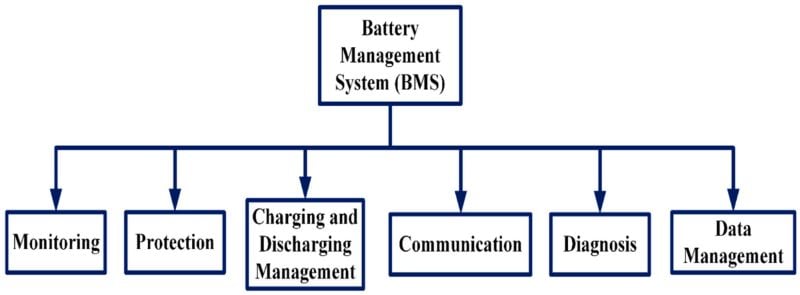
EV battery management system functions. Image used courtesy of Gabbar, et al.
Engineers must develop standardized battery packs and interfaces to account for these variations in chemistry and design. This includes harmonizing the physical dimensions, electrical connectors, and cooling interfaces. Achieving this level of standardization necessitates significant industry collaboration and the establishment of common standards and regulations, potentially through bodies like the Society of Automotive Engineers and the International Electrotechnical Commission.
The NanoCar and Battery Swapping
Battery pack and BMS variability challenges can be overcome by streamlining a car model, battery pack, and swapping stations through one company. Acciona’s NanoCar is a two-passenger vehicle designed for local driving only rather than long trips. This practical geographic limitation helps remove certain battery-swapping obstacles.
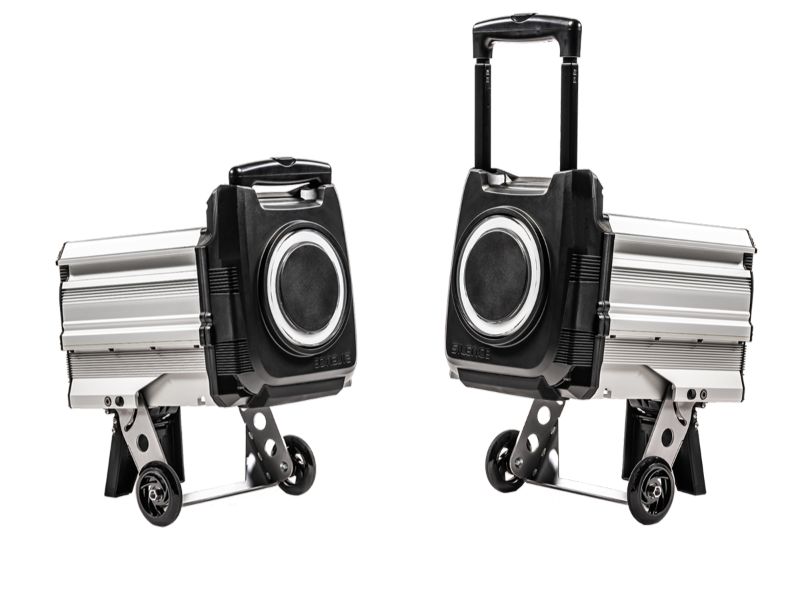
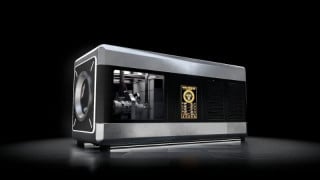
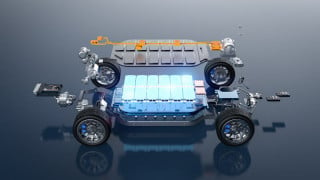
Acciona’s batteries. Image used courtesy of Silence
The feasibility of creating enough battery swapping stations in a small area is significantly higher than developing such infrastructure on a large scale. There are already 140 battery stations in Spain, which will ease accessibility concerns and range anxiety that persist among drivers. However, in much larger countries like the United States, the sprawling distances make it much harder to conceive how building enough battery swapping stations would be easier than charging stations for EV batteries not designed for swapping.
Acciona offers unparalleled ease. Drivers will only need 30 seconds to safely swap out a depleted battery.
While other car companies have opted out of pursuing battery-swapping technology, Acciona is plowing forward and is teaming up with Nissan to bring the NanoCar model to other European countries.
The EV market explosion is an exciting sea change in the transportation sector, and there is still an important need for competition and innovation. While many wrote off battery swapping due to technical challenges, Acciona is proving that EV innovations are constantly evolving.








Swappable batteries could indeed be a game-changer for the EV industry! 🚗🔋 The convenience of quickly exchanging batteries could address range anxiety and reduce charging times significantly. It’s exciting to think about how this could accelerate EV adoption and make electric vehicles more practical for everyday use. I’m curious to see how this technology will evolve and how it might impact the infrastructure and overall cost of owning an EV. Thanks for sharing this insightful update!”