Facebook
 Google
 GitHub
 Linkedin
Lighting Las Vegas: Huge Solar+Storage Heats Up
The largest co-located solar-plus-battery storage system in the U.S. has started delivering power near Las Vegas.
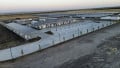
A massive hybrid renewable energy project is online in Nevada’s Mojave Desert. The 6,500-acre facility features a 690 MW solar array and a 380 MW battery system with 1.4 GWh of storage.
Gemini, the largest co-located solar-plus-storage park in the U.S., sits on federal land 34 miles from downtown Las Vegas. It’s expected to generate enough power for more than 260,000 homes and displace about 1.5 million metric tons of carbon dioxide annually.
Commercial operations launched after the developers secured a 25-year offtake contract with NV Energy, a utility serving northern and southern Nevada.
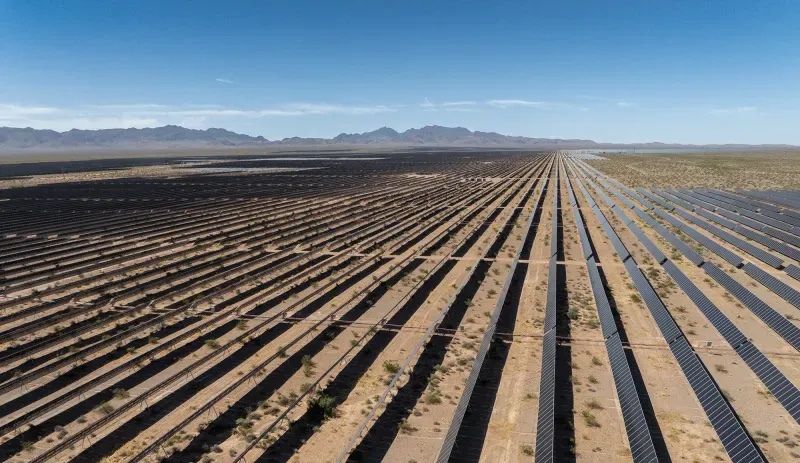
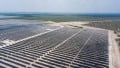
The Gemini project comprises nearly 2 million solar panels. Image used courtesy of Primergy
DC-Coupled Storage and Bifacial Solar Modules
The $1.9 billion project features 1.8 million solar panels and a four-hour battery energy storage system (BESS).
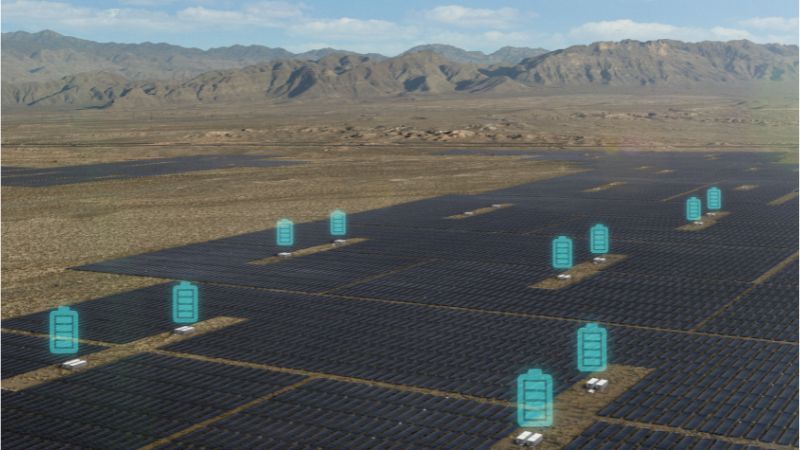
Gemini features several battery energy storage containers. Image used courtesy of Quinbrook Infrastructure Partners
The developers—Quinbrook Infrastructure Partners and its portfolio company Primergy Solar—selected a DC-coupled storage configuration, allowing the battery to recharge directly from the solar array. Unlike conventional AC coupling in many hybrid projects today, DC coupling removes the need for more than one inverter. Charging directly from solar panels is also more efficient than using the grid.
Chicago-based IHI Terrasun, a leader in DC-coupled solutions, provided the system integration, control, and lifecycle services for the solar array and BESS. Primergy has previously said that the project’s advanced software and electrical architecture can balance loads across more than 186 on-site storage subsystems.
Chinese battery manufacturer CATL supplied its lithium iron phosphate-based EnerOne outdoor BESS. The modular product boasts a long service life of up to 10,000 cycles and an integrated frequency conversion liquid cooling system to limit cell temperature changes.
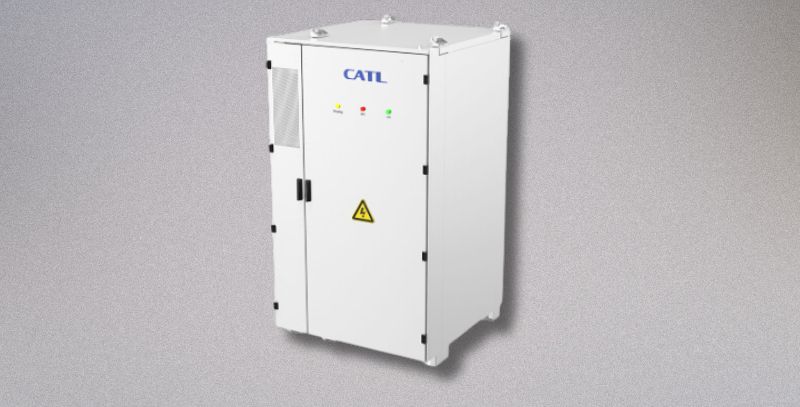
CATL’s EnerOne BESS. Image used courtesy of CATL
Singapore-based Maxeon Solar Technologies contributed its shingled bifacial Performance 5 solar modules. The large-format mono-passivated emitter and rear contact cells offer 21% efficiency and a unique combination of materials, including conductive adhesives and a proprietary encapsulant, to reduce degradation and losses from exposure to harsh desert conditions.
Storage Project Cancellations Threaten Resource Adequacy
Gemini is expected to meet 10% of Nevada’s peak power demand. This comes as NV Energy, the utility receiving power from the project, is scaling its energy storage capacity to manage a peak load topping 8.1 GW.
More broadly, the Public Utilities Commission of Nevada targets 1 GW of additional energy storage capacity by 2030. The state plans to reduce its reliance on fossil fuel-based peaker plants and reach 50% clean energy by the decade's end. The U.S. Energy Information Administration states renewables generated nearly 40% of Nevada’s electricity in 2023.
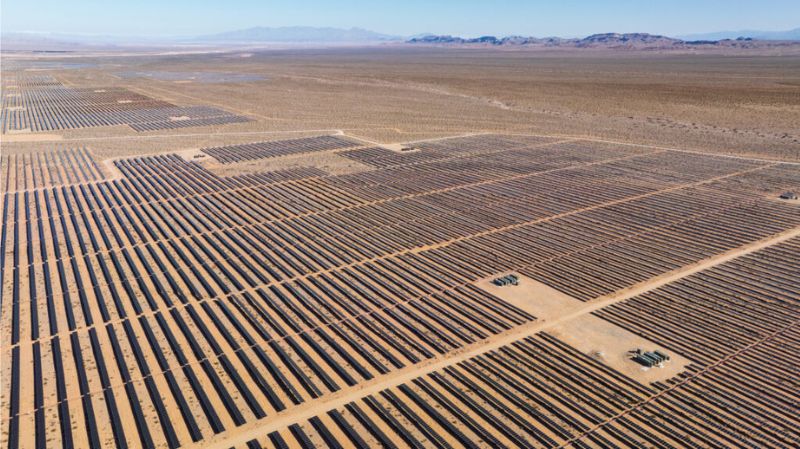
The Gemini project in Nevada. Image used courtesy of Quinbrook Infrastructure Partners
However, market conditions and procurement headwinds have challenged Nevada’s solar-plus-storage expansion as developers canceled or shelved several large projects last year. That includes two Primergy projects, Iron Point and Hot Pot, totaling 600 MW of energy and 500 MW of storage. The pair were initially expected to begin operating in 2023 and 2024. In regulatory filings, NV Energy disclosed that both failed to hit development milestones that impacted their ability to meet contractual commitments.
In the same filing, NV Energy warned it would be 1.6 GW deficient by the summer of 2027 without additional resources. The utility’s recent resource adequacy concerns have prompted adjustments to its integrated resource plan (IRP). In May, it submitted a new IRP outlining three solar and battery power purchase agreements with 1 GW of energy and 1 GW of storage: Dry Lake East (planned for commissioning in late 2026), Boulder Solar III (by June 2027), and Libra Solar (by late 2027).
The proposal also includes 400 MW of natural gas-powered peaking units by 2028 to ensure grid reliability in northern Nevada.