Facebook
 Google
 GitHub
 Linkedin
Eversource Leverages MATLAB for Probabilistic Load Flow to Advance Grid Planning Efforts
EEPower met with Eversource Energy and MathWorks to learn how their collaboration is driving grid modernization design and investment decisions through advanced simulation and data visualization.
The accelerating integration of Distributed Energy Resources (DERs) like solar panels, electric vehicles (EVs), and heat pumps presents significant challenges for traditional power grid planning. The inherent variability and uncertainty introduced by these resources strain conventional deterministic modeling approaches.
Recognizing this, Eversource Energy, New England's largest energy utility, has collaborated with MathWorks Consulting Services to implement a sophisticated Probabilistic Load Flow (PLF) simulation system. This new capability allows them to process and prioritize millions of grid scenarios by likelihood and risk.
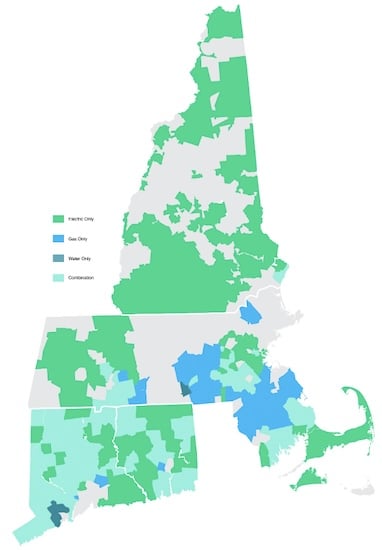
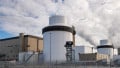
Eversource Energy provides service in Connecticut, Massachusetts, and New Hampshire. Image used courtesy of Eversource Energy.
To learn more, EEPower sat down with John Kreso, Eversource Energy Senior Engineer, and Tony Lennon, MathWorks Technical Marketing Manager.
The Challenge: Managing Uncertainty in the Green Energy Transition
Integrating renewable generation is crucial for the energy transition. For example, the U.S. Energy Information Administration (EIA) projects the addition of over 20 GW of solar capacity in both 2025 and 2026. However, this influx of DERs, coupled with variable loads from EVs and heat pumps, makes predicting grid behavior complex.
Eversource turned to PLF automation, utilizing MathWorks' MATLAB environment and consulting services to build a system capable of processing and prioritizing millions of grid scenarios based on likelihood and risk. They developed a programming and numeric computing platform that allowed parallel processing across multi-core CPUs and GPU banks. MATLAB ActiveX server enabled direct communication between MATLAB and DNV Synergi Electric Solver.

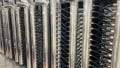
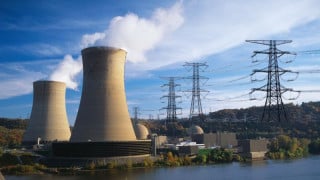
Advanced Probabilistic Load Flow (PLF) simulations are driving Eversource Energy investment decisions. Image used courtesy of MathWorks.
EEPower: How have Eversource Energy’s simulations changed through this collaboration with MathWorks?
Kreso: We used to build the simulations and select the conditions manually. Typically, this was for worst-case scenarios like April, when generation is high and load conditions are low. Now we can do many more simulations in parallel. Our ambitious goal is to simulate a 8760 world (24 hours a day, 365 days a year).
EEPower: Can you give us a rough idea of the scale of the simulations and/or the amount of data?
Kreso: A single station—think of it as a town—will stretch from the large transformers down to the customer level. The distribution network will include tens of thousands of nodes and branches, hundreds of distribution transformers. Multiply that by many stations.
Lennon: The complexity of the simulations at the distribution level increases exponentially.
Kreso: And, the more scenarios that we can run using that 8760 power profile, the more variables that we can incorporate. Every second or microsecond of simulation counts!
Visualization and Data-Driven Investment
Interpreting the vast amount of data generated by PLF simulations is critical. MATLAB’s data visualization capabilities and its ability to seamlessly integrate with other tools in the Eversource Energy simulation tool chain were vital.
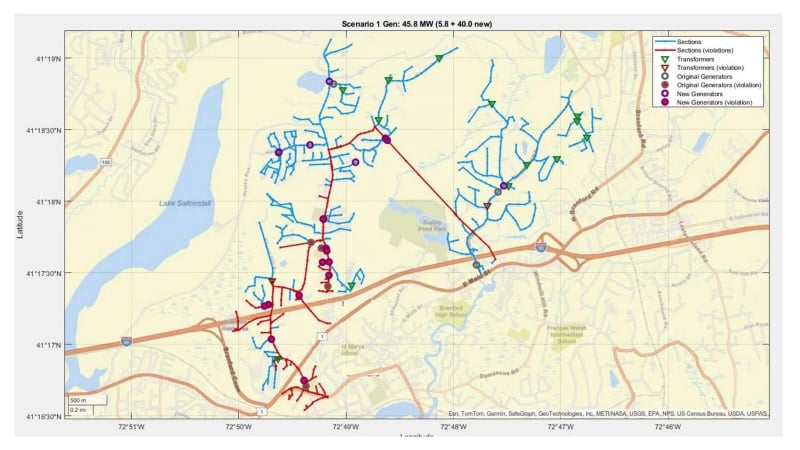
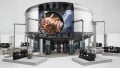
Improved visualization of network simulations drives better decision making. Image used courtesy of MathWorks.
EEPower: How were you able to simplify these larger datasets to facilitate decision making?
Kreso: We are running 10s or even 100s of thousands of PLF simulations. We found that using heat maps helped us identify weak points in the systems and see how many different simulation runs included violations that overlap in a particular area. Knowing these critical points enables us to ask, “What would it look like if we change the system at the point, through either investment or routing in a certain way?”
Lennon: The existing MATLAB toolboxes and libraries make it easier for Eversource to integrate into their existing simulation flow and build GUIs and web applications for data display and user interaction.
Kreso: That ability to leverage the tools that we already have was important. This new capability has broadened how we even approach the PLF problem. Having that Power Flow engine run efficiently and in parallel was a key defining moment.
EEPower: Were there any surprising findings from this new capability that changed your view of the current state of the grid or your planned grid modernization plans?
Kreso: We saw how many different simulations often converged to a small section or a critical path. This enables us to make decisions on dealing with violations or distributed generation (DG).
Lennon: Being able to run all of these different scenarios also provides an improved level of confidence.
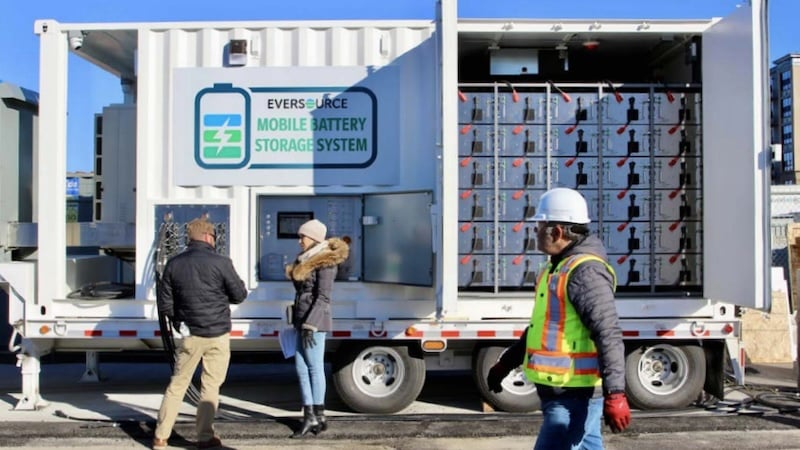
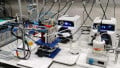
Eversource Energy is investing in simulation capabilities to improve DER plans. Image used courtesy of Eversource Energy.
The Collaboration Model
The collaboration involved MathWorks Consulting Services, which focused not just on delivering a solution but on enabling the Eversource team. "They provided us with the fishing equipment and taught us how to fish," noted Kreso.
EEPower: How does MathWorks typically start engagements for consulting on projects like this and with companies like Eversource Energy?
Lennon: MathWorks has been consulting for at least 20 years, but we don’t lead with consulting. Our FAEs are typically already helping companies who are using our software. If it appears that the customer may need some dedicated guidance, we can explain Mathworks’ capabilities and how we might be able to help. Then we can discuss hours and cost.
We are not looking to provide black box solutions. Our goal is to help companies adopt our tools, train them on the tools, and make them self-sufficient. The customer should understand how it works.
Kreso: We are trying to do end-to-end software chains, and MathWorks is helping us achieve that goal. Some of the members of our team are newer, so it has also been helpful to have key knowledge poured into our team by the MathWorks experts. It has improved how our team approaches problems and builds code. It also enables us to build applications and solutions in a more integrated way.
Future Directions
While the immediate application focuses on forward-looking system planning, Eversource Energy sees potential for broader use.
EEPower: Do the models or analysis contribute at all to how you manage the existing grid today, or is it purely for investment decisions?
Kreso: System planning and forward-looking investment are the immediate use, but there may be other opportunities. For example, Hosted Capacity Maps—how can we incorporate them into our planning and share them with customers?
With all of this simulation data, we can provide more self-service support to allow developers to make better decisions. They may be able to see that they can add up to 100 kW with little or no interconnection costs. Or, a solar installer could see that there is a step change when going from 10 to 11 new units.
EEPower: Have you implemented any numerical optimization techniques, using AI or traditional optimization algorithms, to try to find optimal solutions based on the results of these simulations?
Kreso: We are starting to delve into ML and deep learning. The forecasting side is closer to using AI than we are on the investment side. Naturally, utilities are really cautious! However, as much as we can, we are looking to leverage these new simulation capabilities.
Conclusion
Eversource's adoption of MATLAB-based PLF represents a significant step forward in utility system planning. By embracing probabilistic methods and powerful computational tools, the utility can navigate the complexities of DER integration more effectively, ensuring grid reliability, optimizing investments, and supporting a cleaner energy future for New England. This data-driven approach provides a valuable model for other utilities facing similar grid modernization challenges.