Facebook
 Google
 GitHub
 Linkedin
Energie AG Upgrades Smart Grid Network in the Austrian Alps
Westermo’s routers will use private LTE 450 MHz technology to connect Energe AG’s 600 substations in areas with complex terrain.
Cellular technology has become indispensable for industries requiring robust and efficient communication solutions. In utilities, it supports critical operations like managing smart grids, monitoring distributed energy resources, advanced metering infrastructure, and integrating renewable energy. Emerging technologies like private LTE networks provide solutions tailored to these needs with enhanced coverage, scalability, and security.
Energie AG demonstrated this progress with a significant network upgrade in the complex geographical terrains of Austria. The move will improve grid connectivity in Austria.
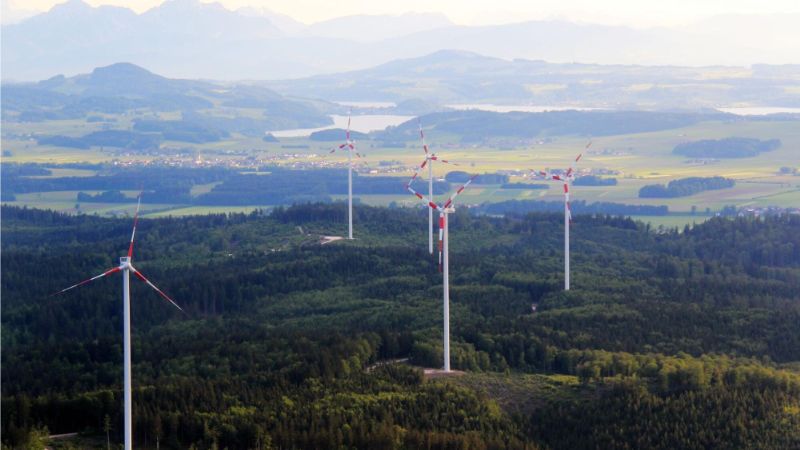
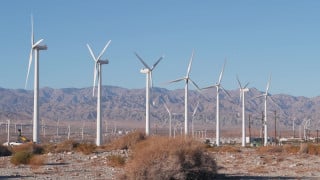
Wind farm in the Austrian Alps.
Understanding Cellular Technology
Cellular technology has evolved from simple voice communications to an integral part of industrial operations, smart city management, and utility networks. CDMA (Code Division Multiple Access) to LTE (Long Term Evolution) is a significant milestone.
CDMA, developed in the 1990s, used unique coding sequences to simultaneously allow multiple users to transmit data over the same frequency channel. However, as utility networks expanded and demands for higher data throughput increased, CDMA's limitations became apparent, especially in managing modern smart grid applications and distributed energy resources.
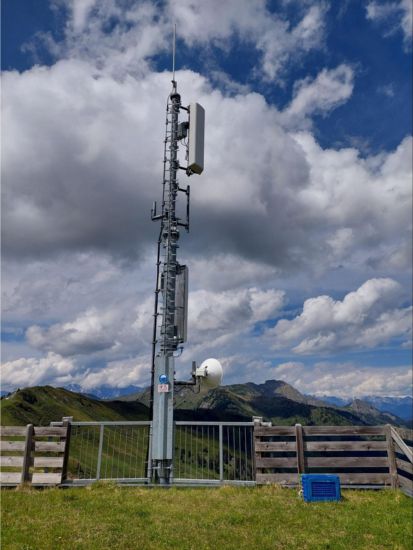
Cell tower with 450 MHz of connectivity.
LTE employs a sophisticated approach called orthogonal frequency division multiplexing, which segments data transmission across multiple narrow bandwidth channels. This system typically operates in two main configurations worldwide: the predominant frequency division duplex mode, which uses separate frequency bands for sending and receiving data, and the time division duplex mode, where transmission and reception alternate within the same frequency band based on network operator allocations in specific regions.
Another deciding factor in cellular communication is the band frequency. High frequencies (above 2 GHz) offer higher data rates and capacity but have shorter wavelengths, resulting in limited range and poor penetration through obstacles. This necessitates more towers for adequate coverage, particularly in dense urban areas. Low frequencies (below 1 GHz) provide broader coverage and better penetration through walls due to longer wavelengths. This makes them ideal for rural or wide-area coverage with fewer towers. However, lower frequencies have lower capacity, limiting peak data rates.
Energie AG’s 450 MHz LTE Upgrade
Energie AG has used Westermo cellular technology to strategically migrate from CDMA 450 to LTE 450 MHz across 6,000 substations in Austria's diverse topographical landscape. This upgrade comes as CDMA reaches the end of its lifecycle. The system architecture employs private LTE infrastructure operating in the 450 MHz band, specifically for its superior penetration characteristics and extended coverage capabilities in challenging terrain.
The solution integrates approximately 8,000 specialized cellular routers with protocol conversion capabilities, supporting multiple SCADA protocols, including 101, Modbus, 104, DNP3, and Digital I/O. The unified communication framework facilitates the management of distributed energy resources, smart meter aggregation, and legacy equipment integration.
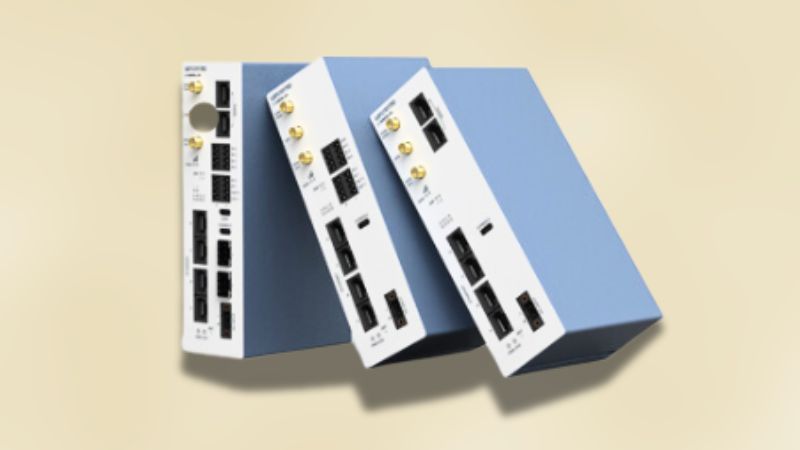
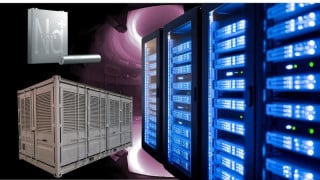
Westermo routers.
The low-frequency 450 MHz implementation optimizes infrastructure requirements by reducing the number of necessary base stations while maintaining robust coverage across flat, hilly, and mountainous regions. The system incorporates automated provisioning and monitoring through proprietary software to enable centralized management of the extensive device network. The architecture prioritizes cybersecurity through private network implementation, which improves protection against blackouts.
Future Developments
The deployment timeline spans from the first quarter of 2024 to the end of 2026, with initial implementation achieving 10% base station coverage by June 2024. If successful, combining low-frequency coverage advantages with advanced protocol handling could become a blueprint for utilities operating in diverse geographical conditions.