Facebook
 Google
 GitHub
 Linkedin
Can a New Material From LG Chem Prevent Battery Fires?
LG Chem’s Safety Reinforcement Layer can shut down the battery before thermal runaway begins.
Most lithium-ion battery fires have been attributed to thermal runaway. With more companies producing lithium-ion (Li-ion) batteries for high-performance applications, thermal runaway issues must be resolved to ensure safe use and consumer confidence in the latest Li-ion technology.
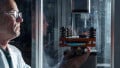
Researchers from LG Chem have developed a thin composite material known as a Safety Reinforcement Layer (SRL) between the cathode and collector to reduce the chance of thermal runaway and battery fires.
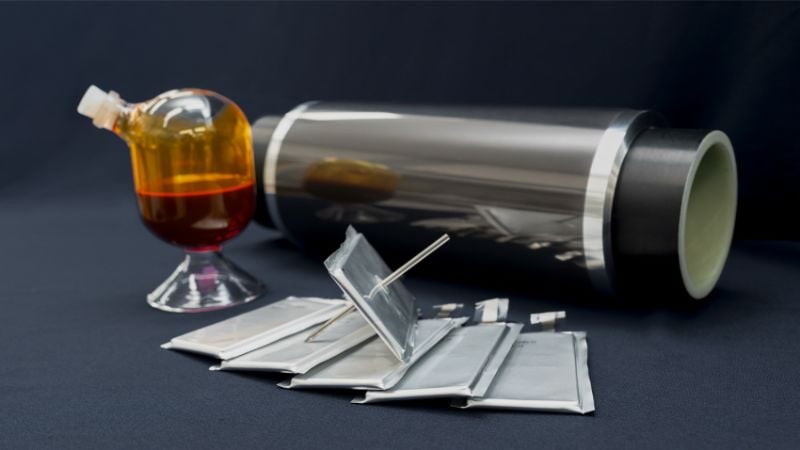
Safety Reinforcement Layer materials. Image used courtesy of LG Chem
Thermal Runaway in Batteries
Thermal runaway occurs in Li-ion batteries when the cell enters a self-heating state that can’t be controlled. The self-heating state is typically caused by the anode and cathode coming into contact with each other, which causes the cell to short-circuit and increase the internal temperature. Thermal runaway can be caused by external heat, mechanical damage, and overcharging.
The battery’s internal temperature can rise by 1000°C (1832 °F) in seconds during thermal runaway. Thermal runaway is a major issue for Li-ion batteries because the heat can continue to propagate throughout the cell and into neighboring cells (if stacked), which can lead to fires, explosions, and violent cell venting that ejects gas, shrapnel, and particulate matter.
LG Chem Safety Reinforcement Layer
LG Chem designed the safety reinforcement layer (SRL) to prevent the electricity flow inside the battery if the cell’s internal temperature starts to elevate. Using temperature sensors to monitor the temperature could theoretically achieve this. However, the sensors would be too bulky in practice and likely fail under the elevated temperature before the electricity flow could be suppressed. So, a material-based solution is required.
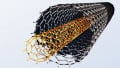
The SRL is a 1 µm thick conductive material made of molecularly engineered polythiophene (PTh) doped with carbon additives. The LG team placed the SRL between the anode and the aluminum current collector. The current continuously flows through this region of the battery during normal operation, but once the SRL material reaches a certain temperature, it stops being conductive. The SRL then acts as an insulating barrier between the anode and the collector to stop the current flowing.
How the Safety Reinforcement Layer Works
The SRL has a cut-off transition temperature of around 100°C that completely shuts down the device before it can build up high heat. This is due to the side chains in the conductive polymer network undergoing a positive thermal coefficient transition in temperatures above 100°C, which increases the resistance fourfold, making it an electrically insulating material. The carbon additives in the thermo-responsive polymer also maintain a high conductivity in the SRL during standard operation. The SRL is only responsible for 0.5% of the cathode weight, enabling the power and energy densities of the battery to remain unchanged.
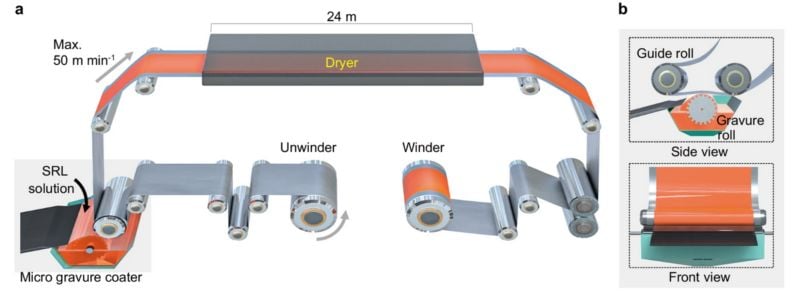
SRL production process. Image used courtesy of Song et al.
SRL Responds to Temperature Changes to Suppress Thermal Runaway
The SRL behaves like a fuse, where the electricity flows freely during normal operation. However, when a high temperature could cause thermal runaway, the SRL reacts to cut the power. Since the response is due to molecular changes once the threshold has been reached, the SRL reacts quickly to intense temperature spikes.
The SRL increases its electrical resistance by 5000 Ω for every 1°C (33.8°F) rise in temperature. The maximum resistance of the SRL is over 1,000 times higher than its standard resistance in normal operating temperatures. The reverse is also true for the SRL, and tests showed that reducing the temperature inside the battery decreased the resistance of the SRL.
Real-World SRL Testing
The SRL was also used in real-world conditions to improve battery safety. In one test, a nail was hammered into the battery (a test that makes almost all batteries catch fire). This resulted in either no fire or a very small and extinguishable fire.
A nickel cobalt manganese electric vehicle battery containing the SRL was also squashed with a 10 kg weight. In this impact testing, all the standard batteries caught fire, whereas 70% of the batteries with the SRL did not. Impact testing on 3.4 Ah pouch cells also showed that the SRL reduced battery explosions from 63% (no SRL) to 10% (with the SRL). LG Chem has already completed safety verification tests for mobile batteries and plans to move on to EV batteries next year.