Facebook
 Google
 GitHub
 Linkedin
Can 3D Nanostructured Electrodes Prevent EV Fires?
Sienza Energy’s proprietary 3D nanostructure enhances the safety of electrical vehicle batteries.
Electric vehicles have gained significant momentum in the past decade, yet the industry still faces considerable challenges, particularly concerning battery technology. For example, continued incidents of battery fires have incited fear in consumers and strict regulations by governing bodies. At the same time, demand grows for fast-charging batteries with higher energy density to make EVs more practical for everyday use. The confluence of these challenges has spurred intense research and development efforts in battery technology, with companies and institutions worldwide racing to create safer and more performant solutions.
A Caltech spinoff company, Sienza Energy, has created a 3D electrode nanostructure they claim could make batteries safer. The technology enables thermal stability and could prevent the fires that plague lithium-ion batteries.
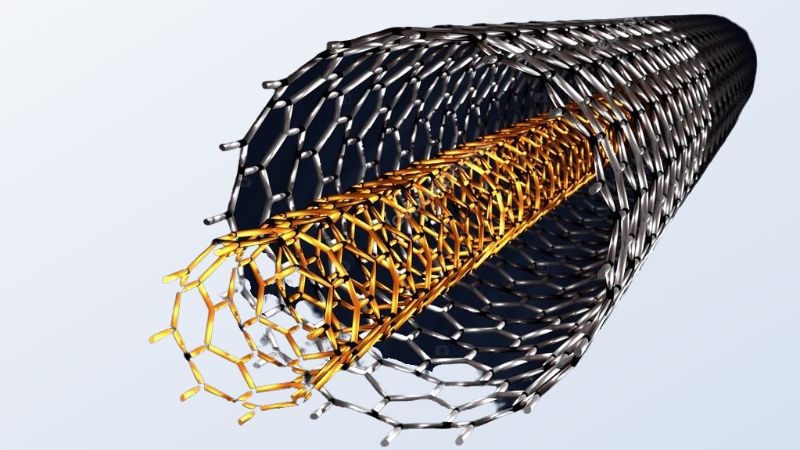
Electrode nanostructure for batteries. Image used courtesy of Sienza Energy
Thermal Runaway and the Electrode
Concerns about battery safety in EVs have garnered significant media and consumer attention in recent years due to several high-profile battery fires and explosion incidents.
At the core is the phenomenon known as thermal runaway. This occurs when a battery cell experiences a sizable rise in temperature, often due to internal short circuits, overcharging, or external damage. Once a cell enters thermal runaway, the heat generated can cause adjacent cells to overheat, creating a cascading effect that can ultimately lead to a fire or explosion.
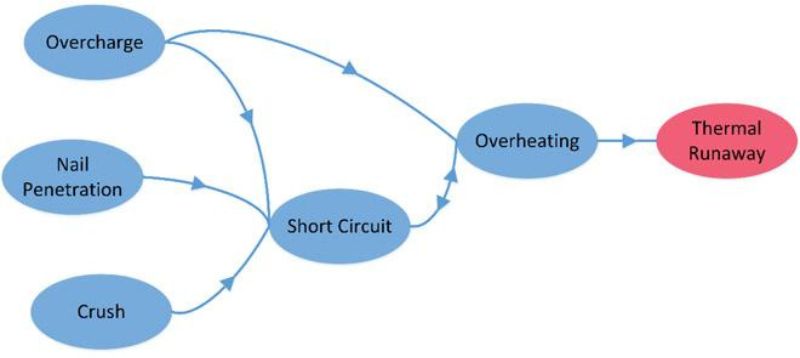
Relating battery damage conditions. Image used courtesy of Zhang et al.
Unfortunately, thermal runaway risk is directly at odds with the demands for greater energy density. The high energy density of lithium-ion batteries, while beneficial for vehicle performance, also means that any failure can release a substantial amount of energy quickly, making containment and mitigation challenging.
The Nano Transformation
Sienza Energy’s electrode design is a notable variable in reducing the risks associated with thermal runaway in lithium-ion batteries. As the primary components of the electrochemical reactions that store and release energy, the electrodes significantly influence a battery's thermal and safety characteristics. Recognizing this, researchers have focused on innovative electrode designs to enhance safety without compromising performance. One promising area of investigation is the nanostructured electrode.
Nanostructured electrodes refer to materials engineered at the nanoscale, where the physical and chemical properties can be finely adjusted to achieve desired outcomes. By manipulating the structure at this level, researchers aim to improve several aspects of battery performance, including thermal stability, electrical conductivity, and the mechanical integrity of the electrode material.
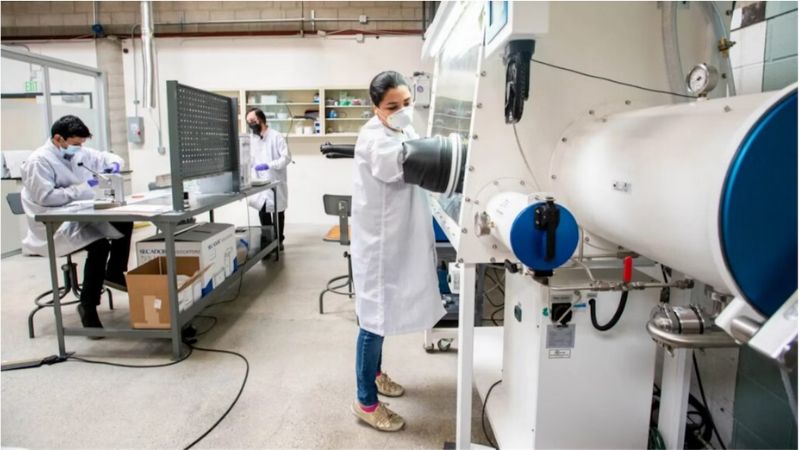
Scientists working at Sienza lab. Image used courtesy of Sienza Energy
Sienza Energy’s proprietary 3D nanostructure for EV batteries addresses safety concerns while significantly improving performance.
The technology utilizes a 3D pure silicon anode, which demonstrated an average gravimetric capacity of 2,941 mAh/g in third-party testing. This capacity is nearly eight times higher than the industry standard for graphite anodes, which typically achieve 372 mAh/g. According to Sienza, the 3D nanostructure has several benefits for battery safety.
First, the 3D nanostructures improve heat dissipation, which prevents localized hotspots and thereby reduces the risk of thermal runaway. The architecture also enhances mechanical stability by better absorbing and distributing mechanical stress, which decreases the likelihood of internal short circuits. Finally, by increasing the surface area of the electrodes, the 3D nanostructures improve the efficiency of electrochemical reactions, leading to enhanced battery performance and longevity.
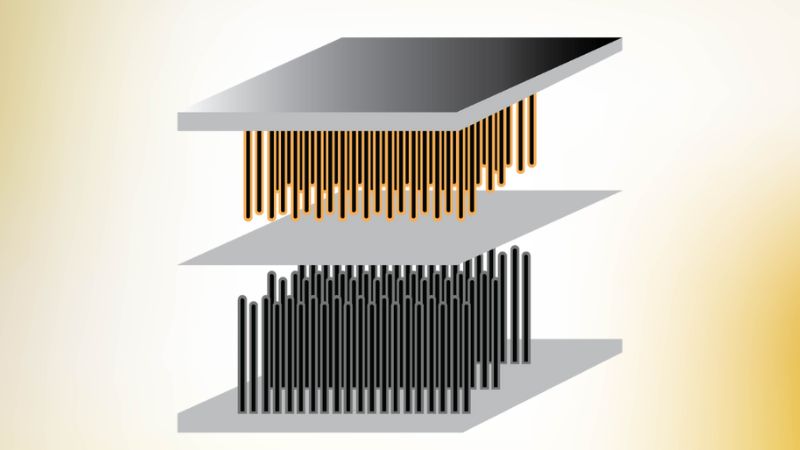
Nanostructure technology creates more surface area for chemical reactions. Image used courtesy of Sienza Energy
Charging Ahead with Nanotech
Battery safety is among the largest roadblocks facing widespread electric vehicle adoption, and thermal runaway is the ultimate challenge. With the introduction of 3D nanostructures into a lithium-ion electrode, Sienza Energy believes it has found a solution to deliver higher energy density and decreased risk of thermal runaway. Should such achievements translate to real-world vehicles, they could significantly impact the automotive industry.