Facebook
 Google
 GitHub
 Linkedin
Tektronix Intros Wideband Shunts and High Voltage Differential Probe
The new wideband shunts and the high-voltage differential probe are designed to enable engineers to extend measurement coverage from precision low-current analysis to high voltage power validation.
Tektronix has introduced new wideband shunts for IsoVu isolated current probes and the THDP0400 high voltage differential probe. Power electronics are moving into a territory that traditional measurement tools were not built for. Silicon carbide (SiC) and gallium nitride (GaN) devices are pushing switching frequencies higher while operating at increasingly demanding voltage levels.
At the same time, engineers are being asked to capture smaller current signals and faster switching events without introducing additional noise or uncertainty into the measurement.
Tektronix is addressing those challenges with two new additions to its power measurement portfolio. Wideband shunts for IsoVu isolated current probes and the THDP0400 high voltage differential probe. Together, the products expand measurement coverage from precision current analysis to high-voltage power validation.
Improving Low-Current Measurement Accuracy
The new wideband shunts are the first shunts added to the Tektronix IsoVu current measurement ecosystem. While engineers have often relied on third-party shunts for low-current analysis, the new devices bring those measurements into the same environment as Tektronix’s isolated current probes.
That integration is important because current measurements become increasingly difficult as signal levels shrink and switching speeds increase. Traditional clamp probes and standard shunts can struggle to capture fast transient behavior, particularly in power integrity and power distribution network analysis. The new shunts are designed specifically for those situations.
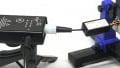
They support bandwidths up to 250 MHz and work directly with IsoVu isolated current probes. Built-in communication, temperature compensation, and integrated fuse protection help simplify setup while protecting both instruments and devices under test.
Why RF Isolation Matters
A key part of the IsoVu platform is its use of RF isolation. Conventional current measurement techniques often face challenges when measuring signals in floating sections of power circuits. Common-mode noise can interfere with measurements, making it harder to accurately capture fast switching behavior. IsoVu addresses that problem through complete galvanic isolation combined with RF-based signal transmission. The result is extremely high common-mode rejection while maintaining wide bandwidth and low noise performance.
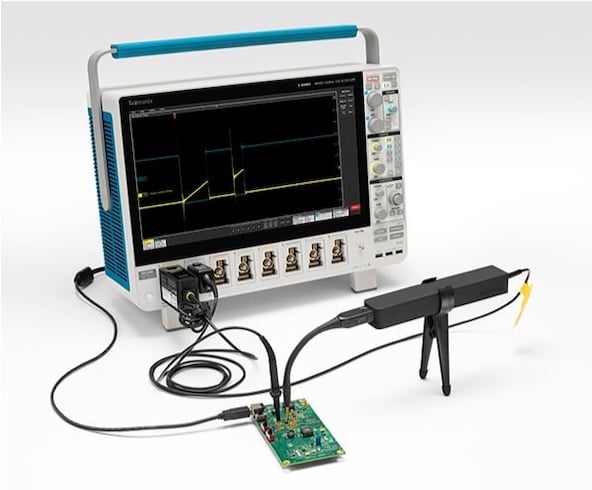
IsoVu isolated current probes use RF isolation to deliver high bandwidth, low noise, and exceptional common-mode rejection in floating power measurements.
The probes support bandwidths up to 1 GHz, common-mode voltages up to 1.8 kV, and common-mode rejection as high as 140 dB. Noise contribution is rated at just 150 µVRMS at 1 GHz. Those numbers matter because they allow engineers to observe small current variations that might otherwise be buried beneath switching noise. More information can be found in the IsoVu data sheet.
Expanding High-Voltage Visibility
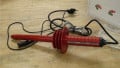
Tektronix also expanded its high-voltage differential probe lineup with the THDP0400. The new probe delivers 400 MHz bandwidth and supports measurements up to ±2000 V. It is designed for floating high-voltage measurements commonly found in power electronics validation, including power converters, double-pulse testing, and wide-bandgap semiconductor development.
One practical advantage is that the probe receives power directly through the TekVPI interface. Engineers do not need an external power supply, reducing cable clutter and simplifying test setups. The THDP0400 is compatible with Tektronix 4 Series B, 5 Series B, and 6 Series B mixed-signal oscilloscopes, allowing it to integrate directly into existing workflows. More information in the THDP0400 data sheet.
Capturing Fast Switching Events
Wide-bandgap devices continue to push switching edges faster. While that improves efficiency, it also makes measurement more difficult. Fast transients can be distorted by probe loading, noise pickup, or insufficient bandwidth. Floating measurements introduce another layer of complexity, especially when operating at high voltages.
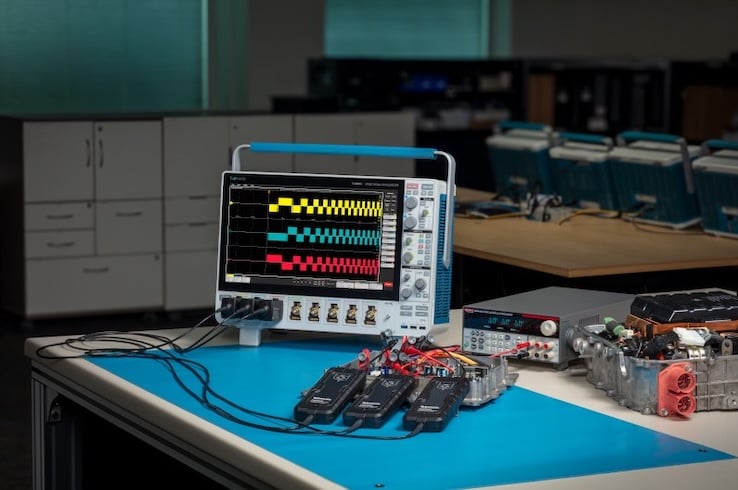
The THDP0400 is designed for high-voltage power validation workflows, including power converters, EV systems, and wide-bandgap semiconductor testing.
The THDP0400 is designed to address those issues by providing the bandwidth needed to capture rapid switching events while maintaining signal fidelity. High common-mode rejection further improves confidence when making isolated measurements in demanding environments.
For engineers validating SiC and GaN systems, those capabilities can make the difference between seeing a switching event clearly and missing important behavior entirely.
Building a More Complete Measurement Ecosystem
The larger story behind these launches is integration. The new wideband shunts complete the IsoVu current measurement workflow, while the THDP0400 extends voltage measurement coverage into higher-voltage applications. Together they allow engineers to stay within a single measurement ecosystem while analyzing both current and voltage behavior across modern power designs.
As power electronics continue evolving toward higher voltages, faster switching speeds, and lower current levels, measurement accuracy becomes increasingly difficult to maintain. These new tools are aimed directly at that challenge.
All images used courtesy of Tektronix.