Facebook
 Google
 GitHub
 Linkedin
Dow Corning Electronics Offers New Thermally Conductive Compound
Dow Corning Corp.’s Electronics and Advanced Technologies group announced the global availability of DOW CORNING® TC-5121 Thermally Conductive Compound – designed for mid-range electronic systems, such as desktop computers and graphic processing units. The company claims that the new compound provides impressive thermal performance, as well as a formula less likely than other thermal materials to scratch heat-sink lids.
Microprocessor producer, Advanced Micro Devices, Inc. evaluated the new compound for low thermal resistance, reliability and screen printability, and qualified it for use in manufacturing. The TC-5121 was said to have demonstrated a high level of thermal conductivity at 2.5W/mK and a low level of thermal resistance at 0.1°C cm(2)/W. These properties are said to enable better screen printing, lower bondline thickness and easier application.
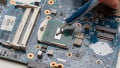
Semiconductor manufacturers use thermally conductive compounds to carry heat away from PC microprocessors, graphics processors and other critical components, typically by applying a thin layer of the compound between a chip and a heat sink. Other emerging markets for these thermal materials include light-emitting diodes, flat-panel displays and a variety of communication and automotive products.
TC-5121 combines Dow Corning silicon polymers with relatively small, soft heat-conducting filler particles to significantly reduce cosmetic scratches to heat-sink lids. The company states that other competitive thermally conductive compounds tend to use larger, harder particles, which are more prone to scratching heat sinks during re-work.
"This new thermal compound gives customers a broader thermal value range than most high thermal-resistance greases," said David Hirschi, Dow Corning’s Global Thermal Management Marketing Manager. "It also reduces the problem of scratches for manufacturers who are concerned about the appearance of heat- sink lids that dissipate heat from microprocessors and graphics processors."