Facebook
 Google
 GitHub
 Linkedin
Texas A&M Students Develop Nuclear Security System
Students developed a comprehensive security system to protect nuclear microreactors from malicious activities.
Nuclear power remains a promising contender in meeting rising demands for clean energy. New reactor designs like small modular reactors (SMR) offer scalable, low-carbon alternatives to traditional large-scale plants. However, ensuring these systems’ security and reliability is tricky, especially as they become more decentralized and integrated into remote locations. Moreover, the growing reliance on digital automation, AI-driven controls, and autonomous monitoring introduces new risks that require robust security frameworks.
Why is nuclear energy low-carbon? Video used courtesy of International Atomic Energy Agency
A student team from Texas A&M addressed this issue by developing a robust security framework for SMRs. Their project aims to overcome the security challenges these nuclear reactors are facing.
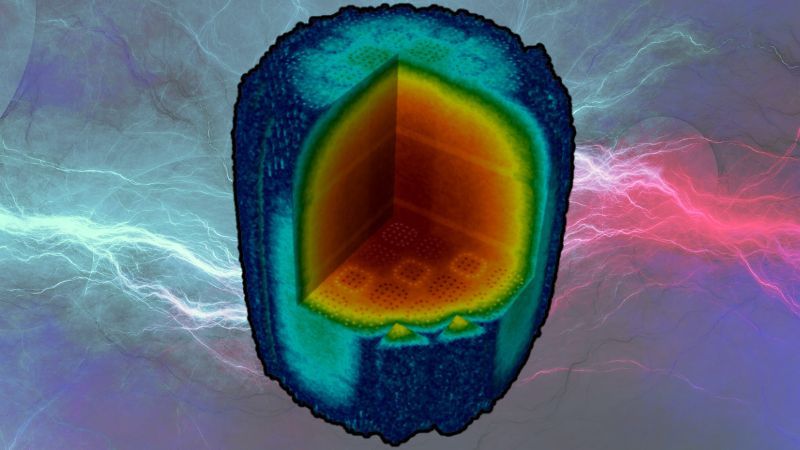
SMR core activity. Adapted from images used courtesy of Wikimedia Commons and Canva
SMR Challenges
An SMR is a nuclear reactor with a capacity of under 300 MWe designed for factory fabrication and remote installation. Its modular nature allows multiple identical units at a site. By lowering upfront costs and financial risks, SMRs decrease nuclear energy entry barriers. Still, widespread deployment of SMRs faces challenges.
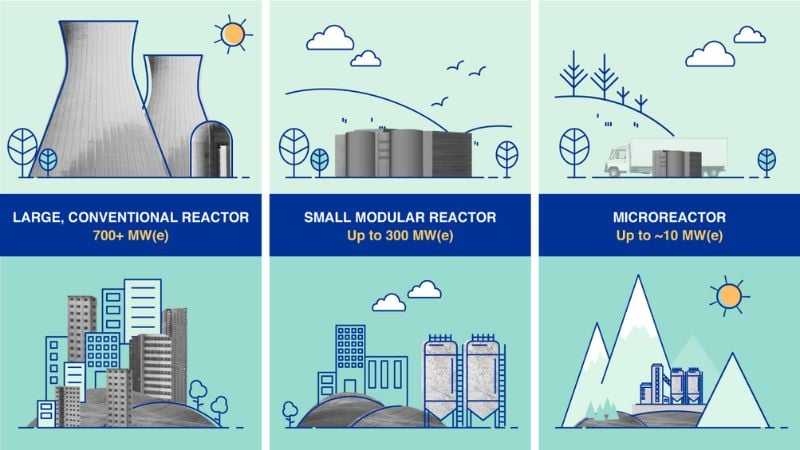
Categorizing nuclear reactors. Image used courtesy of IAEA
Since SMRs are scalable and often deployed in remote or unstable regions, they face security risks from a plethora of sources. For example, many SMR designs use reactor core components manufactured in off-site factories before transporting them to various facility locations. In some cases, the core is shipped fully sealed with fissile material, while others require fuel insertion at the facility. These shipments may cross international borders, requiring compliance with nuclear and hazardous material transport regulations. Meanwhile, continuous monitoring throughout the transportation route is necessary to prevent security risks and operational issues.
Furthermore, highly digitized modern SMRs can be connected to a wider network of devices. Such connectivity creates a large vector for attacks, and digital controls and automation make them prime suspects for malicious interference.
Texas A&M’s Security System
Texas A&M College of Engineering students developed a security system for nuclear microreactors that won first place at the school’s Aggies Invent competition.
In collaboration with Los Alamos National Laboratories, the team designed Intrux, an integrated security framework combining multiple surveillance and tracking technologies for SMRs. The system employs RFID tracking, AI-driven monitoring, and thermal and standard cameras within the reactor’s transport container to detect unauthorized access. It features six LiDAR sensors, door access sensors, and GPS tracking for real-time situational awareness. Data is transmitted via satellite to ensure real-time communication. Unlike conventional security approaches that face challenges related to environmental constraints and scalability, Intrux prioritizes sensor fusion and multi-layered verification.

Student demonstrating the Intrux prototype. Image used courtesy of Texas A&M University
This project, which is projected to cost $17,000, hopes to be a cost-effective solution for securing microreactors in remote or high-risk locations.
Toward a Safer Nuclear Future
As nuclear technology advances, securing SMRs will remain a priority. Addressing both physical and digital vulnerabilities is essential for their safe integration into energy systems. Developing adaptive security frameworks can help mitigate emerging threats and help SMRs remain a viable, low-carbon energy source while maintaining safety and regulatory compliance.